

From Listening to Wearing
Not long ago, if you wanted to work with frequency-based wellness tools, you sat near a machine. You connected electrodes, held cylinders, positioned a plasma tube, or lay between two scalar coils. The device stayed home. You went about your day without it. To understand the broader landscape of these technologies, start with our guide to frequency therapy devices.
That model is changing. A growing category of wearable frequency devices now lets practitioners carry their frequency support with them — on the wrist, ankle, or body — delivering continuous, low-level frequency stimulation throughout the day without any setup, session management, or interruption to daily life.
The market has grown significantly. The global wearable neurotech sector was valued at $2.18 billion in 2025 and is projected to reach $2.61 billion in 2026, growing at nearly 20% annually [1]. The broader PEMF therapy device market — which includes many wearables — sits at approximately $638 million in 2026 and is expected to reach $1.6 billion by 2035 [2]. These are no longer fringe numbers. Wearable frequency technology has moved from specialist wellness communities into mainstream health and biohacking culture.
But the category is genuinely diverse — and not all wearable frequency devices work the same way, target the same systems, or have the same evidence behind them. This article maps the landscape clearly, so readers can make informed decisions about whether a wearable device belongs in their frequency wellness practice, and if so, which kind.
What Is a Wearable Frequency Device?
A wearable frequency device is any portable, body-worn technology that delivers a form of frequency-based stimulus — whether electromagnetic, acoustic, vibroacoustic, or photonic — directly to the body during normal daily activity. Unlike clinical or home-based stationary devices, wearables are designed to be used continuously or semi-continuously: worn during work, exercise, commuting, and sleep without requiring dedicated session time.
The defining characteristic is convenience of delivery — not a single technology or mechanism. This is an important point because the term ‘wearable frequency device’ covers a remarkably wide range of underlying approaches, from devices delivering pulsed magnetic fields to ones delivering gentle tactile vibrations, acoustic frequencies through the skin, or low-level light therapy. Each works through a different biological pathway and has a different body of evidence behind it.
What most wearable frequency devices share is a philosophy: that the most effective frequency support is not necessarily the most intense session, but the most consistent one. They operate at lower intensities than stationary clinical or home devices — but they run for hours rather than minutes, and they do so without any effort from the user. The cumulative exposure model is the core premise of the wearable category [3].
How Do They Work? Key Technologies and Devices on the Market
The wearable frequency device market in 2026 spans several distinct technology categories. Understanding how each works — and what it is actually doing to the body — is essential for making a meaningful choice.
1. Vibroacoustic Wearables: Apollo Neuro
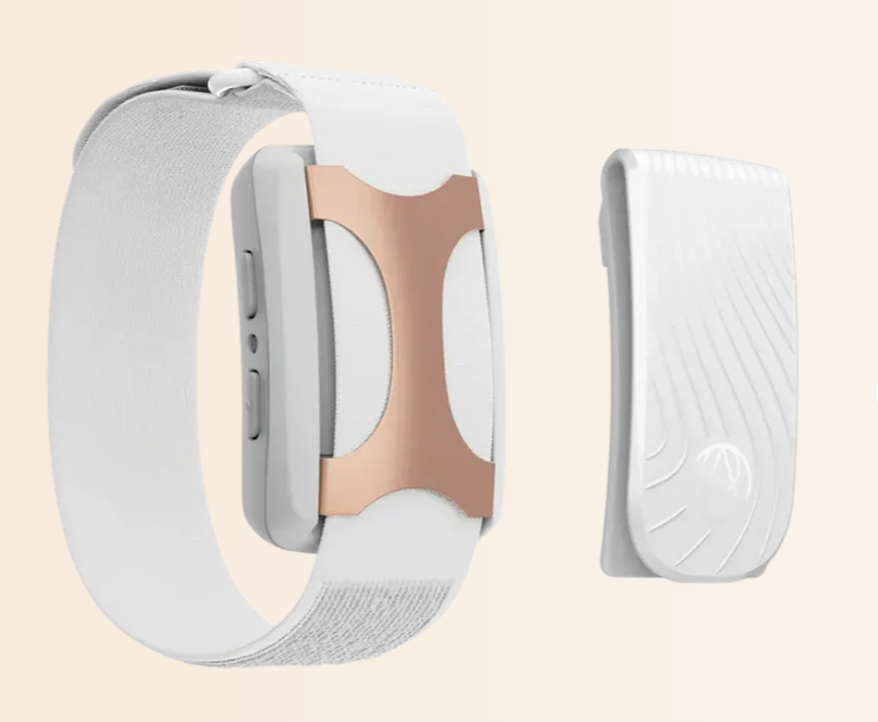
Apollo Neuro ($349) is among the most clinically substantiated wearables in this category. Rather than electromagnetic fields or acoustic sound waves, it uses low-frequency vibrotactile stimulation — gentle, inaudible vibrations felt against the skin on the wrist or ankle. The vibration patterns are specifically designed to stimulate touch receptors that communicate with the autonomic nervous system, mimicking the rhythmic cues associated with safety, calm breathing, and steady human contact [4].
The mechanism is not direct electrical or magnetic stimulation of tissue — it is sensory signaling through the skin’s mechanoreceptors. The device’s app offers mode-based programs: Clear and Focused, Unwind, Social and Open, Rebuild and Recover, Sleep and Renew, and others. Users select a mode, set intensity, and wear the device. Sessions range from 20 minutes to all-day continuous use [4].
Apollo has published research showing improvements in heart rate variability (HRV), sleep quality, and stress markers. It integrates with Apple Health, Oura Ring, and WHOOP. For users whose primary goal is nervous system regulation — reducing the physiological burden of chronic stress — Apollo occupies a distinctive and reasonably well-evidenced position in the wearable landscape. It does not claim to deliver frequencies in the Rife or bioresonance sense; it works through the body’s touch-sensing neural pathways.
2. Acoustic Frequency Wearables: WAVwatch
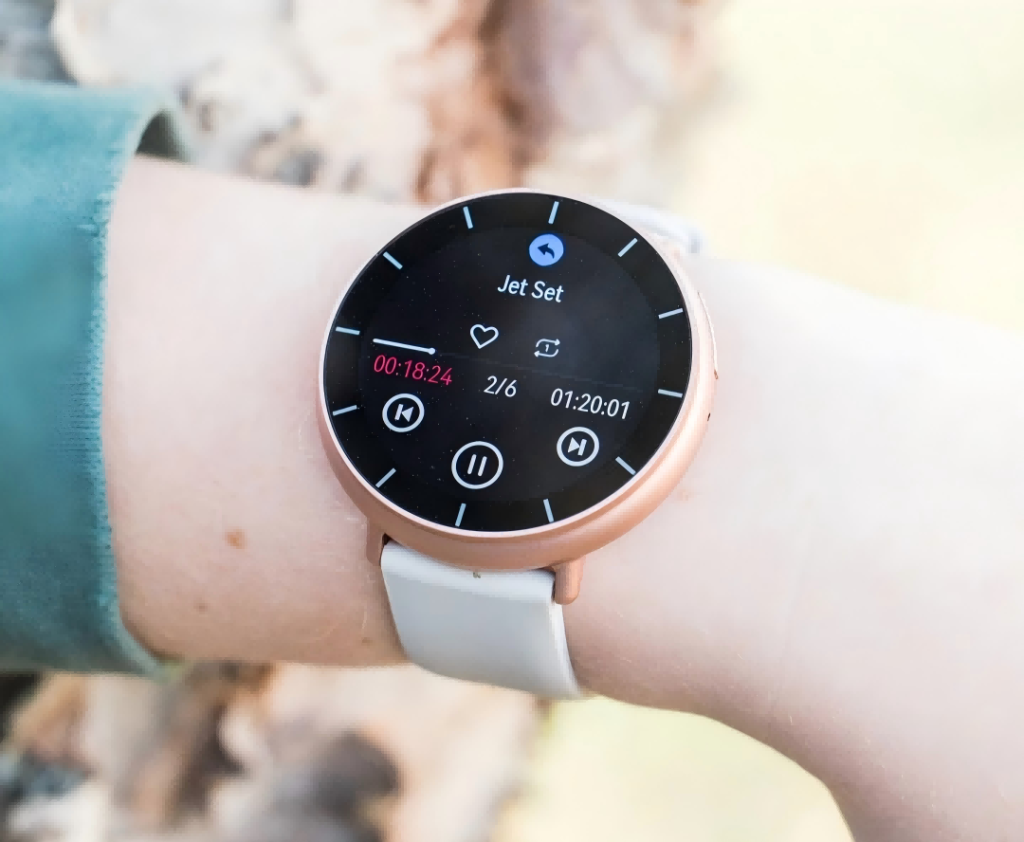
WAVwatch ($697–$1,199 depending on version) takes a different approach. It functions as a working wristwatch and simultaneously delivers acoustic sound frequencies through the skin via a transducer embedded in the watch body. The current WAVwatch 2.2 carries over 1,100 frequency programs — covering stress, sleep, pain management, energy, and numerous specific wellness targets — and requires no app, no Bluetooth, and no wireless connection to operate [5].
The device stores 146 frequency sets, is water-resistant, and runs up to 18 hours on a single charge. The premise is that sound frequencies, delivered through direct skin contact rather than through the air via speakers, are absorbed and conducted through the body’s water content in ways that may influence biological processes. Research at Northwestern University has shown that acoustic stimulation during sleep can increase slow-wave brain activity — one of the scientific threads the WAVwatch community cites [5].
WAVwatch sits in an interesting market position: it offers Rife-adjacent frequency programs (over 1,100 targeted frequencies) in a completely standalone, app-free format that anyone can wear throughout the day. For users who want broad-spectrum frequency access without software complexity, or who are interested in Rife frequencies but want a wearable delivery format, WAVwatch is one of the few devices in this space. The evidence base for acoustic transdermal delivery specifically is more limited than for PEMF or vibroacoustic vibration, and claims should be held with appropriate calibration.
3. Wearable PEMF Devices: Resona Health VIBE and CELLER8
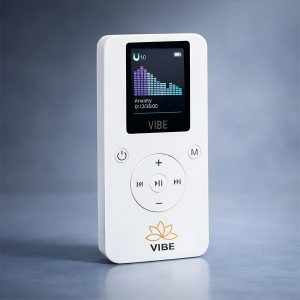
Several manufacturers have miniaturised PEMF technology into wearable form factors. The Resona Health VIBE ($595) is a pocket-sized PEMF device designed for targeted, on-the-go use — typically placed in a pocket or against a specific body area during daily activity. It delivers pulsed magnetic fields at therapeutic frequencies without requiring the user to be stationary or connected to a larger mat or coil [3].
CELLER8, launched in 2022 and gaining significant attention at the 2025 Health Optimisation Summit, offers both a mat version and a compact handheld/wearable PEMF device — appealing to users who want flexibility between targeted and full-body delivery. The handheld can be positioned against a specific area — a joint, the lower back, a muscle group — and worn or held in place during activity.
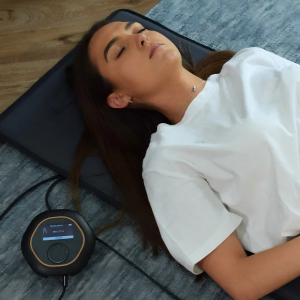
Wearable PEMF devices inherit the strong clinical evidence base that stationary PEMF has accumulated — FDA approval for bone fracture healing, growing evidence in pain management and tissue repair — but at lower intensities than clinical devices. The tradeoff is convenience versus intensity: a wearable PEMF device delivers a gentler, more continuous signal than a full clinical PEMF mat session, which some practitioners view as a useful daily maintenance layer alongside deeper periodic stationary sessions [2].
4. Bioresonance and Multi-Frequency Wearables: Healy
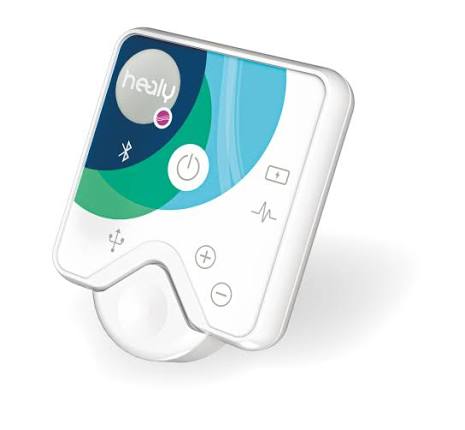
Healy is a microcurrent frequency device worn on the body, delivering individually programmed microcurrent frequencies claimed to support cellular health, bioenergetic balance, and a wide range of wellness goals. It uses a proprietary quantum sensor called HRV+ to assess the user’s current state and select frequencies in real time, delivering them via two electrodes worn on the wrist or body [6].
Healy sits in a more contested position in the evidence landscape. It has certification in some markets as a medical device for specific indications (pain management), but many of its broader wellness claims — particularly those relating to bioenergetic field assessment and frequency personalisation — are based on bioresonance principles that remain outside mainstream scientific consensus. It is popular in the holistic health community and has a large practitioner network.
For readers familiar with Rife and frequency healing concepts, Healy may feel philosophically aligned. For those seeking a device with a conventional evidence base, its more expansive claims warrant careful evaluation. It occupies a space between medically validated microcurrent therapy and broader bioresonance territory — a position that is either its strength or its limitation depending on the user’s framework [6].
5. Aha Halo: Portable Scalar and Rife Frequencies

The Aha Halo, developed within the Spooky2 ecosystem, represents the frequency therapy community’s own answer to the wearable question. It is a palm-sized device combining a scalar energy field with a library of over 100 wellness programs spanning pain management, sleep, detox, emotional balance, and more. It generates a scalar field extending approximately one meter in all directions, stores up to 30 programs for standalone operation, and runs on battery for a full day [7].
Unlike most mainstream wearables, which use vibration, magnetic fields, or microcurrent as their delivery mechanism, Aha Halo operates through the scalar wave framework — making it unique among wearable devices in how it conceptualises delivery. It does not need to be worn against the skin to function; it works within a proximity field. For practitioners already using Spooky2’s stationary scalar system, Aha Halo offers a natural on-the-go companion — maintaining scalar field exposure throughout the day between dedicated home sessions [7].
Who Is a Wearable Frequency Device For?
Wearable frequency devices are not a replacement for stationary frequency therapy systems — they are a complement to them, or an accessible entry point for those not yet ready for a full system. They are well-suited to:
- People with busy schedules who cannot dedicate time to daily device sessions but want continuous background frequency support throughout their working day
- Those who travel frequently and cannot bring stationary equipment — a wearable device packs in a bag and requires no setup at a destination
- Practitioners who already use stationary frequency systems and want to extend their coverage into the hours between formal sessions — using a wearable for maintenance and daily support while the primary system handles deeper protocols at home
- People new to frequency therapy who want an accessible, lower-investment entry point before committing to a full system — devices like Apollo Neuro and WAVwatch offer meaningful entry-level experiences at relatively modest prices
- Those focused specifically on stress, sleep, and nervous system regulation — where vibroacoustic and acoustic wearables like Apollo Neuro and WAVwatch are particularly well-targeted and have the strongest everyday evidence
- Athletes and active individuals who want non-invasive, drug-free recovery support during training periods — wearable PEMF devices are increasingly used in sports recovery contexts
- Elderly users or those with mobility limitations for whom stationary session management is challenging — a wearable device requires no positioning, no electrode placement, and no active session monitoring
How to Choose a Wearable Frequency Device
With the category as diverse as it is in 2026, choosing a wearable frequency device comes down to a few honest questions. Here is a practical framework:
Start with your primary goal
Different devices are optimised for different outcomes. If your primary goal is stress regulation and sleep quality, Apollo Neuro’s vibroacoustic approach has the strongest and most specific evidence base. If you want broad-spectrum frequency access in a convenient format, WAVwatch’s 1,100+ program library offers the most coverage. If pain management and tissue repair are the priority, a wearable PEMF device like the Resona Health VIBE or CELLER8 aligns with the clinical evidence base for PEMF. If you are already in the Spooky2 ecosystem and want on-the-go scalar coverage, Aha Halo is the natural fit [3].
Consider how you will actually use it
The most effective wearable device is the one you will actually wear consistently. Consider your daily routine: do you work at a desk or on your feet? Do you exercise in the device or only during rest? Can you manage an app or do you prefer a standalone button-and-go experience? Apollo Neuro and WAVwatch both pair with apps for program selection, but WAVwatch can also operate entirely independently without a phone. Healy requires app interaction for frequency personalisation [5].
Evaluate evidence claims carefully
The wearable frequency space ranges from devices with published peer-reviewed clinical research (Apollo Neuro, wearable PEMF devices) to devices whose claimed mechanisms are based on frameworks — such as scalar waves and bioresonance — that sit outside conventional scientific consensus but have substantial practitioner communities and experiential evidence. Neither end of this spectrum is without value, but it is worth knowing where each device sits before investing. Ask: what is the specific mechanism this device claims to use, what does the research actually say about that mechanism, and are the claims made proportionate to that evidence [4].
Match budget to commitment
Entry-level wearable frequency devices start at around $349 (Apollo Neuro) and range up to $1,199 (WAVwatch) and beyond (Healy, depending on version). It is worth treating the first wearable device as an experiment — committing to consistent use for four to six weeks before evaluating whether the approach suits you, rather than immediately purchasing the most expensive option. Many practitioners report that the cumulative model requires patience: wearables typically produce more gradual, subtle shifts than intensive stationary sessions, and benefit most from consistent daily use over weeks rather than dramatic effects after single sessions.
Safety considerations
Wearable frequency devices are generally well-tolerated, but standard precautions apply across the category. Those with pacemakers or implanted electronic devices should not use PEMF or microcurrent wearables without medical clearance. Pregnant women should consult a healthcare professional before using any frequency device. Start at low intensity and build gradually — the ‘start low, go slow’ principle applies to wearables just as it does to stationary systems. Hydration supports the body’s response to frequency stimulation and is generally recommended before and during use [3].
A Note on Where Wearables Fit in a Broader Frequency Practice
It is worth being honest about what wearable frequency devices are and what they are not. They are genuinely useful tools for maintaining consistent low-level frequency support, extending a practice into daily life, and making frequency therapy accessible to people who cannot commit to daily stationary sessions. For stress management, sleep quality, and general nervous system tone, the best wearable devices deliver real, measurable value.
What they are not is a substitute for the depth of a well-designed stationary frequency therapy protocol. A full Spooky2 Remote session running a targeted protocol overnight, a dedicated plasma session for a serious chronic concern, or a carefully tuned scalar session — these reach places that a wearable, operating at everyday-safe intensities, cannot. The wearable fills the hours between those sessions. The stationary system provides the therapeutic depth.
Used together — stationary systems for depth, wearables for continuity — practitioners in 2026 have more options for consistent, lifestyle-integrated frequency support than at any previous point in the field’s history. That is genuinely good news for anyone interested in building frequency wellness into daily life rather than treating it as a separate activity that competes with everything else.
References
- [1] Research and Markets. (2026). Wearable Neurotech Market Report 2026.
- [2] Market Growth Reports. (2026). PEMF Therapy Device Market Size, Share & Outlook to 2035.
- [3] Outliyr. (2026). Best Frequency Therapy Devices 2026: 14 Tested & Compared.
- [4] Healthy Home Upgrade. (2026). Apollo Neuro Review 2026: Does This Wearable Really Work?
- [5] WAVwatch. (2026). WAVwatch 2.2: Sound Frequency Wearable Technology.
- [6] Healy World. (2025). Healy — The Microcurrent Frequency Device.
- [7] Aha Harmony. (2025). Aha Halo — Portable Scalar + Frequency Device.
- [8] Thaut, M. H., McIntosh, G. C., & Hoemberg, V. (2015). Neurobiological foundations of neurologic music therapy: Rhythmic entrainment and the motor system. Frontiers in Psychology, 5, 1185.









Comments
Where is Hea Wea ???
Not mentioned anymore as a device Why?
Hi Anna 💜
Thank you for your question. 😊
We believe this may be due to changes made by the brand itself, so we can’t say for certain why the Hea Wea device is no longer being mentioned.
In the meantime, you may wish to explore other frequency device brands that offer similar approaches, depending on what you’re looking for.
Thank you for your understanding, and we wish you all the best on your wellness journey. 💙✨
I have a pacemaker for slow heartbeat. Are any of these modalities compatible with a pacemaker. I have chronic pain from compression fractures and would like to dump the pain pills.
Hi Cecile 💜
Thank you for sharing your situation. We’re sorry to hear about the chronic pain you’ve been dealing with. 😊
If you have a pacemaker, our audio frequency sessions are generally intended to be listened to through your phone, computer, or speakers, as they are simply audio. However, we do not recommend using frequency devices that apply electrical or electromagnetic signals directly to the body unless you’ve consulted your healthcare provider and the device manufacturer, as some modalities may not be suitable for people with pacemakers.
For your chronic pain, you may be interested in this session:
🌿 Chronic Pain Relief | Healing Frequency for Persistent Inflammation
https://www.frequencyheals.com/frequencies/chronic-pain-relief-healing-frequency-for-persistent-inflammation/
We hope it can be a supportive addition to your wellness routine. We also encourage you to discuss any changes to your pain management plan or medications with your healthcare provider.
Wishing you comfort and all the best on your frequency journey. 💙✨