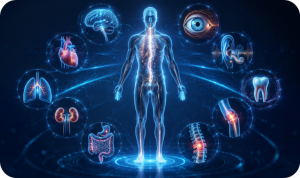

A nervous moment can change your breathing, while a heavy meal can leave you sluggish. Also, still remember how badly a poor night’s sleep can make you harder to focus the next day? These everyday experiences are reminders that the body does not work in isolated parts, and the systems share information, working dependently on one another to keep daily processes moving.
Learning how those systems work can make wellness feel less abstract, which can also help you find resources that match what you want to explore. Frequency Heals’ Explore Frequency Support by Body System collection organizes audios around different areas of the body, as this guide focuses on five connected systems: the nervous, circulatory, respiratory, digestive, and immune systems, and introduces two audios for each. However, frequency healing can only complement treatment plans and unable to work alone to treat the condition. Please seek a healthcare provider for medical advice.
The Body's Connected Support Network
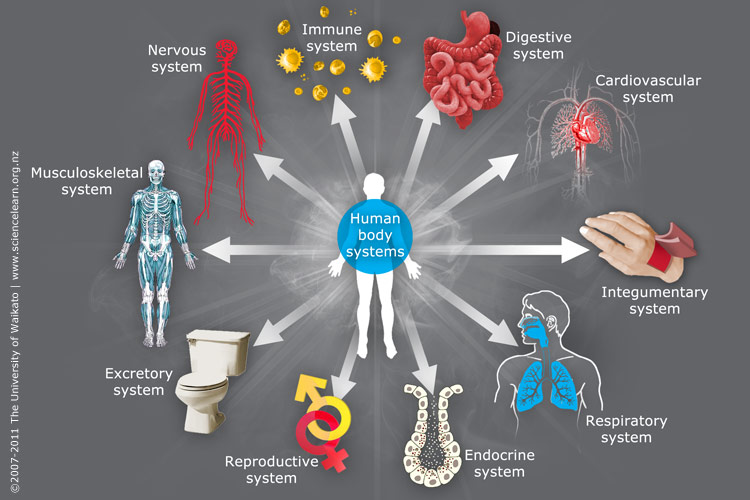
One way to understand the body is to picture a team. The nervous system coordinates signals, while the lungs bring oxygen into the body. The heart and blood vessels help to deliver it. The digestive system makes nutrients available from food, and the immune system recognizes and responds to things the body identifies as potential threats (MedlinePlus, n.d.-a, n.d.-b).
Although each system has a distinct role, their work overlaps, which is why a sensation, such as fatigue, discomfort, or a change in breathing doesn’t point to one cause on its own.
1. Brain & nervous system: the body’s communication network
The brain, spinal cord, and nerves help the body receive information and coordinate responses. They’re involved in movement, sensation, and many automatic processes. When life feels demanding, it is common to notice tension, restlessness, and difficulty concentrating (MedlinePlus, n.d.-a).
If you’ve ever felt constantly “on edge,” emotionally exhausted or stuck in survival mode, you might be dealing with a dysregulated nervous system. And people realized that stress doesn’t just affect your mind, but also your body (Monroe, 2025). However, this effect isn’t just a sign for de-stressing but also your body trying to help you regulate, aiding your metabolism to return to a stablized baseline.
Here are 7 great tips for healing a dysregulated nervous system
While sitting comfortably or winding down in the evening, it’s the perfect time to for a listening break centered on mental clarity or relaxation themes.
2. Heart & circulation: moving blood around the body
The heart pumps blood through a network of blood vessels, and circulation helps to carry oxygen-rich blood to the body and returns oxygen-poor blood to the lungs (National Heart, Lung, and Blood Institute [NHLBI], 2025). A constant process happening whether we are moving, resting, or asleep, keeping us alive
One way to maintain our heart health is to eat food that promotes cardiac health (NIH, 2025):
- Vegetables: leafy greens (spinach, collard greens, kale, cabbage), broccoli, and carrots
- Fruits: apples, bananas, oranges, pears, grapes, and prunes
- Whole grains: plain oatmeal, brown rice, and whole-grain bread or tortillas
- Fat-free or low-fatdairy: milk, cheese, or yogurt
- Protein-rich foods:
- Fish high in omega-3 fatty acids: salmon, tuna, and trout
- Lean meats: 95% lean ground beef or pork tenderloin or skinless chicken or turkey
- Eggs
- Nuts, seeds, andsoy products (tofu)
- Legumes: kidney beans, lentils, chickpeas, black-eyed peas, and lima beans
- Oils and foods high in monounsaturated and polyunsaturated fats:
- Canola, corn, olive, safflower, sesame, sunflower, and soybean oils (not coconut or palm oil)
- Nuts such as walnuts, almonds, and pine nuts
- Nut and seed butters
- Salmon and trout
- Seeds (sesame, sunflower, pumpkin, or flax)
- Avocados
- Tofu

3. Lungs & respiratory system: bringing oxygen in
Breathing does more than make the chest rise and fall. Air travels through the airways to tiny air sacs in the lungs, where oxygen moves into the blood and carbon dioxide leaves it. The respiratory and circulatory systems work together to supply oxygen to tissues throughout the body (NHLBI, n.d.).
If you want to explore audio topics related to breathing mechanics and the airways, try:
A comfortable listening session can also be paired with an easy lung capacity excercise for extra benefit:
This exercise reduces the number of breaths you take and keeps your airways open longer. More air is able to flow in and out of your lungs so you can be more physically active. To practice it, simply breathe in through your nose and breathe out at least twice as long through your mouth, with pursed lips (American Lung Association,2026)
As with pursed lip breathing, start by breathing in through your nose. Pay attention to how your belly fills up with air. You can put your hands lightly on your stomach, or place a tissue box on it, so you can be aware of your belly rising and falling. Breathe out through your mouth at least two to three times as long as your inhale. Be sure to relax your neck and shoulders as you retrain your diaphragm to take on the work of helping to fill and empty your lungs (American Lung Association,2026).
If breathing feels difficult, symptoms worsen, or you have a persistent cough, please contact a healthcare professional.
4. Digestive system: turning food into usable nutrients
Digestion involves more than the stomach and the intestines as the the gastrointestinal tract works with other organs such as the liver, pancreas, and gallbladder to break food down and make nutrients available for energy, growth, and cell repair (National Institute of Diabetes and Digestive and Kidney Diseases [NIDDK], n.d.). Even enzymes in your mouth and the act of chewing makes up a part of your digestive system.

People often notice digestion through familiar sensations such as fullness, bloating, or abdominal discomfort, which can have different causes. Here are some practical ways that you can add to your daily routine to prevent bloating (Cleveland Clinic, 2026):
- Eating enough fiber: High-fiber foods like beans and broccoli will cause more gas at first. But fiber will help eliminate the bacteria that’s stuck in your gut.
- Drink enough water: This will encourage movement along your digestive tract. It keeps the food that’s digesting from becoming too hard and compacted to pass through.
- Get active: Physical activity helps prevent water retention and keeps your bowels moving. It can also help prevent the rapid weight gain that often goes straight to your belly.
- Avoid processed foods: Processed foods are low in fiber and high in salt, preservatives and fat. Salt causes water retention, and fat slows down the digestive process because it takes longer to digest.
- Practice mindful eating: Chew thoroughly and stop eating before you’re full. Feeling full is a delayed reaction. That’s because it takes a while for the food you eat to reach your stomach.
- Notice sensitivities: Pay attention to which foods you’re sensitive to. Some people use a food journal to track how different ingredients make them feel.
5. Blood & immune system: recognition and response
Blood carries cells and other materials through the body, But the immune system has a different but related job of recognizing substances it identifies as foreign or potentially harmful and coordinates a response. When this process is misdirected or doesn’t work as expected, the effects can vary widely (MedlinePlus, n.d.-b).
Your immune system is your body’s first-line defense against invaders like germs as it helps to protect you from sickness and promotes healing when you’re unwell or injured. You can strengthen your immune system by eating nutritious foods, exercising and getting enough sleep.
When your immune system is working properly, it:
- Tells the difference between cells that are yoursand foreign ones.
- Activates and mobilizes to kill germs that may harm you.
- Ends an attack once the threat is gone.
- Learns about germs after you’ve had contact with them and develops antibodies against them.
- Sends out antibodies to destroy germs that try to enter your body in the future.
Many different conditions can weaken your immune system and make you more susceptible to infection. Conditions at birth are less common than those that develop later in life, like Type 2 diabetes and cancer. And at the other end of the spectrum, your immune system may react too strongly to invaders (real or perceived). It may start a fake attack when there’s no invader, or it may keep attacking after getting rid of a real one. An overactive immune system can lead to problems like autoimmune diseases or allergic reactions (Cleveland Clinic, 2023).
Explore the audio library
You don’t need to listen to every session at once. Choose a topic that catches your interest and start with a comfortable volume in a setting where you can relax. Notice whether the audio feels pleasant or distracting and pause or stop if it starts to cause discomfort.
You can also use the body-system categories as a starting point for further exploration. The collection includes additional areas beyond the five featured here and Frequency Heals will continue to update new sessions.
References
- American Lung Association (2026, June 22). Breathing Excercises. Link Title. https://www.lung.org/lung-health-diseases/wellness/breathing-exercises
- Cleveland Clinic (2026, May 4). Bloated Stomach. Link Title. https://my.clevelandclinic.org/health/symptoms/21740-bloated-stomach
- Cleveland Clinic (2023, Oct 20). Immune System. Link Title. https://my.clevelandclinic.org/health/body/21196-immune-system
- de Witte, M., Pinho, A. da S., Stams, G.-J., Moonen, X., Bos, A. E. R., & van Hooren, S. (2022). Music therapy for stress reduction: A systematic review and meta-analysis. Health Psychology Review, 16(1), 134–159. https://doi.org/10.1080/17437199.2020.1846580
- McCrary, J. M., Altenmüller, E., Kretschmer, C., & Scholz, D. S. (2022). Association of music interventions with health-related quality of life: A systematic review and meta-analysis. JAMA Network Open, 5(3), e223236. https://doi.org/10.1001/jamanetworkopen.2022.3236
- Monroe, K. A. (2025, December 8). How to heal a dysregulated nervous system: 7 tips to feel like yourself again. link title. https://www.bswhealth.com/blog/how-to-heal-a-dysregulated-nervous-system
- MedlinePlus. (n.d.-a). Brain and nerves. U.S. National Library of Medicine. https://medlineplus.gov/brainandnerves.html
- MedlinePlus. (n.d.-b). Immune system and disorders. U.S. National Library of Medicine. https://medlineplus.gov/immunesystemanddisorders.html
- National Heart, Lung, and Blood Institute. (n.d.). How the lungs work: The respiratory system. National Institutes of Health. https://www.nhlbi.nih.gov/health/lungs/respiratory-system
- NIH. (2025, December 10). Choose Heart-Healthy Foods. National Heart Lung and Blood Institute. https://www.nhlbi.nih.gov/health/heart-healthy-living/healthy-foods
- National Heart, Lung, and Blood Institute. (2025, June 25). How the heart works: How blood flows through the heart. National Institutes of Health. https://www.nhlbi.nih.gov/health/heart/blood-flow
- National Institute of Diabetes and Digestive and Kidney Diseases. (n.d.). Your digestive system & how it works. National Institutes of Health. https://www.niddk.nih.gov/health-information/digestive-diseases/digestive-system-how-it-works