When Frequencies Need to Reach Their Target Directly
Imagine you’ve just had knee surgery. The inflammation is acute, localized, and uncomfortable. You don’t need a system-wide approach right now — you need frequencies delivered precisely and immediately to the affected tissue. Or perhaps you’re dealing with a localized pathogen concern, a muscle injury, or joint pain that flares with activity. These are situations where directness matters.
Remote Mode is an excellent choice for long-term, systemic, or passive support — running protocols in the background while you live your life. But among the different ways frequencies are delivered, when the goal is immediate, targeted, localized delivery, Contact Mode offers something different: a direct electrical circuit through the body, with the generator’s frequencies riding that current into the tissue.
It is the most established delivery method in frequency therapy, with roots stretching back to early electrotherapy and the original Rife work of the 1930s. For practitioners who want hands-on, session-by-session engagement — those who want to feel something happening and to actively direct the session — Contact Mode remains a core and indispensable tool. It is also, for many who are new to frequency therapy, the mode where they first genuinely experience how frequency-based support feels in the body.
What Is Contact Mode?
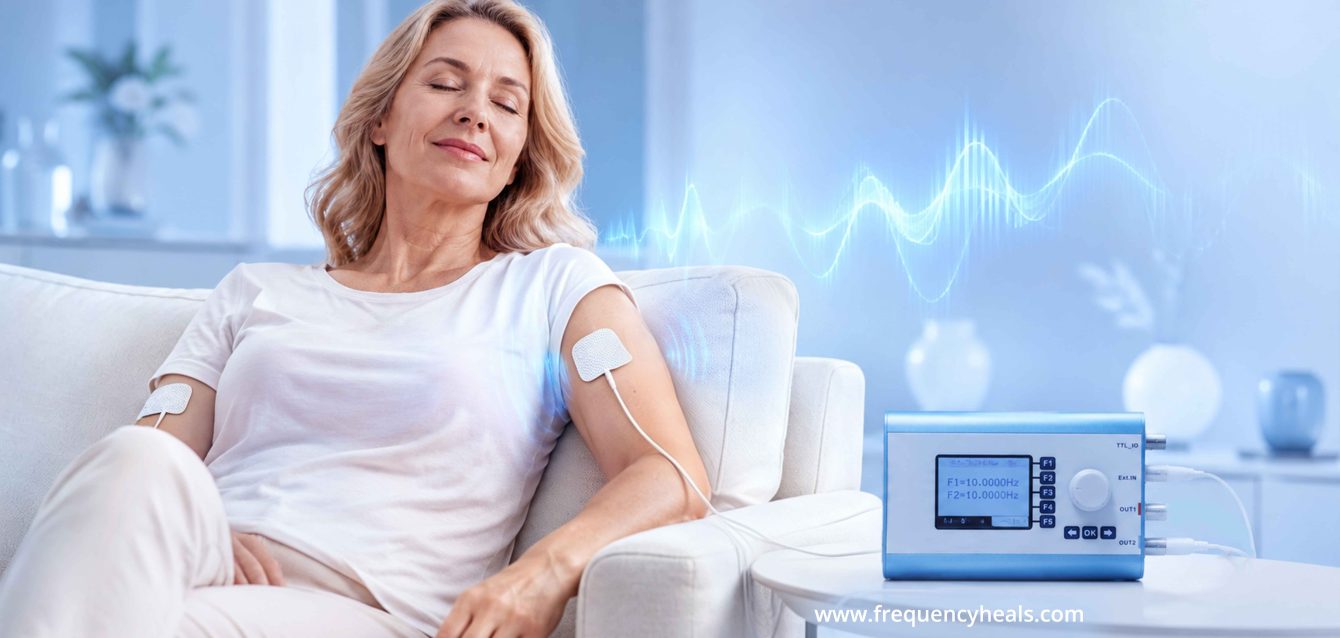
Contact Mode works by completing an electrical circuit through the body. Two electrodes — placed at different points on the skin — are connected to the generator. When the generator runs, it produces a low-intensity electrical signal, typically in the milliamp range, that enters through one electrode, travels through the tissue between the two contact points, and exits through the other electrode [1].
The target frequency is carried by this current into the body. Because the signal follows the path between the two electrodes, the practitioner has meaningful control over the route — choosing contact points to direct the current through the tissue region of interest. This directionality is one of Contact Mode’s key advantages over non-contact methods.
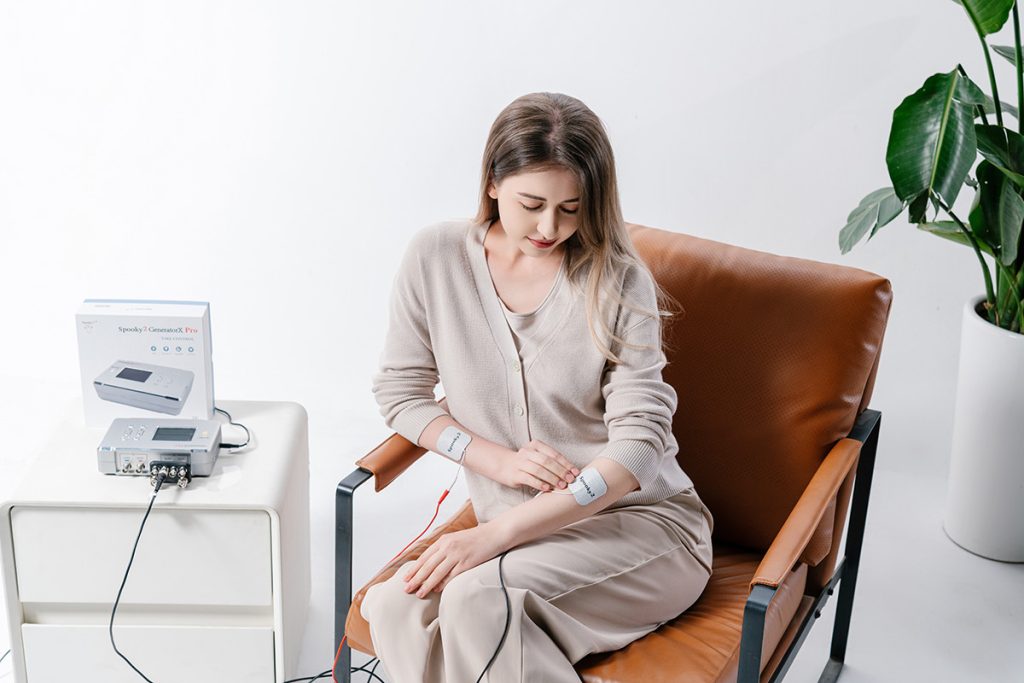
In systems like Spooky2, Contact Mode sessions typically run at amplitudes of 14 to 20 volts through the signal Boost, elevated into the range needed for effective tissue penetration. The software includes dedicated preset configurations for Contact Mode — separating healing-oriented and killing-oriented protocols — so practitioners can load appropriate settings without manually configuring parameters from scratch [2].
An important design detail worth understanding: Spooky2’s Contact Mode automatically reverses polarity of the electrical signal every 60 seconds — a deliberate safety feature designed to prevent the buildup of acidic byproducts under electrode contacts that would otherwise occur with sustained unidirectional current, potentially causing skin irritation during extended sessions [2].
Contact Mode Accessories: Your Options Explained
Several electrode types are compatible with Contact Mode across different devices and manufacturers, each suited to different applications and preferences.
- Hand cylinders: Metal cylinders — one in each hand — are the simplest and most accessible starting point. They require no adhesive and provide a broad contact pathway through the upper body, arms, and torso. Well-suited for general wellness sessions, immune support, and pathogen-clearing programs where broad tissue coverage is preferred.
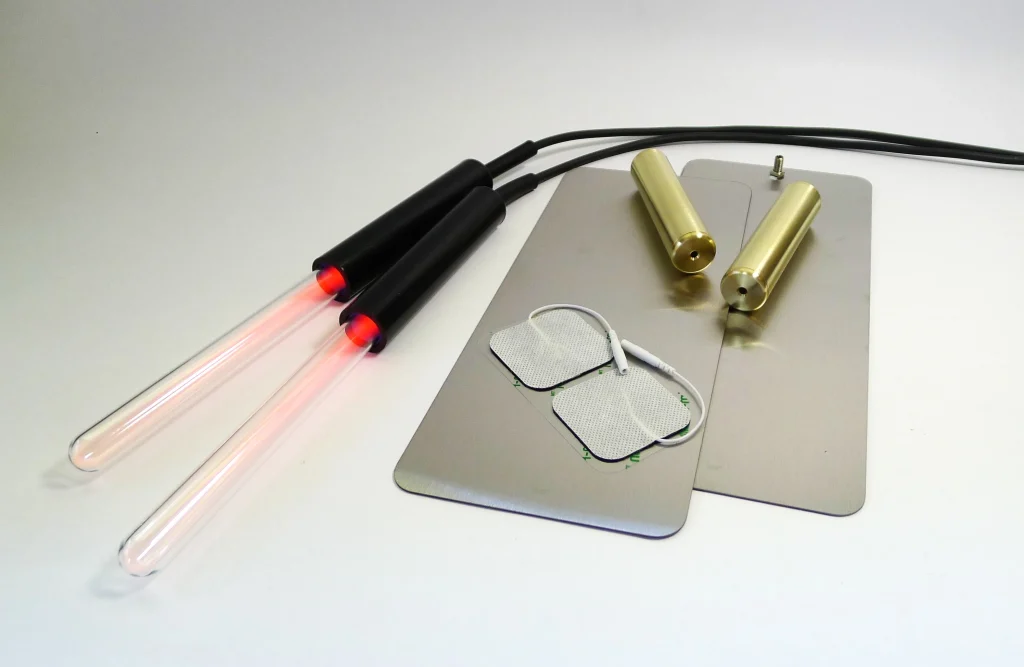
- TENS pads: Adhesive gel pads offering the most precise electrode placement, allowing current to be routed directly through a specific joint, muscle group, or organ region. The preferred choice when localization matters — post-injury recovery, joint inflammation, or targeted pathogen protocols. Pads should be repositioned periodically during sessions longer than 30 minutes.
- Silver gloves, socks, and bands: Conductive fabric accessories covering larger surface areas — the entire hand, foot, wrist, or ankle — providing even, distributed contact across a limb or extremity. Useful for neuropathy support, peripheral circulation concerns, or when broad coverage of a specific area is preferred.
- Footplates: Conductive plates placed under the feet, a passive option for practitioners who prefer not to hold anything. The current path runs from sole to sole through the lower body, comfortable for extended sessions in a chair or recliner.
For extended or overnight Contact Mode sessions on Spooky2 systems, the Colloidal Silver port on the Boost provides a lower-current pathway that reduces intensity to a level safe for sustained use — the recommended configuration for any session intended to run longer than a typical waking-hour window [1].
Understanding Waveforms in Contact Mode
One aspect of Contact Mode in modern Rife systems like Spooky2 that distinguishes them from simpler electrotherapy devices is the depth of waveform control available. Different waveforms interact with biological tissue differently, and understanding the key options helps practitioners get the most from their sessions.
The square wave is the most commonly used waveform in Contact Mode. It switches abruptly between maximum and minimum values, creating sharp electrical pulses associated with stronger stimulation of cell membranes and, in killing protocols, with the electroporation effect — brief disruption of pathogen cell membranes that increases vulnerability to the target frequency [2].
The H-Bomb waveform — formally the Universal Square H-Bomb — is a modulated square wave combining multiple harmonic layers into a single complex waveform. It is broadly described as an all-in-one option suitable when practitioners are unsure whether to prioritize healing or killing frequencies, or when wide-spectrum coverage within a single session is preferred. For those new to Contact Mode who want a practical starting preset, the H-Bomb configuration is a reliable first choice [2].
For low-frequency protocols operating below 10 kHz, direct Contact Mode delivery can produce noticeable skin sensation because the low-frequency electrical signal is directly perceptible to nerve endings. A dynamic carrier wave — a carrier frequency of 1 MHz or higher applied to the second output channel — modulates the low target frequency onto a higher-frequency carrier that passes through tissue with much less sensation while retaining the therapeutic effect. This technique significantly improves comfort in low-frequency contact sessions without compromising efficacy [3].

Market Comparison: Contact Mode Devices
Contact Mode is offered across several manufacturers. The table below compares key specifications based on publicly available information. Always verify current pricing and specifications directly with manufacturers before purchasing.
| Specification | Spooky2 (GX Pro) | GB4000 | BCX Ultra | TrueRife F-122 |
|---|---|---|---|---|
| Entry price (approx.) | ~$400 (XM kit)/ ~$950 (GX Pro kit) | ~$850 (generator only) | ~$2,500–$3,000 | ~$3,500+ |
| Frequency range | 0-5 MHz/0–40 MHz | 1 Hz–20 MHz | 1 Hz–4 MHz | 1 Hz–4 MHz |
| Frequency resolution | 8 decimal places (GX Pro) | 0.01 Hz | Crystal-based precision | Not publicly specified |
| Frequency database | 70,000+ programs | User-programmed (2000 channels) | 1,424 factory presets + 256 user | 2,400+ programs |
| Carrier wave | No (direct / dynamic carrier option) | Yes (3.1 MHz RF) | Yes (1 Hz–4 MHz variable) | Not standard in contact |
| Built-in biofeedback | Yes (GX Pro — 6 min scan) | No | No | No |
| Standalone operation | Yes (GX Pro kit, up to 30 programs) | Yes | Yes | Yes |
| Community / support | Very large (~100,000 members) | Manufacturer + dealer support | Manufacturer support | 175+ reviews, in-house support |
An important principle that applies across all Contact Mode devices, emphasized by frequency therapy practitioners and device designers alike: higher power output does not equal better therapeutic results. Excessive power can be counterproductive and, at extreme levels, harmful to tissue. What matters most is precision — delivering the correct frequency accurately and consistently. A lower-power device with high frequency resolution and a well-curated program database will typically outperform a high-power device with poor precision [1].
How to Choose the Right Contact Device
- Budget: Entry-level contact kits from Spooky2 offer the most accessible starting point. Higher-priced systems like BCX Ultra and TrueRife include more accessories and direct factory support in the base price, which may suit practitioners running in-person client sessions.
- Intended use: For practitioners wanting Contact Mode as one tool within a larger multi-modal practice — combining Remote, PEMF, Scalar, and Plasma — Spooky2’s modular ecosystem is flexible and cost-effective. For those wanting a dedicated standalone contact device with minimal software complexity, GB4000 or BCX Ultra may suit better.
- Frequency database: Spooky2’s 70,000+ program library, expanded continuously through community contributions, is the largest available. A significant advantage for practitioners exploring a wide range of conditions over time.
- Biofeedback capability: Only Spooky2’s GX Pro includes integrated biofeedback scanning — identifying the frequencies the body responds to most strongly before a session. No equivalent is available in competing contact-mode devices at any price point.
- Community and training resources: The Spooky2 community is the largest of any Rife-based system, with free courses, certified trainers, and an active global network. For practitioners new to frequency therapy, this support infrastructure is often as important as the hardware itself.
Who Is Contact Mode For?
- People recovering from sports or exercise injuries where a specific muscle, tendon, or joint is the primary target
- Those dealing with localized joint, muscle, or soft tissue inflammation where precise electrode placement can direct current through the affected area
- People addressing pathogen-related concerns where direct, higher-intensity frequency delivery is preferred
- Practitioners who prefer active, session-based engagement — those who want to sit with their device, run a defined session, and feel the process
- Practitioners running in-person sessions with clients who want professional-grade direct delivery as part of a structured approach
Safety Guidelines
- Current intensity: Always begin at the lowest available amplitude setting. Increase gradually until a mild tingling is felt at the electrode contact points — and stop there. A sensation that is sharp, uncomfortable, or painful is a clear signal to reduce the setting immediately.
- Contraindications: Consult a healthcare professional before using Contact Mode if you have a pacemaker or any implanted electrical device, if you are pregnant, or if you have a history of epilepsy. Do not place electrodes in a configuration where the current path crosses the chest region over the heart [4].
- Session management: During acute phases, shorter and more frequent sessions are generally preferred. For overnight or extended sessions on Spooky2 systems, use the Boost’s Colloidal Silver port for reduced-current safe sustained delivery.
- Skin care: For sessions longer than 30 minutes using TENS pads, rotate placement periodically. Replace pads regularly — reused pads lose adhesion and create uneven current distribution. Keep skin clean and dry at contact sites before applying adhesive pads.
- Electrode placement: Avoid placing electrodes over open wounds, inflamed or broken skin, or areas with reduced sensation. For abdominal placement, avoid a direct path over the stomach or intestines during active digestion.
References
- [1] Spooky2. (2024). Contact Mode Overview and Boost Safety Settings.
- [2] Spooky2. (2026). A Practical User Guide to Spooky2 Contact Mode.
- [3] Spooky2 Tools. (2020). Optimizing Contact and Plasma Preset — Dynamic Carrier Wave Technique.
- [4] Nelson, R. M., & Currier, D. P. (Eds.). (1991). Clinical Electrotherapy (2nd ed.). Appleton & Lange.
- [5] Schwartz, R. G. (2009). Principles of electrotherapy. In Physical Medicine and Rehabilitation (3rd ed.). Elsevier.
- [6] GB4000. (2025). GB4000 Technical Specifications.
- [7] BCX Ultra. (2025). BCX Ultra Deluxe Specifications.
- [8] Laufer, Y., & Vallye, N. (2010). Effects of electrical stimulation on pain and function in chronic musculoskeletal conditions. Physical Therapy Reviews, 15(2), 91–101.