

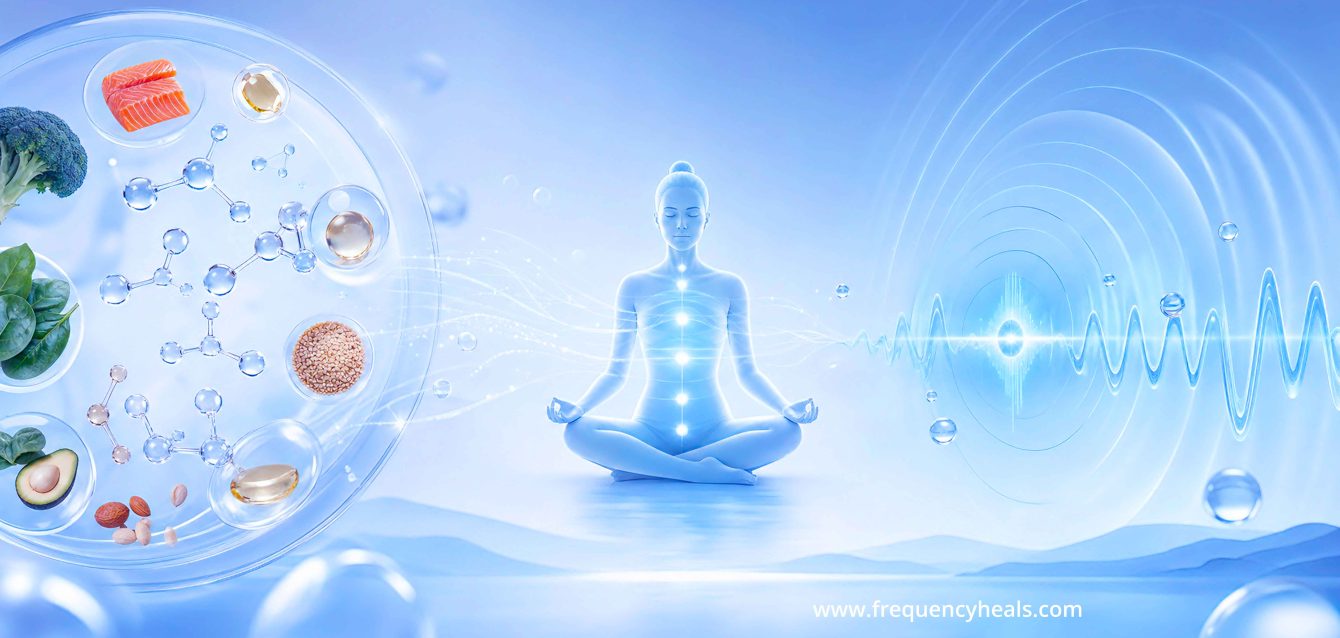
Most people who take an interest in their health are familiar with supplements. A morning vitamin C, a magnesium capsule before bed, an omega-3 with lunch. The logic is straightforward: the body needs certain nutrients to function well, and supplementation fills the gaps that diet alone may leave.
But a quietly growing area of frequency-based wellness asks a different kind of question. Rather than introducing a nutrient molecule into the body, what if it were possible to work with the frequency pattern associated with that substance — its energetic signature — and explore whether the body responds to that information in a meaningful way?
This is the territory of frequency simulation: a concept that sits at the intersection of biophysics, information medicine, and the broader frequency healing field. It is genuinely speculative in places, genuinely interesting in others, and genuinely important to understand clearly before forming a view on it. This article maps that territory honestly — what frequency simulation is, why practitioners find it compelling, how it is implemented in practice, and where the scientific conversation currently stands.
1. What Frequency Simulation Means
Every physical substance has a characteristic set of electromagnetic properties. At the molecular level, atoms and chemical bonds vibrate at specific frequencies — frequencies determined by the masses of the atoms involved and the strengths of the bonds between them. These vibrational signatures are so precise and reproducible that they form the basis of infrared spectroscopy, a standard analytical chemistry technique used daily in laboratories around the world to identify compounds [1].
Frequency simulation, in the context of wellness technology, is the practice of delivering these characteristic frequency signatures to the body — without the physical substance itself being present. Instead of ingesting a molecule of vitamin C, for example, a device delivers the electromagnetic frequency pattern associated with vitamin C’s molecular structure. Instead of swallowing a magnesium supplement, a frequency generator runs a program corresponding to magnesium’s characteristic oscillatory properties.
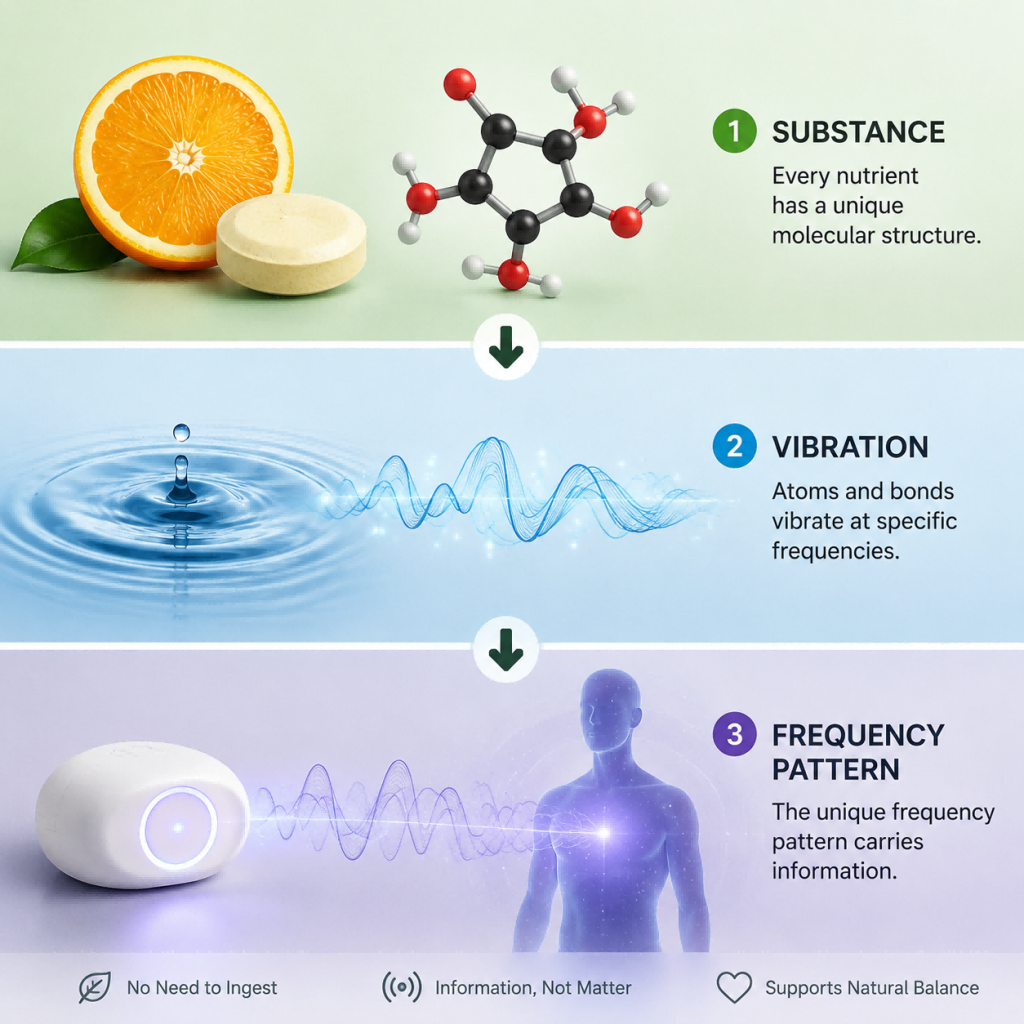
The underlying premise is that the body responds not only to the biochemical presence of a substance but also to the informational pattern it carries — and that this pattern can, in principle, be encoded and transmitted through frequency-based means. This is a significant conceptual claim, and it is worth being clear that it remains outside mainstream scientific consensus. What is not in dispute is the starting point: substances genuinely do have measurable electromagnetic frequency characteristics. The question — still open — is whether and how the body responds when those frequency characteristics are delivered without the substance [2].
Different systems use different terminology for this concept. Spooky2 calls these programs Molecular Weight (MW) frequencies — calculated from the monoisotopic mass of the substance in question and converted into a corresponding frequency value. The Infopathy platform calls its digital frequency signatures ‘Infoceuticals’ (ICs) — electromagnetic signals recorded from substances or generated algorithmically and delivered to water or the body via dedicated hardware [3]. Both approaches share the same core idea: that a substance’s informational signature can be separated from its physical form and transmitted independently.
2. Why Frequency Simulation Is Used
Understanding why practitioners turn to frequency simulation requires understanding the limitations they are working around — and the properties they are hoping to preserve.
Accessibility and cost
Quality supplements are expensive, particularly for people running comprehensive nutritional protocols over extended periods. Frequency simulation, once a device is in place, effectively eliminates the ongoing cost of the supplements being simulated. Spooky2’s database includes approximately 22,000 MW frequency programs covering vitamins, minerals, herbs, amino acids, pharmaceutical compounds, and other substances — all accessible at no additional cost through the software [4]. For practitioners working with a wide range of nutritional targets, this represents a significant practical advantage.
Avoiding side effects and interactions
Oral supplementation is subject to a long chain of variables before a nutrient reaches the cellular level: digestive efficiency, gut microbiome status, liver processing, individual absorption genetics, and interaction with other substances consumed simultaneously. The bioavailability of orally administered nutrients varies enormously between individuals and contexts. Frequency simulation, in theory, bypasses this entire chain — delivering information directly without any dependence on digestive or absorption pathways [2].
Avoiding side effects and interactions
Physical supplementation carries risks that frequency delivery does not — at least not in the same form. High-dose vitamins can cause toxicity. Herbal supplements interact with medications. Some compounds are contraindicated for specific health conditions. Because frequency simulation delivers informational patterns rather than biochemical quantities, the risks associated with physical overdose and drug-nutrient interactions are not directly applicable [3]. Practitioners in the Spooky2 community consistently report not experiencing the side effects associated with the physical compounds whose frequencies they run.
Exploring complementary support
For many practitioners, frequency simulation is not a replacement for supplementation but an additional layer of support. Running MW frequencies for a nutrient they are also physically taking is used to reinforce and extend the effect — providing continuous frequency-level support between doses, or during periods when physical supplementation is paused. In this framing, frequency simulation is a complement to conventional nutritional practice rather than a competitor to it.
3. How Frequency Simulation Works
The practical implementation of frequency simulation varies across different platforms and devices, but follows a common conceptual structure: a substance’s frequency signature is identified, encoded into a deliverable format, and transmitted to the body through one of the available frequency delivery pathways.
Molecular Weight (MW) frequencies in Spooky2
In Spooky2’s approach, MW frequencies are calculated from the monoisotopic mass of a substance — a fundamental physical property of every molecule, determined by the combined atomic masses of its most abundant constituent atoms. Each monoisotopic mass corresponds to a specific frequency value when converted using a standard formula. This frequency is then delivered through any of Spooky2’s delivery modes — Remote, Contact, PEMF, Plasma, or Scalar — depending on the practitioner’s preference and protocol [4].
It must be noted that the MW frequencies deliver informational content, not physical dose. There is no conversion between frequency delivery and the amount of a substance — a practitioner cannot calculate how many milligrams of magnesium a MW frequency session is equivalent to, because those are different categories of action entirely. The frequency delivers the informational signature of the substance; the physical quantity is a biochemical concept that does not apply in this context [4].
Spooky2’s MW database covers approximately 22,000 programs including vitamins (A, B complex, C, D, E, K), minerals (magnesium, zinc, selenium, calcium), amino acids, herbal compounds, omega fatty acids, and a range of pharmaceutical molecules. All delivery modes are compatible with MW programs, though practitioners often prefer Remote Mode for long-running nutritional support protocols — allowing the session to run continuously through the day and night without any active session management [4].
Infoceuticals (ICs) via the Infopathy platform
Infopathy takes a related but technically distinct approach. Its library of over 4,000 Infoceuticals includes both algorithmically generated frequency signatures and electromagnetically recorded signals from physical substances. These are stored digitally on the Infopathy platform and can be transferred to the body through three modes: via audio frequencies played through the Glowing IC Pad (which converts audio signals into electromagnetic output), via the IC Hummer (a wireless ultrasonic device), or via PEMF delivery through the Circuit IC Pad [3].
The PEMF delivery mode of the Infopathy system is particularly notable because it connects frequency simulation most directly to an established evidence base. When a substance’s IC signal is delivered through a PEMF-capable pad, the delivery mechanism itself — pulsed electromagnetic field stimulation — is the same technology with FDA approval for bone healing and clinical research support across multiple conditions. What remains less established is whether the specific IC content encoded within that PEMF signal produces additional effects beyond the PEMF itself [3].
Molecular Scalar delivery
In systems using scalar wave technology, such as Spooky2 Scalar, frequency simulation can also occur through the Molecular Scalar mode. A physical substance — a supplement tablet, a herbal extract, an essential oil — is placed on the Receiver coil of the scalar system, and its molecular frequency signature is carried through the scalar field to the user sitting between the two coils. This is a form of frequency simulation that uses the physical substance as its source rather than a pre-calculated database value — the substance’s own electromagnetic properties are transmitted through the field without the substance entering the body [5].
4. Real-World Applications
In practice, frequency simulation is used across a wide range of wellness contexts. Here are some of the most common applications reported within the practitioner community:
- Nutritional support protocols: Running MW or IC frequencies for vitamins and minerals as a daily background protocol — either as a standalone approach or alongside physical supplementation. Common targets include vitamin D, B12, magnesium, zinc, and omega-3 fatty acids — nutrients that are widely deficient in modern populations and commonly supplemented.
- Herbal and botanical support: Frequency programs exist for a wide range of medicinal herbs like curcumin, ashwagandha etc, allowing practitioners to explore the frequency signatures of botanicals that might be expensive, difficult to source, or contraindicated in physical form for specific individuals.
- Exploring pharmaceutical frequencies: Some practitioners run MW frequencies for pharmaceutical compounds — including common medications — as a complementary layer alongside prescribed treatment. This is an area where the disclaimer at the end of this article is particularly important: frequency simulation of a medication is categorically not the same as taking the medication, and no frequency program should be used as a substitute for prescribed medical treatment.
- Travel and access limitations: For practitioners traveling internationally or living in regions where specific supplements are unavailable or prohibitively expensive, frequency simulation offers a practical workaround. The entire Spooky2 MW database and the Infopathy platform are accessible anywhere with a device and an internet connection.
- Sensitivity and reactivity: Some individuals are highly reactive to physical supplements — experiencing digestive distress, allergic responses, or other adverse reactions. Frequency simulation allows such practitioners to explore the informational signature of a substance without the physical tolerance concerns.
- Stacking with physical supplementation: Running frequency simulation of a supplement during the hours between physical doses — or during sleep, via Remote Mode — to provide continuous informational support alongside the biochemical effect of the physical compound.
Explore our curated frequency audio collection for supplements and essential oils, designed to support your daily wellness routine.
The Scientific Conversation: Where Things Stand
It is important to discuss frequency simulation by addressing the scientific landscape clearly.
The starting point — that molecules have characteristic electromagnetic frequencies, and that these frequencies are measurable and reproducible — is established science. Infrared and Raman spectroscopy are built on exactly this foundation, and they are among the most widely used analytical techniques in chemistry and pharmaceutical research [1].
The biophysical research of figures like Luc Montagnier (whose work on electromagnetic signals from DNA was referenced in the Imprinting article) and the theoretical frameworks of researchers working in information medicine suggest that electromagnetic signals from biological molecules may have measurable effects on biological systems even in the absence of the physical molecule [2]. Some in vitro studies have shown effects of electromagnetically transferred molecular signals on cellular systems — anti-parasitic, anti-fungal, and anti-bacterial effects in controlled laboratory conditions [3]. These findings are preliminary, have not been widely replicated to mainstream satisfaction, and are not accepted as established by mainstream pharmacology or medicine.
What the broader evidence base does not yet provide is clinical trial data demonstrating that frequency simulation of a nutrient or compound produces the same physiological outcomes as physical supplementation with that compound. The practitioner community’s experience — which is substantial and largely positive — is experiential evidence, not clinical evidence. The distinction matters for honest communication, even if experiential evidence is not without value.
Frequency simulation is best understood, at this stage of the science, as a complementary exploratory practice with a coherent theoretical basis and a growing practitioner evidence base — not as a clinically validated substitute for established nutritional or medical interventions.
5. Disclaimer
The information in this article is provided for educational purposes only. Frequency simulation — including Molecular Weight (MW) frequency programs, Infoceuticals, Molecular Scalar delivery, and all related approaches — is not a substitute for medical diagnosis, medical treatment, or prescribed medication.
Frequency programs for pharmaceutical compounds, medications, or therapeutic substances do not replicate the biochemical action of those substances. Running a frequency program associated with a medication is not the same as taking that medication, and should never be used as a replacement for prescribed or clinically indicated treatment. Anyone currently taking prescribed medication should continue to do so under medical supervision and should not discontinue or modify their medication based on frequency-based approaches without consulting a qualified healthcare professional.
Frequency simulation has not been evaluated or approved by the FDA, the MHRA, or any other national regulatory body as a treatment, cure, or prevention for any disease or medical condition. The experiences reported by practitioners and users represent individual accounts and should not be interpreted as clinical evidence of efficacy.
If you are experiencing a health concern, please consult a qualified healthcare professional. Frequency-based wellness tools are best used as part of a broader, professionally supervised approach to health — not as standalone treatments for medical conditions.
References
- [1] Atkins, P., & de Paula, J. (2014). Physical Chemistry: Quanta, Matter, and Change (2nd ed.). Oxford University Press. [Chapter on molecular vibration and infrared spectroscopy]
- [2] Montagnier, L., Aïssa, J., Ferris, S., Montagnier, J. L., & Lavallee, C. (2009). Electromagnetic signals are produced by aqueous nanostructures derived from bacterial DNA sequences. Interdisciplinary Sciences: Computational Life Sciences, 1(2), 81–90.
- [3] Infopathy. (2026). How Infoceuticals Work: IC Technology and Biophysical Signals.
- [4] Spooky2. (2025). Spooky2 MW Ingredient Frequencies for Serious Health Support.
- [5] Spooky2 Scalar. (2023). Molecular Scalar: How Substance Signatures Are Transmitted Through the Scalar Field.
- [6] Bellavite, P., & Signorini, A. (2002). The Emerging Science of Homeopathy: Complexity, Biodynamics, and Nanopharmacology (2nd ed.). North Atlantic Books. [Background on information transfer in dilute biological systems]
- [7] Oschman, J. L. (2000). Energy Medicine: The Scientific Basis. Churchill Livingstone. [Chapter on electromagnetic signalling and information transfer in biological systems]
- [8] Davenas, E., Beauvais, F., Amara, J., Oberbaum, M., Robinzon, B., Miadonna, A., … & Benveniste, J. (1988). Human basophil degranulation triggered by very dilute antiserum against IgE. Nature, 333(6176), 816–818.





Comments
I love these frequencies!! Keep them coming
Hi Rhiannon 💜
Thank you so much for your kind words! 😊
We’re so happy to hear that you’re enjoying the frequency sessions. Your support and encouragement mean a lot to us.
We’ll continue creating and sharing more frequency content for our community. Stay tuned for more sessions and updates! 🎧✨
Thank you for being part of the Frequency Heals journey. 💙
I desire nerve healing in my left leg and hip as well as osteoporosis support.
Thank you.
Hi Bonnie 💜
Thank you for reaching out. 😊
For nerve and hip wellness support, you may explore this session:
🌿 Sciatic Nerve Discomfort Frequency for Shooting Pain & Hip Ease
https://www.frequencyheals.com/frequencies/sciatic-nerve-discomfort-frequency-for-shooting-pain-hip-ease/
For bone wellness support, you may also explore:
🦴 Osteoporosis Support Frequency for Bone Density & Skeletal Strength
https://www.frequencyheals.com/frequencies/osteoporosis-support-frequency-for-bone-density-skeletal-strength/
We hope these sessions can be a supportive addition to your wellness routine. Please listen at a comfortable volume and explore them at your own pace. 🎧
Everyone’s experience with frequencies can be different, and these sessions are not intended to replace professional medical advice or treatment.
Thank you for being part of the Frequency Heals community. We wish you all the best on your wellness journey. 💙✨
Hola, thank you so much for all your help, could you help me telling me what frequency is for help with some thing about immune sistem that doctor don’t find? I feel is some thing about collagen problem, ( sorry my English )
Hi Nora 💜
Thank you for reaching out and sharing your thoughts with us. We’re sorry to hear that you’re looking for more support with your wellness journey.
We’d love to understand your situation better so we can provide more relevant information. Could you please share a little more about what you’re experiencing?
For example:
• What kind of immune system concerns are you looking for support with?
• How long have you been experiencing this?
• Are there any specific symptoms or areas you would like to focus on?
• When you mentioned collagen problems, could you tell us more about what you mean?
Once we understand your needs better, we’ll be happy to guide you toward some suitable resources from our library. 💙
Thank you, and we look forward to hearing more about your journey. ✨
I am suffering from cronic back pain and almost on bed rest. Please share some more details likely I may get some relief. Thanks a lot.
Hi Bhikhalal 💜
Thank you for sharing your experience with us. We’re sorry to hear that you’ve been dealing with chronic back pain. 🙏
Based on what you described, you may explore this frequency session for back and spine wellness support:
🌿 Full Back Pain Frequency | Spinal Health & Muscle Tension Support
https://www.frequencyheals.com/frequencies/full-back-pain-frequency-for-spinal-health-muscle-tension/
We recommend exploring at your own pace and listening in a comfortable way. We hope these resources can support your wellness journey. 💙
Thank you for being part of the Frequency Heals community. ✨
Greetings. Has any research been done regarding Leela Quantum Tech’s technology?
Hi Ronnie, thank you for your question. Leela Quantum Tech is a wellness brand that focuses on what they describe as quantum energy technology and information-based wellness solutions. Their products include Quantum Bloc devices, wearable Quantum Capsules, and information/frequency cards, which the company presents as tools designed to support energy balance, environmental harmony, and overall wellness.
Reviews and opinions about Leela Quantum Tech are quite mixed. Some users, biohacking enthusiasts, and alternative wellness practitioners share positive personal experiences, reporting benefits such as feeling more grounded, improved relaxation, better sleep, increased focus, and a greater sense of balance. The company also highlights its own research and testing related to its technology.
At the same time, independent scientific validation of these specific quantum energy concepts and products remains limited. Some scientists and physics communities question the use of terms such as “quantum energy fields” in consumer wellness products and point out that reported benefits may also involve factors such as personal perception or the placebo effect.
We encourage everyone to explore information from multiple sources, review the available evidence, and make an informed decision based on their own understanding and experience.
Tenez-moi au courant
Bonjour Karine 💜
Merci pour votre message. 😊
Nous avons bien vu que vous êtes déjà inscrite à nos mises à jour. Nous vous tiendrons informée de nos nouveaux contenus, ressources et actualités. ✨
Merci de faire partie de la communauté Frequency Heals. Nous sommes ravis de partager ce voyage avec vous. 💙
À bientôt ! 🌿
I have Chronic Fatigue Disease and aggressive Fibromyalgia. I also struggle with throat pain directly associated with my vocal folds (this tends to present in many with CFD). I am a singer and possibly going on tour soon. Physical energy, brain fog, and pain are serious issues now. What do you reccomended to heal at the root of the problem and not just address symptoms?
Hi Ielan 💙
Thank you for sharing more about what you’re going through. We understand why you’d want to look beyond individual symptoms, especially when fatigue, pain, brain fog, and throat discomfort are affecting your daily life and singing. 🙏
Based on the concerns you mentioned, you can explore these frequency resources:
🎧 Chronic Fatigue Support
https://www.frequencyheals.com/frequencies/overcome-chronic-fatigue-sound-frequency-healing/
🎧 Fibromyalgia Support | Pain, Fatigue & Brain Fog
https://www.frequencyheals.com/frequencies/fibromyalgia-healing-frequency-for-pain-fatigue-brain-fog/
🎧 Respiratory System & Throat Support
https://www.frequencyheals.com/frequencies/balance-respiratory-system-microbial-for-healthy-lungs-throat/
These sessions are intended as complementary wellness resources, rather than treatments that can address or eliminate an underlying disease. There isn’t a single frequency we can recommend as a way to “heal the root cause,” because conditions such as chronic fatigue and fibromyalgia can have complex and individual underlying factors. 🌿
Since you’re experiencing significant fatigue, pain, brain fog, and ongoing vocal-fold/throat symptoms, especially as a singer, we’d encourage you to continue working with qualified healthcare professionals to identify and address the underlying causes.
You can explore the frequency sessions alongside appropriate medical care and listen at a comfortable volume. 🎧💙
Gracias por su generosidad , Bienestar y bella vida. Thank you for your generosity, well-being, and beautiful life.
Hola Carolina 💙
¡Muchas gracias por tus amables palabras! 🙏😊
Nos alegra mucho saber que valoras nuestro trabajo y que estos conocimientos pueden acompañarte en tu camino hacia el bienestar. 🌿✨
Te deseamos también mucho bienestar, salud y una hermosa vida. 💙
¡Gracias por ser parte de la comunidad de Frequency Heals! 🙏🌸