

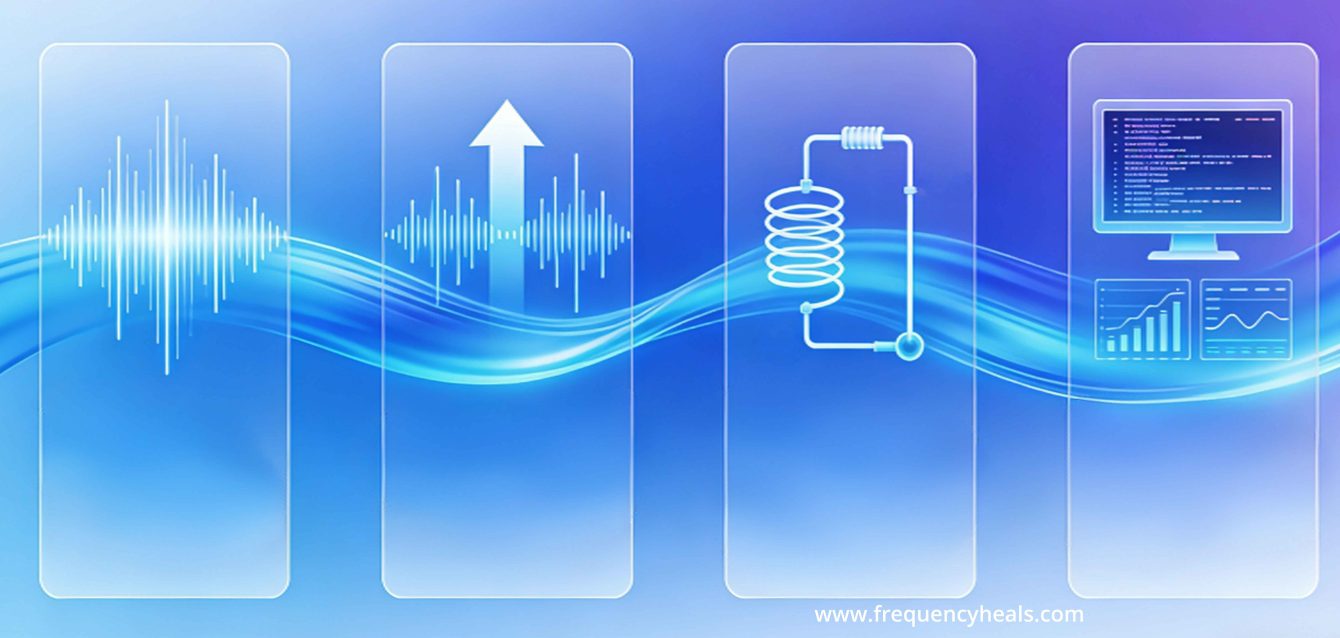
Understanding frequency therapy devices becomes much less mysterious when you know what’s actually inside them. These aren’t magical boxes producing unexplainable effects — they’re engineered systems built from specific, understandable components that work together in logical ways to generate and deliver therapeutic frequencies.
After reviewing the diverse range of frequency devices available on the market — from PEMF mat systems like iMRS and Omnium1, to plasma-based Rife generators like GB4000 and various DIY systems, to contact electrode devices, to scalar wave systems — clear patterns emerge. While implementation varies significantly across device types, all frequency therapy devices share fundamental functional components organized around the same basic goal: generating precise frequencies and delivering them to the body.
This article breaks down the essential components found across different types of frequency devices, explains what each does, and shows how they work together to produce therapeutic frequency signals.
Component 1: The Frequency Generation System (The Functional Heart)
Regardless of delivery method, every frequency device needs a system that creates precise electrical signals oscillating at specific therapeutic frequencies. This is the functional heart that defines what the device can do [1][2].
- Digital signal generators form the core of modern systems. These use programmable microcontrollers or dedicated frequency synthesis chips to produce electrical waveforms at exact frequencies. In PEMF devices like the iMRS Prime and Omnium1, frequency generators operate primarily in the 0.5-30 Hz range. In Rife-type generators and plasma devices, frequency ranges extend much higher — the GB4000 system generates frequencies from 1 Hz to 20 MHz (20,000,000 Hz), while contact electrode systems typically work in ranges from 1 Hz to several hundred thousand Hz [1][2][3].
- Waveform generation capabilities vary by system type. PEMF devices typically use sawtooth or square waves based on NASA research suggesting these shapes produce more effective cellular stimulation. Rife generators often provide multiple waveform options — sine waves, square waves, triangle waves, pulsed square waves — with research suggesting different waveforms may affect biological systems differently [2][4]. Advanced systems allow users to select waveform types based on application.
- Programmability and control separate sophisticated from basic devices. Entry-level systems offer simple preset frequency selections. Mid-range devices provide multiple pre-programmed therapeutic protocols — the iMRS Prime includes seven “Fast-Start” programs, while the Omnium1 offers five preset modes for common applications. Advanced Rife generators may include software control with extensive frequency databases, biofeedback scanning capabilities, and the ability to create completely custom frequency sequences [2][3][5].
- Frequency accuracy and stability critically affect therapeutic outcomes. Quality generators maintain frequency precision within tiny fractions of one percent of specified values. Lower-quality systems may drift several percentage points from stated frequencies, potentially reducing effectiveness [1][2].
The frequency generation system determines what therapeutic frequencies the device produces. All other components exist to amplify, modulate, and deliver what this system specifies.
Component 2: Signal Amplification and Modulation
Frequency generators create precise signals, but initially these exist at low power levels insufficient for therapeutic effect. Amplification systems boost signals to appropriate therapeutic intensity [1][4].
- Basic amplification circuits strengthen signals while preserving waveform integrity. In PEMF devices, amplification must achieve magnetic flux densities typically between 0.09 and 120 microTesla depending on application — requiring carefully calibrated circuitry [2][5]. Contact electrode systems use lower-power amplification, often operating at milliamp current levels considered safe for direct skin contact [6].
- High-power RF amplification appears in plasma-based Rife devices. These systems amplify signals to much higher power levels needed to drive plasma tubes. The GB4000 with MOPA amplifier, for example, produces up to 190 watts of radiant power through its plasma tube — dramatically higher than contact or PEMF systems [3]. DIY plasma Rife machines use combinations of RF amplifiers and high-voltage transformers to achieve the voltages needed to excite plasma tubes (typically several thousand volts) [4].
- Carrier wave modulation is essential in many Rife-type systems. The therapeutic frequency (often in the audio range, 20-20,000 Hz) modulates onto a much higher carrier frequency (typically 100 kHz to several MHz in plasma devices). This modulation process involves specific circuits that combine the low-frequency therapeutic signal with the high-frequency carrier, creating an amplitude-modulated output similar to AM radio broadcasting [3][4]. The carrier frequency allows the therapeutic frequencies to penetrate tissues more effectively than direct low-frequency stimulation.
- Power management and safety limiting ensure amplified signals remain within therapeutic — not harmful — ranges. Quality devices include circuitry that prevents accidental over-intensity settings and provides controlled, regulated power delivery [1][2].
Component 3: Delivery Systems and Applicators (How Frequencies Reach the Body)
Different frequency device types use fundamentally different delivery mechanisms, each requiring specific components.
PEMF Delivery: Coils and Electromagnetic Fields
PEMF devices deliver frequencies through electromagnetic fields generated by carefully configured coils [2][5].
- Full-body mat applicators contain multiple copper or aluminum coils arranged in specific patterns. The iMRS Prime Exagon mat uses six solid copper coils divided into three pairs with varying winding counts, creating graduated field intensities. The Omnium1 OmniMat employs six copper coils in a foldable configuration. Coil design — wire gauge, number of turns, spacing, and arrangement — directly determines electromagnetic field shape, strength, and penetration depth [2][5].
- Localized pad and spot applicators use smaller coil assemblies for targeted treatment. These might contain one or two coils designed for concentrated field delivery to specific body areas like joints or muscles [2].
The quality of coil construction significantly affects device performance. Precision-wound coils with appropriate materials create uniform, reliable fields. Poorly manufactured coils produce irregular fields with unpredictable therapeutic characteristics.
Plasma Delivery: Tubes and High-Voltage Systems
Plasma-based Rife devices use gas-filled tubes that emit electromagnetic frequencies when excited by high-voltage signals [3][4].
- Plasma tubes are glass tubes containing noble gases (typically argon, neon, or combinations) at low pressure. When high-voltage, high-frequency signals are applied across electrodes in the tube, the gas ionizes and glows, creating plasma. This plasma broadcasts electromagnetic frequencies into the surrounding space without requiring physical contact with the user [3][4]. Modern plasma tubes in systems like the GB4000 MOPA use conduction lighting (no internal electrodes contacting the gas), which prevents electrode contamination and extends tube life to tens of thousands of hours. The tube size, gas mixture, and pressure all influence emission characteristics [3].
- High-voltage transformers convert amplified RF signals to the high voltages (typically several thousand volts) needed to excite plasma tubes. These transformers must handle high frequencies while maintaining signal fidelity [4].
- Antenna and emission systems in some plasma devices help direct or focus the broadcast frequencies. The plasma tube itself acts as a broadcasting antenna, radiating frequencies throughout a radius that can extend 30 feet or more from quality systems [3].
Contact Delivery: Electrodes and Conduction
Contact-based systems deliver frequencies through direct electrical conduction via electrodes placed on the skin [6].
- Handheld metal electrodes — typically stainless steel cylinders or bars — allow users to hold the device outputs in their hands, completing an electrical circuit through the body. This is the simplest and most common contact delivery method [6].
- TENS-style pads with adhesive backs can be placed on specific body areas for localized frequency delivery. These work similarly to TENS units used in physical therapy but deliver therapeutic frequencies rather than simple electrical pulses [6].
- Footplates made of conductive metal allow frequency delivery through the feet while the user sits or lies comfortably. Some systems combine footplates with handheld electrodes for whole-body coverage [6].
- Contact pads or wraps can be positioned over joints, muscles, or treatment areas. For better conductivity, these are sometimes used with conductive gel or immersed in saline solution during treatment [6].
Contact delivery is generally lower power than plasma (milliamps versus watts of broadcast power) but provides direct, efficient frequency transmission through tissues.
Scalar Wave Delivery: Field Generators
Scalar wave devices represent a different approach, using paired transmitter/receiver units to create standing wave fields [7].
- Transmitter and receiver units work as matched pairs. The transmitter contains a frequency generator and creates electromagnetic fields that the receiver converts to scalar waves, which return to the transmitter creating a scalar field between the units. Users sit or lie between transmitter and receiver [7].
- Link cables and tuning systems connect transmitter to receiver for initial frequency establishment. After tuning, the actual scalar field transmission occurs through the lids (not through the cable), creating the standing wave pattern [7].
- Modulation capabilities in advanced scalar systems like Spooky2 Scalar allow Rife frequencies to be impressed onto the scalar field via connected generators, combining scalar and Rife approaches [7].
Component 4: Control Interface and User Interaction
Users need ways to select programs, adjust parameters, monitor sessions, and interact with devices. Control systems make this possible [2][3].
- Touchscreen tablets dominate modern mid-to-high-end PEMF systems. The Omnium1 uses an 8-inch Android tablet providing intuitive program selection and parameter adjustment. The iMRS Prime features a 10-inch touchscreen LCD panel. These interfaces allow visual program selection, real-time session monitoring, and access to device settings [2].
- Dedicated control panels appear in devices like BEMER and some Rife generators, providing purpose-built controls for frequency selection, intensity adjustment, and session timing [2][3].
- Software-based control is common in advanced Rife generators. Systems may include PC software (like Frex16 for DIY plasma devices) or specialized control applications that provide access to extensive frequency databases, allow custom program creation, and offer biofeedback scanning capabilities [3][4].
- Simple manual controls — rotary dials, switches, and LED indicators — suffice for basic devices, offering straightforward frequency selection and intensity adjustment without complex interfaces [6].
Interface sophistication should match user needs. Beginners benefit from simple, preset-focused controls. Experienced practitioners may prefer extensive customization options.
Component 5: Power Supply Systems
All frequency devices require electrical energy, delivered through power systems designed for their specific requirements [1][2].
- AC power supplies convert household electricity (110-120V or 220-240V) to voltages required by device electronics. PEMF devices typically use 12V DC internally. Plasma Rife systems require higher voltages for tube excitation. Power supply quality affects signal cleanliness and device reliability [1][2].
- Battery systems enable portable operation. The Omnium1 exemplifies this with a 14.8V, 9000mAh lithium-ion battery providing approximately 6 hours of continuous operation (or up to two weeks of typical use given session lengths). Rechargeable batteries trade runtime for mobility [2].
- Hybrid power appears in some devices allowing both AC and battery operation — running on batteries when portability matters, switching to AC power for stationary use while simultaneously recharging [2].
- Power management circuits regulate voltage, filter electrical noise, provide overcurrent protection, and implement safety features like automatic shutdown and thermal monitoring [1][2].
Component 6: Housing, Connections, and Physical Implementation
The physical structure containing and organizing components significantly affects usability, durability, and therapeutic delivery [2].
- Mat and pad construction in PEMF devices must protect internal coils while remaining comfortable for users lying or sitting on them. Materials, thickness, and fabric choices influence both comfort and electromagnetic field characteristics [2].
- Control unit and generator housings protect sensitive electronics from physical impact, moisture, and dust while providing heat dissipation, cable connections, and user interface access. Portable devices require compact, durable housings. Stationary systems can prioritize robustness over portability [2][3].
- Plasma tube mounting in Rife devices must securely hold tubes while allowing them to broadcast frequencies freely. Some systems use handheld tube configurations for targeted application; others use fixed mounting for general broadcast [3][4].
- Connection systems — cables, plugs, adapters — link control units to delivery applicators. Quality connections maintain signal integrity through repeated use. Multi-applicator systems may include distribution boxes allowing simultaneous connection of multiple applicators [2].
- Portability considerations vary by design philosophy. The Omnium1 system fits entirely into a gym bag (5kg total). The iMRS Prime uses heavier, more robust construction for extended lifespan. Plasma Rife systems range from compact desktop units to larger clinical devices [2][3].
How Components Work Together: System Integration
Understanding individual components clarifies their functions, but seeing system-level integration reveals how frequency devices actually work.
PEMF System Operation:
- User selects program via touchscreen control
- Frequency generator produces precise waveforms at specified frequencies
- Power system provides stable electrical energy
- Amplification circuits boost signals to therapeutic levels
- Amplified signals flow through connection cables to mat or pad applicators
- Coils in applicators create pulsed electromagnetic fields
- Fields penetrate body tissues when applicators are properly positioned
- Control system manages session duration and automatic parameter adjustments
Plasma Rife System Operation:
- User sets therapeutic frequencies via software or control panel
- Frequency generator creates low-frequency therapeutic signals
- Modulation circuits combine therapeutic frequencies with high-frequency carrier
- RF amplifier boosts modulated signal
- High-voltage transformer converts to plasma tube excitation voltage
- Plasma tube ionizes and broadcasts frequencies into surrounding space
- User sits or lies near tube within broadcast radius
- Session runs for programmed duration with user monitoring device operation
Contact Electrode System Operation:
- User selects frequencies from presets or custom programming
- Generator produces specified frequencies
- Amplifier boosts signals to safe current levels (typically milliamps)
- User holds metal electrodes or applies contact pads to body
- Electrical circuit completes through body tissues
- Frequencies conduct through tissues between contact points
- Timer manages session duration
- User can adjust intensity through session as needed
Scalar Wave System Operation:
- User tunes transmitter and receiver units to establish field
- Optional: connects Rife generator for frequency modulation
- Transmitter generates electromagnetic fields
- Receiver converts to scalar waves returning to transmitter
- Standing scalar field forms between units
- User positions themselves within field
- Field operates passively without user interaction during session
- Session continues for programmed or user-determined duration
Each system type uses the same fundamental components — frequency generation, amplification, delivery, control, and power — but implements them differently based on the delivery mechanism and therapeutic approach.
Quality Variations and What They Mean
Component quality varies significantly across devices and directly affects therapeutic capability and user experience.
- Frequency precision separates quality from budget devices. Premium systems maintain accuracy within 0.01% of specified frequencies. Lower-quality generators may vary several percent, potentially reducing therapeutic effectiveness [1][2].
- Amplifier and power delivery quality affects field strength consistency and signal cleanliness. Well-designed systems provide stable, regulated output. Poor amplification introduces distortion and irregular delivery [4].
- Coil and applicator construction in PEMF devices significantly influences field characteristics. Precision manufacturing creates predictable, uniform fields. Cheap construction produces irregular patterns [2][5].
- Plasma tube quality affects broadcast efficiency, emission uniformity, and lifespan. Quality tubes with proper gas mixtures and construction last for many thousands of hours. Inferior tubes may fail quickly or produce inconsistent output [3].
- Control system sophistication ranges from minimal (simple presets) to extensive (programmable, software-controlled, biofeedback-enabled). More sophisticated systems offer finer therapeutic targeting but require greater user knowledge [2][3].
- Materials and construction durability determine device longevity. Quality devices warrant 3-5 years or more on major components. Budget systems may offer shorter warranties reflecting less robust construction [2].
Understanding these quality factors helps evaluate whether a device likely delivers on its promises or represents marketing over substance.
Practical Implications of Understanding Components
Knowing what’s inside frequency devices and how they work provides several practical benefits:
- Informed purchasing becomes possible when you understand what creates therapeutic effects. You can evaluate whether a device has the components needed to produce advertised capabilities.
- Realistic expectations develop from recognizing that devices are sophisticated engineering, not magic. They work through understandable physical principles creating measurable electromagnetic fields.
- Troubleshooting ability improves when you know how components relate. Device issues can often be traced to specific component problems — power, connections, settings, applicator positioning, or component malfunction.
- Comparison framework emerges for evaluating different device types. Understanding components allows meaningful comparisons: Does Device A offer genuine frequency generation advantages, or just prettier packaging? Does Device B’s lower price reflect reasonable simplification or compromised core function?
- Maintenance awareness comes from knowing what needs care. Coils shouldn’t be bent. Plasma tubes should be handled carefully. Connections require periodic cleaning. Batteries need proper charging.
The Bottom Line on Components
Frequency therapy devices aren’t mysterious black boxes. They’re engineered systems built from understandable components organized around clear functional purposes:
- Frequency generation systemscreating precise therapeutic frequencies
- Amplification circuitsboosting signals to effective levels
- Delivery systems(coils, plasma tubes, electrodes, or scalar generators) transmitting frequencies to the body
- Control interfacesenabling user interaction and program selection
- Power suppliesproviding necessary electrical energy
- Housing and connectionsprotecting components and organizing systems
These components work together through logical processes to produce electromagnetic fields, plasma broadcasts, conducted signals, or scalar waves at specific therapeutic frequencies.
Understanding this demystifies frequency therapy technology without diminishing its value. Recognizing the engineering sophistication involved actually enhances appreciation for what quality devices can accomplish.
Whether you’re exploring frequency devices for the first time or using them as part of your wellness practice, understanding components helps you use these tools effectively, make informed decisions, and maintain realistic expectations about capabilities and limitations.
The components are real. The engineering is sound. The fields and frequencies they produce can be measured. And when implemented with quality components working in precise coordination, frequency devices create genuine tools that can support wellbeing through therapeutic application of frequency.
References
- [1] Ghanbari Ghoshchi, S., et al. (2024). Pulsed electromagnetic field (PEMF) stimulation as an adjunct therapy. Frontiers in Sports and Active Living, 6, 1471087.
- [2] Omnium1 system. (2025). Swiss Bionic Solutions.
- [3] GB4000 Frequency Machine. (2025). All Rife Frequencies.
- [4] DIY Advanced Plasma Rife Machine. (2023). Hackster.io.
- [5] PEMF therapy: What it is and how it works. (2023). I-Tech Medical Division.
- [6] DIY ESP32 Rife Machine with ZAPPER function. (2025). Hackster.io.
- [7] Spooky2 Scalar. (2018). Spooky2 Shop.







Comments
Hello,
I hope your day is going well. Are you folks part of the Rife Frequency – Spooky2 company? You talk about Rife frequencies when you explain different programs that you have. So I am wondering if your AHA Halo device is a Spooky2 device? Can this device help heal problem areas in my body?
I think you folks have a good site here; just wondering if you are part of the Spooky2 program?
Thanks for your assistance,
Rick
Hi Rick,
Thank you for your thoughtful questions and for your interest in our work. 😊
Frequency Heals works with Spooky2 as a third-party partner, and the frequency program library featured in our content is provided by Spooky2. This is why you may see Spooky2 programs and frequency information referenced throughout Frequency Heals. Frequency Heals itself is a separate platform focused on making frequency-related content and resources more accessible.
Spooky2 and AHA were founded by the same person, John, although they operate as separate brands with different products, devices, and offerings. AHA Halo is an AHA device, not a Spooky2 device, and it has its own design and program library. Regarding your question about whether AHA Halo can help with specific problem areas in the body, AHA Halo is designed as a wellness device that allows users to explore frequency and scalar-based programs. Individual experiences can vary, and the device is not intended to diagnose, treat, or cure specific medical conditions.
If you’d like to learn more about how other users have experienced AHA Halo, you can also explore our customer reviews here: https://www.ahaharmony.com/reviews/ These reviews may give you a better sense of the different ways people have incorporated AHA Halo into their personal wellness routines. 💙
We hope this helps clarify the relationship between Frequency Heals, Spooky2, and AHA. 💙✨
Hello,
I hope your day is going well. Are you folks part of the Rife Frequency – Spooky2 company? You talk about Rife frequencies when you explain different programs that you have. So I am wondering if your AHA Halo device is a Spooky2 device? Can this device help heal problem areas in my body?
I think you folks have a good site here; just wondering if you are part of the Spooky2 program?
Thanks for your assistance,
Rick