

There’s a moment most of us have experienced but rarely think about — that tightening in your chest before a difficult conversation, or the way your whole body seems to exhale when you finally get good news. We tend to think of emotions as something that happens in the mind. But the body, it turns out, has a lot to say about that.
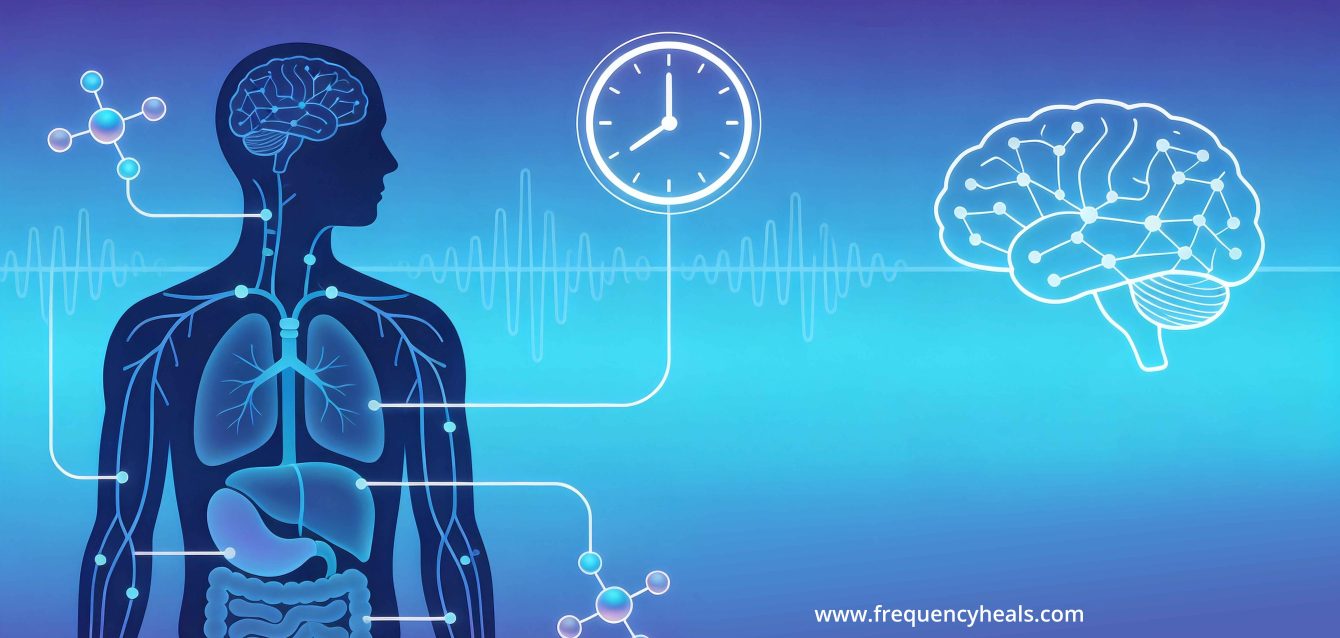
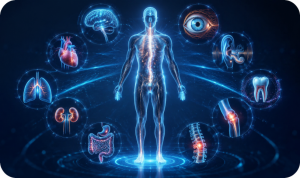
The truth is, emotions don’t stay neatly inside your head. They ripple outward — into your heartbeat, your breathing, your muscles, even your digestion. These responses are part of the body’s natural frequencies, from the rhythm of the heart to the activity of the brain. This connection reflects a broader principle of why biological systems naturally respond to rhythm and frequency. And when you start paying attention to that, a genuinely fascinating picture begins to take shape: one where your inner emotional life and your body’s physical rhythms are in constant, dynamic conversation with each other.
I was skeptical of this framing at first, honestly. It sounded a little too poetic to be real biology. But the research is surprisingly robust. Let’s take a slow look at it together.
Your Body Is Always Keeping Time
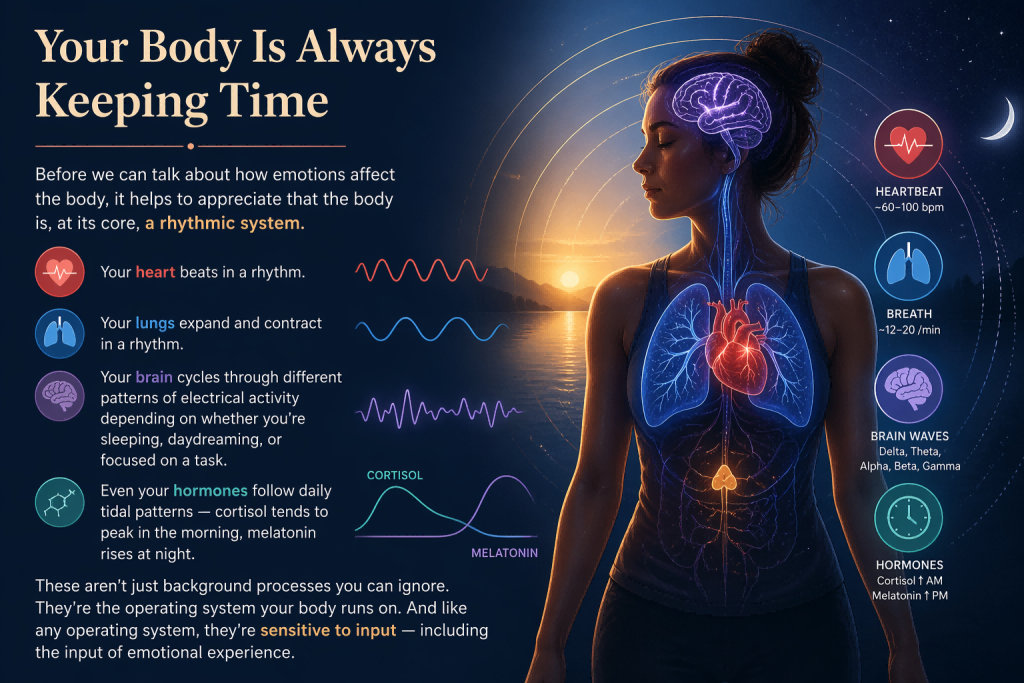
Before we can talk about how emotions affect the body, it helps to appreciate that the body is, at its core, a rhythmic system.
Your heart beats in a rhythm. Your lungs expand and contract in a rhythm. Your brain cycles through different patterns of electrical activity depending on whether you’re sleeping, daydreaming, or focused on a task. Even your hormones follow daily tidal patterns — cortisol tends to peak in the morning, melatonin rises at night.
These aren’t just background processes you can ignore. They’re the operating system your body runs on. And like any operating system, they’re sensitive to input — including the input of emotional experience.
What Happens in the Body When You Feel Something
Take anxiety as a clear example. When you’re anxious, your sympathetic nervous system kicks into gear — the branch of your nervous system responsible for the classic “fight or flight” response. Your heart rate climbs. Your breathing becomes shallower and faster. Your muscles tense up. Blood flow shifts toward your limbs and away from your digestive system.
These aren’t just uncomfortable sensations. They’re measurable, physiological changes in your body’s rhythmic patterns.
Researchers have spent decades studying what’s called heart rate variability — or HRV — as a window into this relationship. HRV isn’t just about how fast your heart beats; it’s about the variation between individual heartbeats. And that variation, it turns out, tells you an enormous amount about your emotional and nervous system state [1].
When people are calm, present, and emotionally regulated, HRV tends to be higher — meaning the heart is actually varying its rhythm in a flexible, responsive way. When people are stressed, anxious, or emotionally overwhelmed, HRV often drops. The heart’s rhythm becomes more rigid, less adaptive.
What’s remarkable is that this works in both directions. Your emotional state affects your heart rhythm — but your heart rhythm can also influence how you feel. This bidirectional relationship is one of the central ideas behind a lot of current research in psychophysiology [2].
The Breath Connection
Breathing is another place where this becomes really visible.
When you’re frightened or panicked, your breath gets fast and shallow — almost instinctively. When you’re at peace, it naturally slows and deepens. Most of us have experienced this without ever thinking much about why it happens.
The reason is that breathing is one of the few autonomic (automatic) functions you can also consciously control. It’s a bridge between the voluntary and involuntary parts of your nervous system. And because of that, it becomes an especially interesting target for emotional regulation.
Slow, rhythmic breathing — particularly the kind that emphasizes a long exhale — activates the parasympathetic nervous system, sometimes called the “rest and digest” branch. It’s the counterpart to fight-or-flight. Research suggests that this kind of paced breathing can reduce subjective anxiety, lower cortisol, and shift HRV in a healthier direction [3].
This is why breathing exercises show up in everything from clinical anxiety treatment to athletic performance training. The rhythm of the breath genuinely matters — not just symbolically, but biologically.
Brainwaves Are Part of This Story Too
Here’s something that surprised me when I first came across it: your brain’s electrical activity also shifts with your emotional state.
Neuroscientists measure this through something called electroencephalography, or EEG — essentially, tracking the waves of electrical activity moving through the brain. Different states of mind correspond to different dominant wave patterns.
When you’re stressed or mentally overloaded, you tend to see higher-frequency beta waves. When you’re relaxed and at ease, alpha waves are more prominent. During deep, dreamless sleep, slow delta waves dominate [4].
Now — this doesn’t mean your brainwaves perfectly “encode” emotions in a one-to-one way. The brain is vastly more complex than that, and researchers are careful not to oversimplify. But the general pattern is well-established: your inner emotional landscape leaves a measurable imprint on your brain’s rhythmic activity.
And here’s the part that starts to get really interesting…
The Body Is Responsive to External Rhythms Too
If the body runs on rhythms, and if those rhythms shift with emotional states — then what happens when the body encounters rhythms from outside itself?
This is where things get fascinating, and where a lot of the emerging research is quietly pointing.
We already know, intuitively, that external stimuli affect our inner state. A fast, loud piece of music can make you feel energized or agitated. A slow, repetitive natural sound — rain, ocean waves — can soften your nervous system almost immediately. This isn’t just subjective preference. There’s something real happening.
The concept of entrainment helps explain part of this. Entrainment, in its most basic sense, is the tendency of rhythmic systems to synchronize with each other. It’s a phenomenon observed in physics, biology, and neuroscience alike. When two oscillating systems interact, they often begin to fall into step.
In the context of sound and the body, this suggests that rhythmic auditory input may, under certain conditions, nudge the body’s own rhythms in a particular direction. Steady, slow rhythmic sounds might support a shift toward calmer breathing patterns and lower arousal. Irregular or intense auditory input might push in the opposite direction — increasing alertness or tension [4].
This is exactly why certain types of music, drumming patterns, or rhythmic sound are used across cultures for ritual, ceremony, and healing — and why researchers are now studying these practices with more rigorous tools.
Structured Sound and Emotional States
This brings us — gently — to the space where frequency-based practices begin to make sense.
Some practitioners and researchers are exploring whether structured sound and frequency patterns can be used intentionally to interact with the body’s existing rhythms. The idea isn’t that sound forces the body into a particular state — it’s more that rhythmic, patterned auditory input may offer the nervous system something to orient toward, something coherent to respond to.
Think of it this way: if your body is already wired to respond to rhythm — if your heart rate, breathing, and brainwave activity all shift in response to emotional experience — then it’s not a huge leap to ask whether carefully structured external rhythms might offer a kind of… scaffolding. A gentle signal that the nervous system can use as a reference point.
Research in music therapy and auditory neuroscience is beginning to take this more seriously. Studies have explored how rhythmic auditory stimulation can influence physiological markers of stress and relaxation [3], and how different auditory environments affect emotional processing [1].
This doesn’t mean every claim in the frequency healing space is validated by science. Some of them are well ahead of the evidence. It’s worth being honest about that. But the foundation — the idea that the body is rhythmically sensitive, and that emotional states are deeply connected to those rhythms — is genuinely well-supported.
What This Means for You, Practically
You don’t need to be interested in frequency therapy at all for this to be useful information.
Just paying attention to how your body’s rhythms shift with your emotional state is valuable in itself. Notice what happens to your breathing when you’re anxious. Pay attention to how your muscles feel after a genuinely joyful moment. Start to get curious about the relationship between what you feel and what your body is doing in response.
That kind of awareness is its own form of regulation. And it opens the door — if you’re curious — to asking what kinds of external input might support more ease in that system.
Whether that looks like a specific breathing practice, a particular kind of music, or something more structured like sound therapy or frequency-based practices… the underlying principle is the same. Your body already speaks in rhythms. Emotions are part of that conversation. And understanding that conversation is the first step toward having a little more influence over how it goes.
A Note Going Forward
In the next article, we’ll take a wider view — looking at how all the body’s major rhythmic systems (heart, breath, brain, and more) work together to create something researchers call physiological coherence. And what happens when those systems fall out of sync.
For now, the main thing to sit with is this: your feelings aren’t just in your head. They’re in your heartbeat, your breathing, the electrical hum of your brain. The body and the mind are having a conversation — and it’s a rhythmic one.
References
- [1] McCraty, R., & Shaffer, F. (2015). Heart rate variability: New perspectives on physiological mechanisms, assessment of self-regulatory capacity, and health risk. Global Advances in Health and Medicine, 4(1), 46–61.
- [2] Thayer, J. F., Åhs, F., Fredrikson, M., Sollers, J. J., & Wager, T. D. (2012). A meta-analysis of heart rate variability and neuroimaging studies: Implications for heart rate variability as a marker of stress and health. Neuroscience & Biobehavioral Reviews, 36(2), 747–756.
- [3] Zaccaro, A., Piarulli, A., Laurino, M., Garbella, E., Menicucci, D., Neri, B., & Gemignani, A. (2018). How breath-control can change your life: A systematic review on psycho-physiological correlates of slow breathing. Frontiers in Human Neuroscience, 12, 353.
- [4] Thaut, M. H., McIntosh, G. C., & Hoemberg, V. (2015). Neurobiological foundations of neurologic music therapy: Rhythmic entrainment and the motor system. Frontiers in Psychology, 5, 1185.







Comments
i would Love to learn & listen to authentic frequencies!
Hi Suzanne 💜
Thank you for your interest! 😊
If you’d like to learn more about frequencies and explore how frequency-based sound works, we recommend starting here:
🌿 Science of Frequency
https://www.frequencyheals.com/science-of-frequency/
You can learn more about the principles behind frequencies and how they are explored through sound and vibration. 🎧
We also encourage you to explore different sessions and find the ones that resonate with your interests and listening preferences. 💙✨
Welcome to your frequency journey! 🌿