
There’s a moment most people have — somewhere early in their frequency healing journey — where they pause and think: Wait… am I doing this for how I feel emotionally, or for something happening in my body?
It’s a good question. And the answer shapes everything — which frequencies you explore, how you use them, and what kind of support you’re actually looking for, including practical questions like how long you should listen to healing frequencies depending on your goals.
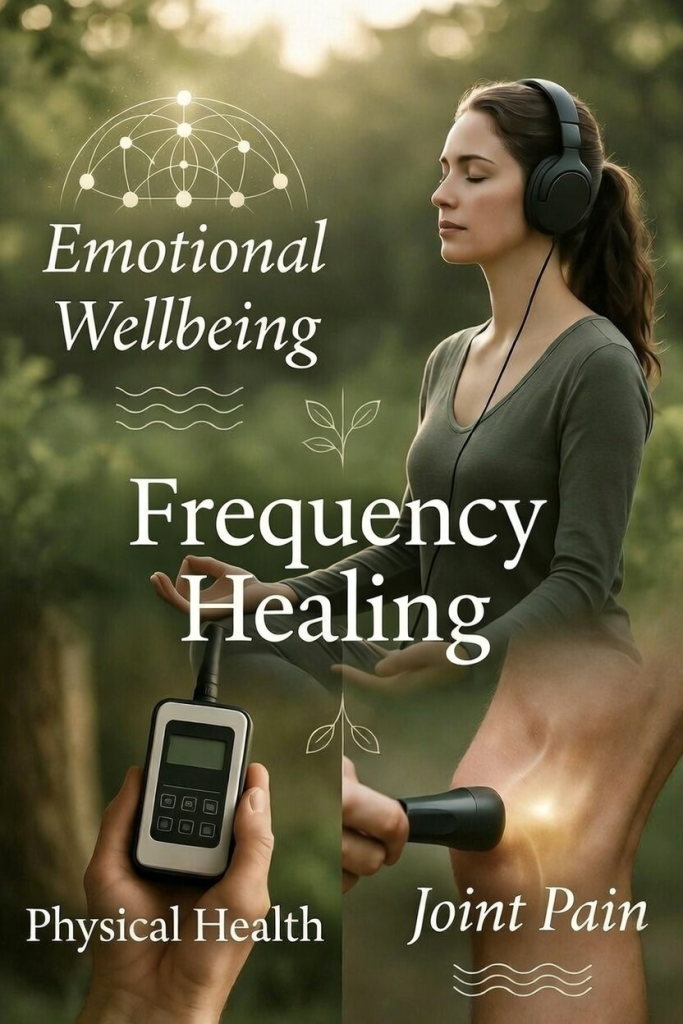
Here’s the thing though. Emotional and physical frequency support aren’t opposites. They’re not even separate categories, really. The body and mind are deeply, constantly interconnected. But the approaches people take — the frequencies they’re drawn to, the delivery methods that work best — often look quite different depending on whether their focus is more emotional or more physical.
This article isn’t about telling you which path is “right.” There isn’t one. It’s about helping you understand the landscape so you can find what resonates — literally and figuratively — with where you are right now.
How People Tend to Explore Frequency Support
When someone begins exploring frequency healing, they usually have a starting point. Maybe they’re carrying stress they can’t quite shake. Maybe they’re dealing with a persistent ache that won’t go away. Maybe it’s both — because, as we said, the two are rarely fully separable.
What happens next is interesting. People naturally gravitate toward frequencies and methods that speak to their most pressing need. Someone navigating grief or anxiety might find themselves drawn to Solfeggio tones and calming audio frequencies. Someone managing chronic joint pain or post-injury recovery might be more drawn to structured frequency systems and device-based approaches.
Neither starting point is more valid than the other. They’re simply different doors into the same space.
The Emotional Side: Sound-Based Approaches
When people explore frequency support for emotional wellbeing — managing stress, processing difficult emotions, finding calm amid chaos — audio-based frequencies tend to be the natural first step. They’re accessible, gentle, and surprisingly well-supported by research.
Solfeggio Frequencies and Emotional Resonance
Solfeggio frequencies are a set of nine specific tones — ranging from 174 Hz to 963 Hz — that have been used in chanting and meditation traditions for centuries. Each tone is traditionally associated with different aspects of emotional and mental wellbeing.
The most studied of these is 528 Hz, often called the “Love Frequency.” A 2018 study by Akimoto and colleagues found that just five minutes of listening to music tuned to 528 Hz produced measurable reductions in cortisol — the body’s primary stress hormone — while simultaneously increasing oxytocin, a hormone associated with calm and emotional connection [1]. That’s a meaningful shift in the body’s stress response from a remarkably short listening session.
A separate 2024 study examining 528 Hz found a statistically significant reduction in state anxiety among participants exposed to even brief sessions of this frequency, with results confirmed through standardised anxiety assessment scales [2]. These aren’t dramatic, headline-grabbing transformations. But they are real, measurable shifts in how the nervous system responds — and for people carrying daily emotional weight, that matters enormously.
Other Solfeggio tones are explored for different emotional purposes. 396 Hz is traditionally associated with releasing guilt and fear. 417 Hz is connected to facilitating change and clearing emotional blocks. 639 Hz is linked to harmony in relationships and emotional balance. While these specific associations carry less direct scientific validation than 528 Hz, the broader principle — that specific frequencies influence nervous system states and emotional processing — is increasingly supported by research.
Binaural Beats for Emotional Regulation
Binaural beats work differently from Solfeggio tones, but they’re equally popular for emotional support. By presenting two slightly different frequencies to each ear, binaural beats create a perceived third frequency in the brain — one that can encourage specific brainwave states associated with relaxation, calm, or emotional balance.
A comprehensive 2024 systematic review following PRISMA guidelines examined twelve studies on binaural beats and their effects on anxiety and depression. The findings were clear: binaural beats consistently showed better results in alleviating anxiety and depression symptoms compared to control conditions [3]. Theta-range binaural beats (4-7 Hz) were particularly effective for anxiety reduction, encouraging the brain toward states associated with deep relaxation and emotional processing.
What makes binaural beats especially appealing for emotional support is their accessibility. You don’t need any special training or prior experience. You put on headphones, press play, and let the frequencies do their work. For someone navigating a stressful period — whether it’s work pressure, relationship challenges, grief, or simply the relentless pace of modern life — that simplicity is genuinely valuable.
Audio-Based Rife Frequencies
Within the audio frequency space, Rife frequencies also appear. These are specific frequencies originally developed by Royal Raymond Rife in the 1920s, based on his research into how different frequencies affect biological systems. While Rife’s original work focused heavily on physical conditions, certain audio-based Rife frequencies are now explored for emotional support as well — particularly in combination with other sound-based approaches.
The audio delivery of Rife frequencies makes them part of the broader emotional frequency landscape, offering another layer of options for people seeking sound-based emotional support.
The Physical Side: Structured Frequency Systems
When people’s focus shifts more toward physical concerns — chronic pain, inflammation, muscle tension, joint health, injury recovery — the approaches they explore often become more structured and device-oriented.
Why Physical Frequency Support Looks Different
There’s a practical reason for this shift. Emotional frequency support works largely through the nervous system — influencing brainwave states, stress hormones, and emotional processing pathways. Audio frequencies are well-suited for this because the auditory system is a direct pathway to the brain.
Physical frequency support, on the other hand, often needs to reach specific areas of the body — a painful joint, inflamed tissue, a recovering muscle. Sound waves delivered through headphones don’t target your knee. They don’t penetrate deep into tissue. For localized, physical concerns, different delivery methods become relevant.
This is where structured Rife frequency systems and pulsed electromagnetic field (PEMF) technologies come into play.
Structured Rife Frequency Systems
Rife frequency systems use specific frequencies designed to address particular physical conditions. Unlike casual audio listening, these systems typically involve more structured protocols — specific frequencies, specific durations, specific sequences — tailored to the type of physical support being sought.
The research underpinning electromagnetic frequency therapy for physical conditions is substantial. A meta-analysis of 25 controlled clinical trials found strong statistical evidence that pulsed radio frequency energy therapy is effective for treating both postoperative and non-postoperative pain, as well as supporting wound healing [4]. These aren’t small, preliminary findings — they represent a meaningful body of evidence accumulated over decades of clinical research.
PEMF and Localized Physical Support
Pulsed electromagnetic field therapy represents one of the most researched approaches to physical frequency support. A 2020 systematic review and meta-analysis of sixteen randomised placebo-controlled trials found that PEMF therapy produces clinically significant effects on pain in patients with osteoarthritis [5]. The mechanism involves influencing nitric oxide signaling pathways, which play a role in reducing inflammation and supporting tissue healing.
For people managing chronic joint pain, post-injury recovery, or ongoing physical discomfort, PEMF-based frequency devices offer something audio simply can’t: targeted, localized frequency delivery that works on the physical structures causing the problem.
Where Emotional and Physical Overlap
Here’s what’s worth remembering: the line between emotional and physical frequency support is blurrier than it might seem.
Chronic pain influences mood. Unresolved stress creates physical tension. Anxiety manifests in the body. Depression affects sleep, which affects healing. The body and mind are in constant dialogue, and frequency therapy — whether emotional or physical in focus — often influences both sides of that conversation.
A person using 528 Hz Solfeggio tones for stress may notice their chronic tension headaches ease. Someone using PEMF for knee pain may find their overall anxiety levels drop as their sleep improves. These crossover effects aren’t coincidences. They reflect the deep interconnection between emotional states and physical health.
This is actually one of the most compelling aspects of frequency healing as a whole. It doesn’t force you to choose between mind and body. It simply meets you where you are — and often, gently, supports more of you than you initially expected.
Finding Your Starting Point
If you’re new to exploring frequency support and wondering where to begin, here’s a simple way to think about it:
- If your focus is primarily emotional — stress, anxiety, mood, emotional processing, relaxation — start with audio-based approaches. Solfeggio frequencies, binaural beats, and frequency-layered music are accessible, well-researched, and require nothing more than a pair of headphones and some quiet time.
- If your focus is primarily physical — chronic pain, inflammation, injury recovery, joint health — explore structured frequency systems and device-based approaches. These offer targeted, localised delivery that addresses physical concerns more directly.
- If your concerns are mixed — as they often are — you might find yourself naturally moving between both worlds. That’s not only okay; it’s how many people experience frequency healing in practice. Starting with audio and later exploring device-based approaches as needs evolve is one of the most common and comfortable paths.
There’s no single “correct” frequency or method. There’s only the one that works for you, in your situation, at this point in your journey. And understanding the difference between emotional and physical frequency support helps you navigate that journey with more clarity — and less guesswork.
References
- [1] Akimoto, K., Hu, A., Yamaguchi, T., & Kobayashi, H. (2018). Effect of 528 Hz music on the endocrine system and autonomic nervous system. Health, 10(9), 1159–1170.
- [2] Heti, M., & Yeshaswini, V. (2024). 528 Hz: The sound of tranquillity and its effect on anxiety. Revista Electronica de Veterinaria, 25(1S), 595–603.
- [3] Stojanović-Stojanović, D., et al. (2024). The efficiency of binaural beats on anxiety and depression — a systematic review. Applied Sciences, 14(13), 5675.
- [4] Englehart, J. M., et al. (2012). Meta-analysis of clinical efficacy of pulsed radio frequency energy treatment. Surgical and Interventional Radiology, 7(2), 101–108.
- [5] Lim, S. K., et al. (2020). Effects of pulsed electromagnetic field therapy on pain, stiffness, physical function, and quality of life in patients with osteoarthritis: A systematic review and meta-analysis. Journal of Orthopaedic & Sports Physical Therapy, 50(3), 147–156.