

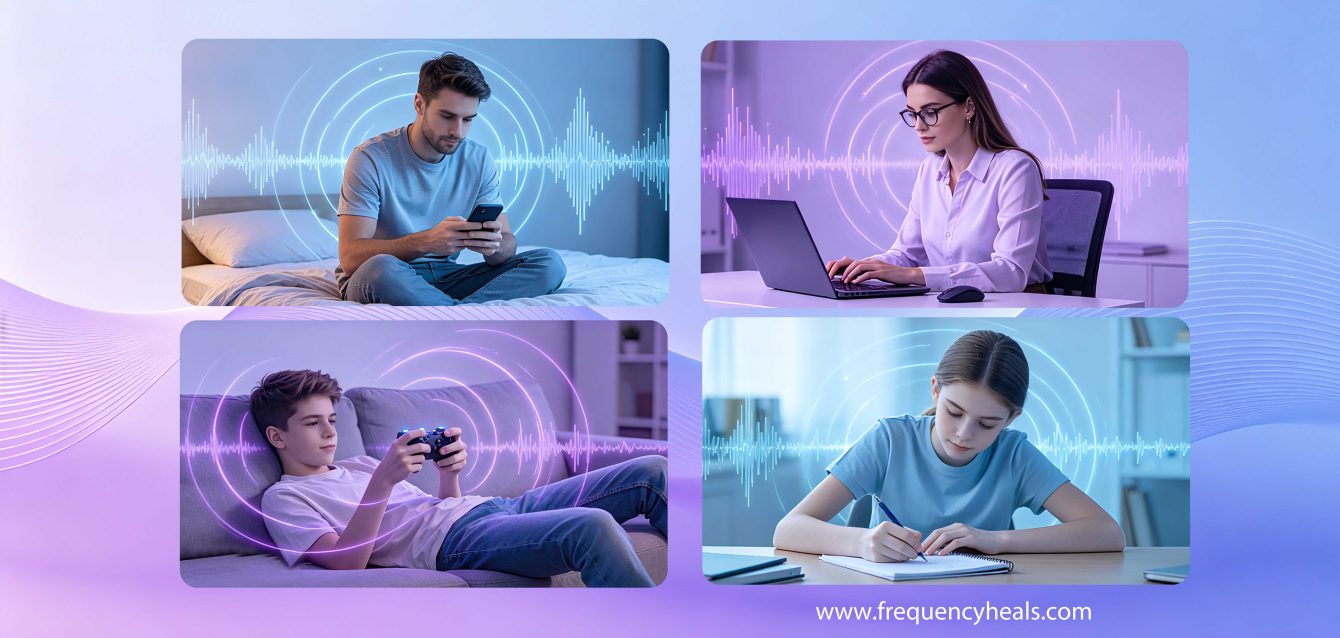
We humans are creatures of habit. The Sunday run, the bedtime story, that morning cup of coffee: these are some of the things that we do to create reassuring harmony in our lives. Routines simplify life and comfort us. However, these actions are much more than simple rituals. Many people also incorporate practices like meditation and sound-based approaches into their daily routines to create moments of calm and balance.
Many daily routines influence our circadian rhythm, our body’s 24/7 clock tucked inside the hypothalamus of the brain that’s responsible for regulating bodily functions: sleep patterns, hormone production and release, hunger signals, digestion, body temperature, blood pressure, mood, brain function, and cell repair. We need healthy routines for our clocks to properly regulate our bodies.
Yet nowadays, these clocks need fixing. We are no longer living in sync with the rhythm of the days and seasons. Our work, study and play schedules are stretching into what should be down time. We eat dinner too late and snack too much. We lug our venti lattes to work and chug beers after work. We spend less time outside in sunlight and more time seated in front of the blue light of our screens. We’ve swapped working out in the gym for sparring on social media. We go to bed later and later, doom scrolling instead of relaxing with a good book. We’re more plugged in to the news and less tuned into each other…
Soon we find our daily routines filled up with very unhealthy habits that end up impacting our circadian rhythm…and we wonder why everything feels out of whack.
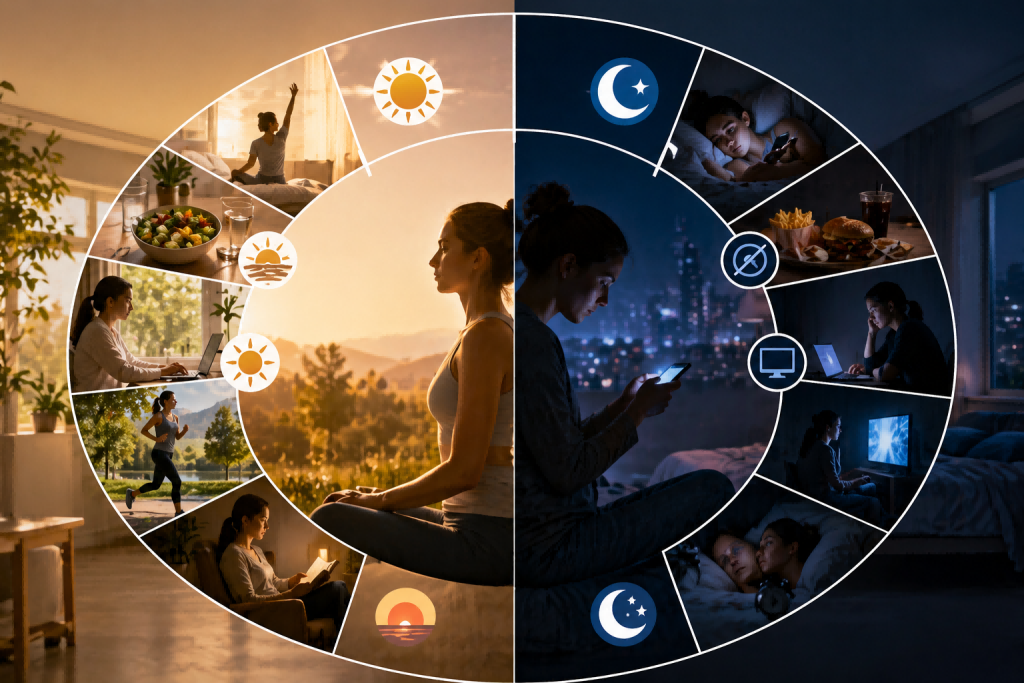
Our body clocks are actually a network of neurons tucked in the brain’s hypothalamus, but it doesn’t work in a vacuum: it gets signals from our sensory world. So all those habits- good or bad- influence our clock’s inner workings. That means we have some control over bringing our circadian rhythm back into sync. By tweaking our routines just a little, we can make profound changes to our well-being.
We’ll be taking a three-pronged approach to getting our well-being back on track: scrutinizing our daily routine, analyzing our circadian rhythm via our body’s signals, and using audio frequencies to enhance positive outcomes (for those unfamiliar with the healing virtues of audio frequencies, please take a look at this article).
As you will be listening to audio frequencies either in the background during your activities or as a fully immersive experience, you will need at the very minimum a headset (preferably not Bluetooth ear buds, which may interfere with the reception of the frequencies/binaural beats- opt for wired models instead). Load or pin the Frequency Heals App and its YouTube channel on your smart phone and computer to have quick access to the presets. Over time, you can create a personal library with ready-to-use downloads.
If you are new to using frequencies, you will need time to acclimate. Some frequencies are barely audible; others might be more strident. Turn the volume to zero and raise it to a comfortable level. Start with shorter sessions (10-15 minutes) and work your way up.
We’ll be looking at four profiles that together cover many common health and quality-of-life complaints that can be alleviated by simply changes to the daily routine. This will give you an idea how to proceed with your own daily tweaks.

Brian is an active male in his 40s, married with two young children. He has a high-pressure job with lots of meetings and a fair amount of overtime. He often eats lunch at restaurants with colleagues. He works out at the sports club everyday, either before or after work. Brian has never had any real health issues, but recently he has been complaining about occasional IBS, and now he has tendinitis in his ankle from playing squash.
Circadian analysis: The stress and fast pace of Brian’s life delivered him an inflammation double whammy: IBS and tendinitis. Restaurant meals are often low in fiber, high in salt, and are usually prepared with inflammatory seed oils. Working overtime means he eats dinner later and has no time to properly digest before going to bed. Chances are that his wind down routine in the evening is short and he’s going to bed with the mental baggage of his day.
The Rx: Focus on reducing stress and inflammation, and promoting restorative sleep.
- Make some minor changes to the routine: Plan the more intense workout in the morning and take a short digestive walk after a lighter dinner to help wind down. Opt for high-fiber vegetable and healthy protein choices at lunch. Learn about what foods cause or reduce inflammation.
- After sports: Play this preset to focus on tendinitis recovery
- During the lunch break: Play this preset while relaxing after lunch, preferably with a warm compress over the stomach to calm down IBS symptoms.
- During the evening wind-down: Play this preset to de-stress upon arriving home. If the demands of the family are too great, then play while reading in bed.

Julia is a semi-active woman in her late 50s who went into menopause 2 years ago. She has a desk job and is in front of her computer most of the day. She takes her dog out for a 45-minute walk every evening after dinner and for longer walks on the weekend. She is currently complaining of weight gain and lower back pain. She occasionally has anxiety attacks in the middle of the night.
Circadian analysis: While Julia’s daily rhythm is pretty good, the hormonal changes brought about by menopause have changed her metabolism, with regular cortisol spikes that are behind her anxiety attacks. Sitting at her desk all day is not only bad for her back, but exposing her eyes to the blue light of her computer screen can mess up her circadian rhythm. Her current physical activity is not too bad, but may need to be boosted.
The Rx: Work on balancing Julia’s hormones and offsetting the physical consequences of her desk job.
- If at the desk all day, get up every 30 minutes, stretch and move around for 5 minutes.
- Invest in a pair of blue light glasses or at the very least, adjust the lighting on the screen. Avoid screen time after work.
- During the workday: If working on longer projects and are allowed to wear a headset, work on healing and focus at the same time while listening to 582 Hz (4 hours minimum is ideal). If this is not possible, play it during the lunch break. This will add up to 30 minutes for exercise to the day.
- During the lunch break: Try to reserve the second half of the lunch hour for a 30-minute frequency session to relieve lower back pain. Ideally, this would be done lying down with a pillow placed under the knees.
- Bedtime ritual: To help deal with night-time anxiety attacks, listen to this preset lying down for at least 15 min before bedtime.

Chloe is a 23-year-old grad student. She’s a “flexitarian” (mostly vegetarian, but will occasionally eat eggs, fish, and poultry) and does yoga and Pilates every day. While she lives pretty healthily, she does like to go out for pizza and beer with her friends at the weekend. Chloe sometimes feels overwhelmed by her workload, also often complains of painful menstrual cramps.
Circadian analysis: Chances are Chloe has periods of intense activity prior to exams or when she has to hand in a paper. This irregularity can be disruptive to her circadian rhythm. Menstrual cramps create a vicious circle- the pain can provoke anxiety, which can exacerbate the pain. Chloe’s exercise regime is excellent, but her diet would benefit from some small changes to make it less inflammatory.
The Rx: A more supportive diet, meditation and a trusty calendar will create balance and well-being.
- Use a daily/weekly/monthly planner to even out the irregular workload.
- Add healthy fats to meals to support brain function and protein (especially in the morning) to support muscle health.
- Swap beers for a glass of red wine and pizza parlors for healthy, low-carb pot luck dinners.
- Morning ritual: Wake up with a 10-30 minute 528 Hz meditation, which is a great overall frequency for the mind, body and spirit. Follow up with an anti-inflammatory beverage. The first meal of the day should include healthy fats and proteins.
- During study sessions: Use a headset to listen to this preset as “background music” for PMS and menstrual cramp relief. Prioritize this for long-term therapeutic support. Otherwise, listen to this preset when extra focus is needed.
- At bedtime: Avoid overstimulation to ease into a restorative sleep. If at all possible, try to turn off the screens a few hours before going to bed. Otherwise, opt for anti-blue light glasses. Favor more relaxing yoga over Pilates if doing the exercise routine in the evening. Once in bed, play this preset in the background throughout the night for complete body/mind renewal.

Derek is a 12-year-old who has just started middle school. He is on the local soccer team and practices 3 times a week after school. He spends about 10 hours a week playing video games, mostly on the weekend. Derek is a bit shy and insecure at his new school. He suffers from hay fever in the spring and is starting to get acne. He is having more and more problems getting up in the morning.
Circadian analysis: Derek is experiencing the pains of being a pre-teen: major bodily changes coupled with major life changes. He needs help getting out of bed. His body clock may be disrupted from blue light and the dopamine spikes from his gaming. Ideally he would get more exercise to balance out his sitting all day at school. He can benefit from gentle support habits that won’t disrupt him from being a “normal teenager”.
The Rx: The biggest challenge is to get Derek to follow a routine at a time in his life when he will most likely refuse advice from an adult. He may not even think he has a problem. However, every time he complains about something, that’s a signal he is looking for an answer. Here are some ways to nudge him:
- Empower Derek with information. One way to do this is to watch YouTube videos together on various health topics (ie acne), and have a discussion about them to see what he’d like to incorporate into his wellness regimen.
- Favor an anti-inflammatory diet- shop and prepare lunches and snacks together to limit junk food intake. Derek should be an actor in making healthy food choices.
- Help Derek draw up a daily/weekly schedule that includes study, sports, sleep, leisure and hygiene.
- Chances are Derek will be open to listening to frequencies as they are they are delivered via smartphones and computers- what pre-teen can resist that? Create a wellness “menu” with curated presets that he can easily access.
- The number of hours Derek spends gaming is still considered to be moderate, but he should still be careful about protecting his eyes from blue light exposure, and he should not be gaming in the evening. Certain violent games may be anxiety provoking, which is worth monitoring.
- Engage in some “weird science” with him as you introduce him to frequencies. For example: you can show him how frequencies affect the water he drinks. Watch this video on Dr Emoto’s experiments with water. Then prepare your own structured water together to have on hand throughout the day (make sure to read the instructions in the notes for best results). This will encourage Derek to keep hydrated (get him a cool flask).
- Morning boost: Play this preset once Derek wakes up for 10-15 minute to energize his morning. Follow through with a tall glass of structured water.
- On the way to school: Listen to this preset with headphones while in the car or bus to help overcome shyness.
- The evening “spa” treatment: Listen to this video for as long as possible while getting ready for bed to help with acne flare-ups.
- After a weekend of gaming: If overstimulated, create a weekend bedtime ritual by dimming the lights and playing this frequency while lying in bed.
These are just a few ways you can incorporate frequencies into your daily lives. There’s so much you can do, but it’s best to go slowly but surely, as consistency will produce better results. By creating new healthy habits and sticking with them, you will see that many of the irregularities in your daily life will iron themselves out. A properly running circadian clock will further boost wellness benefits, allowing you to enter into a virtuous circle of health.
FAQs
- Must I play these frequencies at a certain volume?
Louder is not necessarily better- comfort and consistency is key. Frequencies do not need to be played loudly to be effective. If the sound feels too strong or distracting, simply lower the volume. - Which is better for listening to frequencies- my computer or my smartphone? Do I need to use headphones?
Both computers and smartphones work well for playing audio frequencies. Headphones are preferred for binaural tones and recommended to have a more immersive listening experience, but they are not required. Many people benefit from playing frequencies in the background during daily activities. - I’m having trouble listening to frequencies- can I play them while listening to other music?
It’s generally best to listen to frequency tracks on their own so the rhythmic patterns remain clear. However, you can acclimate to them playing them quietly in the background while listening to compatible music tracks and gradually wean yourself off the music as you become more comfortable.










Comments
Love the spine frequencies
Thank you, Kathy 😊💙
We’re so glad to hear you’re enjoying the spine frequencies! Messages like yours make our day and encourage us to keep creating more content for the community 🌿 Wishing you continued comfort, wellness, and enjoyable listening on your frequency journey 💙🙏
U have any sounds for palpations
Hi Deidre 💜
Thank you for your question. 😊
If you’re looking for frequency resources related to **heart palpitations or heart rhythm support**, you may explore this session:
❤️ **Steady Heart Rhythm Support for Arrhythmia**
https://www.frequencyheals.com/frequencies/steady-heart-rhythm-support-for-arrhythmia-frequency-healing/
You can also explore more heart and circulation-related frequency sessions here:
🌿 **Heart & Circulation Frequency Sessions**
https://www.frequencyheals.com/video-category/heart-circulation/
Because palpitations can have many different causes, especially if they are new, frequent, severe, or accompanied by chest pain, fainting, or shortness of breath, please also seek medical evaluation promptly.
We hope these resources are a helpful addition to your wellness routine. 💙✨
thank you
Hi Andree 💜
You’re very welcome! 😊
Thank you for exploring Frequency Heals. We hope you enjoy discovering more frequency resources and creating a listening routine that feels right for you. 🌿🎧
Wishing you all the best on your frequency journey! 💙✨