

If you have decided to read this article, then you have opened yourselves to a new path to wellness and healing with frequencies. But wait, frequencies have existed for millennia; it’s just that for the past 100 years or so they have been brushed under the rug. They have since been dusted off and made even more accessible that ever before.
The first major step into using frequencies is letting go of some ingrained patterns of thinking that are tied to the current allopathic model that we are so used to. The best way of going about this is to understand why we approach medicine the way we do. Here is a very brief history lesson to put things into perspective.
Conventional medicine’s grip on our health
Medicine as we know it has only been around for little more than a century. Before that, people’s ailments were mostly treated with plants, herbs, oils and yes, frequencies. At the turn of the 20th century, industrialists John D. Rockefeller and Andrew Carnegie were looking for untapped sources of wealth when they came upon the idea to use patentable synthetic materials as the basis of what was to become modern pharmaceuticals.
However, people were quite used to more natural remedies, so the entire American medical structure at the time needed to be gutted and overhauled. Abraham Flexner wrote a report in 1910 that vilified the many independent schools of naturopathy, osteopathy, homeopathy and so on, carrying on a witch hunt that chased away many practitioners. The two industrialists followed suit, establishing medical schools and medical boards that promoted a standardized form of care using their pharmaceuticals.
The final blow came from Sigmund Freud’s nephew, Edward Bernays, the father of Marketing and Public Relations. While not credited directly with influencing the medical industry, his coercive techniques in mass manipulation continue to shape how people approach medicine. An in-depth, two-way dialogue with a caregiver became a one-way monologue given by an unquestionable medical authority. The double whammy of trust being heaped on the system and a mounting lack of confidence in ourselves has led us to accept whatever health verdict has been handed down to us- for better or for worse.
Old habits are hard to break: many newcomers to frequency healing are expecting the same Rx that they’ve always gotten. They want a quick fix to take care of an obvious symptom. The problem with most conventional treatments is that they are a Band Aid that covers up the problem, but doesn’t heal at the source. This isn’t to say that frequency healing will always heal at the core, but this is mindset you will need to adopt when embarking on your healing frequency journey.
Let’s take a common issue: lower back pain. If you were to seek a conventional “cure” and heat/ice didn’t do the trick, you might go to the pharmacy or to the doctor for pain relief. This could be in the form of a nonsteroidal anti-inflammatory drug (NSAID) or acetaminophen, both of which have side effects. Your doctor may even prescribe antidepressant medications as they are said to influence the chemical messengers that affect pain signals in the body. If the pain is chronic, the meds get stronger and go longer, but the core issue isn’t treated. The bottom line is that you haven’t gotten better.
This is where you’ll be putting on your Sherlock Holmes cap and start figuring out the why behind your health issue. But even Detective Holmes doesn’t randomly wander willy-nilly while he’s sleuthing: he has a methodology. We shall do the same as we become more proactive on our path to wellness.

Some basic guidelines
Be really attuned to your body and get used to noticing when you feel well. Some people are so focused on their problems, they don’t notice when things are OK.
Learn about the causes that underpin your health issues. Visit dedicated forums like the official FrequencyHeals Facebook page/private group to see what others like you have experienced with frequencies- take lots of notes and revise when needed. Use discernment- as alternative healing modalities gain traction, you’ll find yourself navigating a minefield of information. Double check by researching or asking an experienced frequency practitioner. Over time, you will find that certain things will resonate with you… and others won’t.
DON’T expect people to hand you answers on a silver platter. Everyone’s experience is personal, so what works for one person, may not work for you. Gather and evaluate.
Keep a log. Suggested columns: date, problem, frequencies used, how often used, how long were they played, any/all effects after listening (including related factors such as sleep, stress, activity, and emotional well-being).
Create a doable daily frequency ritual, integrating it into a healthy lifestyle. We’ll get into this in more detail shortly.

Peeling the onion: getting to the root of the problem
The “onion” approach is simple: start outward and work inward. This is an easier way for people new to frequency healing to cross the bridge from the symptom-oriented allopathic model. This is how it goes:
- Symptom level
- Underlying physical causes
- Underlying emotional issues and trauma
- Spiritual/Chakra misalignment/blockages
Now let’s look at the same back problem from frequency healing approach. The first impulse is to try to deal with just the pain, but as we’ve learned, that approach is often just masking the problem. But let’s go the familiar route anyway, focusing on the symptom.

- You would first choose a frequency for pain relief:
2. If the symptoms reoccur are you’re not getting enough relief, you may start looking at other underlying physical causes, such as:
- Muscle or ligament strain due to heavy physical activity, awkward movements, or improper posture, isthe most common cause of lower back pain.
- Arthritis and osteoarthritiscan affect the lower back, causing stiffness and pain.
- Skeletal irregularities like scoliosis, a curvature of the spine, can lead to back pain later in life.
So if you suspect that untreated scoliosis is the root cause, then you can try this frequency preset, for example:
Inflammation is a common culprit, so you can look into this too:
- If after trying these frequencies and you feel not everything is resolved, you can start looking into emotional factors that could cause the inflammation and pain:
- The final layer to peel is the spiritual angle of what ails us. This isn’t about religion; this is about energy- our life force. In fact, if you were to look at your body at the atomic level, you would see that most of what makes the physical you is not matter at all: it’s energy that surrounds the nucleus and electrons. Energy is very sensitive and can be influenced by negative experiences…even hurtful words. Moreover, traumatic experiences can even be passed on for generations. The good news is that energetic trauma bonds can be broken. To learn more about frequencies and energy, take a look at this article.
So, what type of frequencies should we be looking at? You will have to dig a little deeper and try to uncover why you got to this point. What was the event or events that could have set off that lower back pain…even well before the symptoms appeared? If you can’t find anything in your life, was there unresolved trauma in your parents’ or grandparents’ lives? Lower back pain is said to be tied to feelings of insecurity and a need for stability. The lower back acts as a foundation, so when this area hurts, it could point to foundational concerns in your life. This is tied to the root chakra, so one frequency approach would be to focus on that: https://www.frequencyheals.com/video-category/chakras/
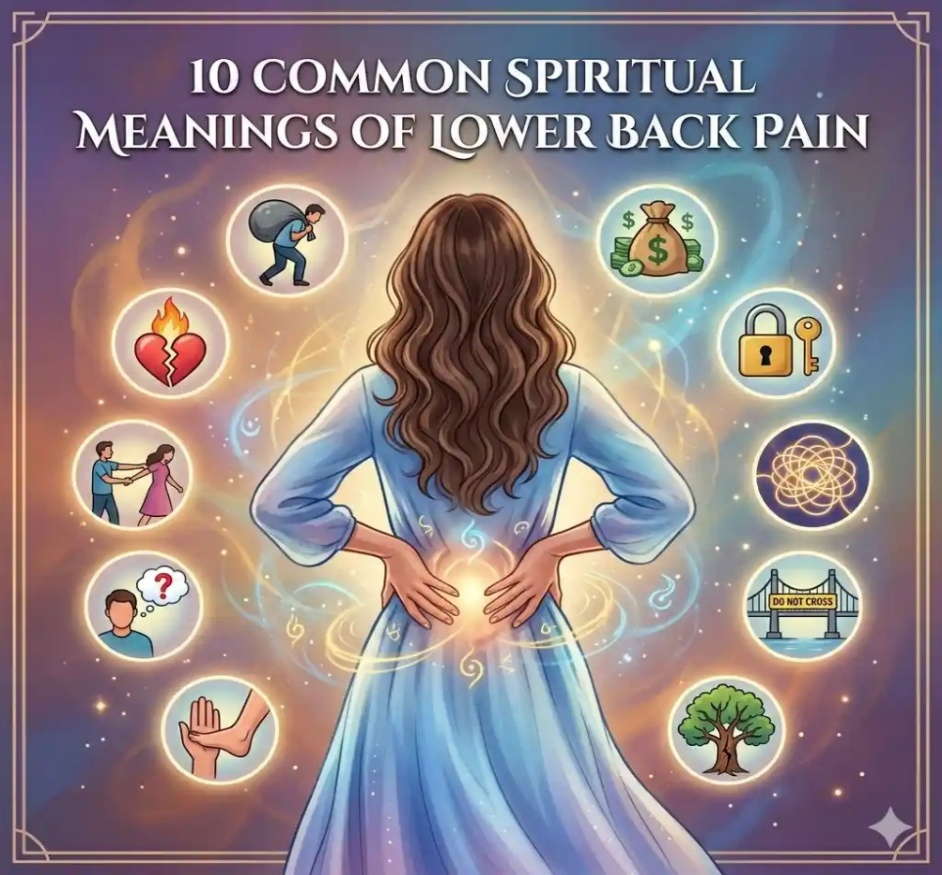
While we only focused on lower back pain, this approach can be applied to any sort of physical or emotional health issue. It will require self-introspection, sleuthing and heightened awareness. You’ll need to know what key words to write in the search bar or speak into an AI chatbot. You’ll need to use discernment and hone your inner compass. Over time, you will know what to look for and be more attuned to the changes that frequencies can produce in your body.
However, remember that frequencies are not a magic bullet: ideally, they should be incorporated into a healthy lifestyle that includes nutrition, exercise, adequate sleep, breathwork, contact with nature, and some sort meditative practice that can help create inner balance. Don’t beat yourself up if you’re not perfect in all these areas, slow incorporation of these practices will ensure that they remain lifelong habits.
Putting this into practice- creating consistent daily habits with frequencies
We have become impatient with everything- we want a quick fix. Our allopathic mindset has us rushing from one cure to another and not focusing on long-term wellness. If there is one take-away you should walk away with after reading this article, it would be stay consistent.
While you may feel some positive effects after a particular frequency session, most of the time, you may need to have several sessions or even maintain a longer term daily listening regimen. You may also want to add or change frequency programs. This is where your frequency log will come in handy- it will help you keep track.
Timing is important!
Keep in mind that some frequencies stimulate and others calm, so the programs you choose should blend seamlessly into your day. Calming frequencies should be listened to while you’re relaxing or getting ready for bed and not when you’re working or driving a car (If there is a description, check to see if there are listening recommendations). Likewise, some of the tracks you play will be inaudible, others will be strident, and still others will be anchored to music. This will determine not just when you listen to them but how you listen to them (generally it’s best to have a comfortable wired headset). Always start with the volume at zero and work your way up, understanding that even inaudible frequencies are doing their job.
One example of a daily regimen
We’ll continue to use the case of lower back pain, but the same methodology applies to whatever you wish to work on. You have taken a look at your list of frequencies and have noted in your log which are more stimulating and which are more calming or relaxing. They don’t have to be in “onion peel” order: select the frequency that would be the most adapted to your situation and your needs during the day. Here is an example:
Morning routine: Set aside a few extra minutes in the morning to get your day off to the right start. If you’ve had a good night’s sleep, chances are you’re not feeling as much pain, so you can try the scoliosis frequency program as you continue to lie flat on your bed (if your bed has a firm mattress; otherwise, lie on a mat on the floor), as you listen, you can engage in a deep breathing exercise or meditation.
During your work day: You can play the lower back pain support program throughout the day. The programs are usually 30 minutes long, and you can play them continuously when you’re dealing with acute pain, and sporadically throughout the day (but as part of a consistent routine) for duller, chronic pain management. Normally, this particular program is inaudible, but if you do need to play a more audible frequency or one that has a music track, then wear a headset. If this is not possible, then listen to this program during your lunch break, preferably lying down with a pillow under your knees.
After work: If possible, give yourself some “down time” to unload built-up stress between work and the responsibilities that await you at home. This track is best played with no distractions, but putting on some headphones and taking a quiet stroll in a park will allow you to get in some air and decompress your back after sitting all day. If you’ve spent your whole day standing up, then relax in your car or on a park bench before going home.
Bedtime ritual: The bulk of your body’s repair work happens while you sleep, so if this is an issue, then take a look at this article. Preparing to go to bed should happen gradually: allow a few hours to digest your last meal, turn off blue light screens at least two hours before going to bed, and slowly dim the lights as you approach bedtime. Just before you go to bed, listen to the anti-inflammation program to kick start your body’s nighttime repair process. You can listen to this while applying heat or cold therapy. If you want to boost the effects even more, engage in gratitude meditation, giving thanks for a quick recovering…even if it hasn’t happened yet.
An important final note
This will hopefully give you an idea of how to create- and maintain- a frequency routine. Quite a few were mentioned in this article to give you an idea how to incorporate them into your daily life, but it is strongly suggested to try one at a time to become familiar with them. This protocol is by no mean one-size-fits-all; you need to adapt frequencies to your lifestyle. Nor is it set in stone: if you find that a particular frequency program isn’t working for you after trying it out for a while, then switch it out for another. This also applies to the activities you pair your frequencies with. Think of this experience as your wellness laboratory, or even better, your wellness playground!
While this article focused only on lower back pain, frequencies can be used for many wellness goals. When frequencies are incorporated into a healthy lifestyle, their benefits will be amplified. Even though frequencies are generally regarded as safe, if you have any doubt as to whether or not you should be using them (during pregnancy, if you have epilepsy, or wear an imbedded medical device) it is advisable to consult with a knowledgeable frequency practitioner.