Pain rarely arrives carrying a neat label.
A stiff knee can change the way you walk, while a tight lower back can make sitting, sleeping, and even putting on your shoes feel different. A sensitive nerve can send discomfort far beyond the place where the irritation began, and a headache or toothache can take over your attention even though the painful area is relatively small.
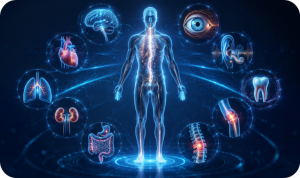
The experiences can feel so different from each other because pain involves different body systems. Bones and joints provide structure while muscles create movement. The spine supports the body and protects important nerve pathways. Peripheral nerves carry signals between the body and brain, while the brain interprets those signals within the larger context of sleep, stress, emotion, and previous experience.
Moreover, understanding this whole-body pain map can help you choose more appropriate wellness habits and explore supportive resources with clearer expectations.In this guide, we’ll moves through five areas of the body, offering some simple comfort strategies and related audios from the Frequency Heals’ Pain Relief & Comfort collection for each one.
The audios are intended as complementary wellness resources and not as replacements for medical or dental evaluation. Research has found that music-based interventions can offer small, short-term benefits for some people living with chronic pain, but this does not establish that a particular frequency audio can treat an injury or medical condition (Hsu et al., 2022).
Pain Is an Experience, Not Just a Warning Light
It’s tempting to think of pain as a simple alarm about damaged tissue signaling the brain, causing pain to appear. The real process is more layered.
The International Association for the Study of Pain describes pain as both a sensory and emotional experience. Pain and nociception, the nervous system’s processing of potentially harmful stimuli, are related but not identical. Biology matters, but so do sleep, stress, mood, attention, previous experiences, and the meaning a person gives to a sensation (Raja et al., 2020). This doesn’t mean that pain is imaginary. It means pain is personal and influenced by more than one input.
This is also why useful pain support rarely depends on one tool. Gentle movement, appropriate rest, professional care, sleep, stress regulation, and enjoyable listening can occupy different places in the same wellness routine. Instead of asking one resource to “fix” everything, it’s more helpful to build several supportive habits around the body system involved.
1. Bones and Joints: When Movement Starts to Feel “Rusty”
Joints are meeting places between bones, and cartilage aids their surfaces to move smoothly, while ligaments provide stability and muscles guide movement. When a joint feels stiff, swollen, or sore, people often become less active to protect it. A short period of rest can be appropriate after an injury, but avoiding movement for too long can allow surrounding muscles to weaken and stiffness to increase.
For osteoarthritis, exercise is strongly recommended because it can support both pain management and physical function. There’s not a single one-size-fits-all activity for everyone. Walking, water exercise, strength training, balance work, and tai chi are among the options that can be adapted to a person’s ability and affected joints (Kolasinski et al., 2020).
A simple “motion snack” can make movement feel more manageable: after sitting for an hour, spend two or three minutes slowly bending and straightening the affected joint within a comfortable range. For knees and hips, a brief walk around the room can help. And as for hands, gently opening and closing the fingers can break up long periods of stillness. But please stop immediately if movement produces sharp pain, instability, or rapidly increasing swelling since there may be potential inflammation..
Sinple Excercises:
2. Muscles and Spine: The Support System That Dislikes Staying Still
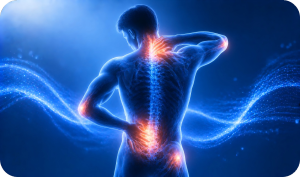
Your back is not one solid structure but is a coordinated system of vertebrae, discs, joints, ligaments, muscles, and nerves. And the muscles around the spine continually adjust to help you sit, stand, lift, turn, and maintain balance.
Back discomfort can appear after an unfamiliar movement, long periods of sitting, repetitive work, or a change in activity, and sometimes no single cause can be identified. Although resting briefly can feel natural during a flare-up, current guidance for chronic primary lower-back pain emphasizes education, structured exercise, and a broader combination of physical and psychological support rather than relying on passive care alone (World Health Organization, 2023).
Try creating a “movement menu” instead of searching for one magical stretch. It could include a five-minute walk, several slow shoulder rolls, a gentle seated trunk rotation, or standing up from your chair a few times. Choose movements that feel easy and controlled. During desk work, changing position regularly is often more realistic than trying to hold one supposedly perfect posture all day.
You could play them at a desirable volume while resting in a supported position or completing clinician-approved mobility exercises. New back pain accompanied by loss of bladder or bowel control, numbness around the groin, significant leg weakness, fever, or recent major trauma requires prompt medical attention.
3. Peripheral Nerves: Why Pain Can Travel
Peripheral nerves form a communication network between the brain, spinal cord, skin, muscles, and organs. When a nerve is irritated or affected, the sensation can feel very different from an ordinary muscle ache. People often describe nerve-related discomfort as burning, tingling, electric, shooting, or numb.
The location of the sensation doesn‘t always reveal where the problem begins. Sciatic discomfort, for example, can travel from the lower back or buttock into the leg. Tingling in a hand can relate to a nerve pathway in the wrist, arm, shoulder, or neck. This is one reason persistent nerve symptoms are worth assessing instead of repeatedly stretching the area that hurts.
Appropriate exercise can support mobility, balance, and function in several neuropathic pain conditions, but the best program depends on the underlying cause. Research has examined stretching, strengthening, aerobic activity, stabilization work, and sensorimotor training; this variety reinforces the value of individualized guidance (Zhang et al., 2021).
For everyday care, avoid remaining in one position until tingling intensifies. Alternate sitting, standing, and light walking when possible. Move gradually rather than forcing a deep stretch into burning or electrical pain.
The listening sessions below are gentle routines to help maintain your nerve health, calming additions to a broader routine and not a way to diagnose the source of nerve discomfort. If numbness is increasing, grip or leg strength is changing, or balance is becoming less reliable, please arrange a professional evaluation.
4. Brain and Pain Processing: Headaches and Widespread Sensitivity
Some pain can’t be understood by looking at one joint or muscle, and headaches involve the nervous system, which can be influenced by sleep, hydration, skipped meals, stress, sensory input, hormones, and other individual triggers. Fibromyalgia is also more than merely the discomfort in several muscles, but is associated with widespread pain, fatigue, sleep disruption, and changes in how the nervous system processes sensory information.
Consistency is often more useful than dramatic lifestyle changes. For migraine management, the memorable “SEEDS” framework covers sleep, exercise, eating, keeping a diary, and stress management. Regular sleep and meals, gradual physical activity, adequate hydration, and a headache diary can assist people in recognizing patterns and discuss them more clearly with a healthcare professional (Robblee & Starling, 2019).
For widespread pain, think in terms of pacing. On a better day, doing everything at once can lead to exhaustion afterward. A steadier rhythm, alternating manageable activity with planned recovery, can be easier to sustain. Fibromyalgia recommendations also emphasize education and a graduated, individualized approach, with exercise receiving the strongest therapy-based recommendation (Macfarlane et al., 2017).
Tips: Lights and sounds may be significant triggers that would likely aggravate headaches. Dim the room if light feels uncomfortable, lower the audio volume and allow yourself to stop if any sound makes symptoms worse. A sudden, exceptionally severe headache, or a headache accompanied by weakness, confusion, fainting, fever, or difficulty speaking, requires urgent medical assessment.
5. Oral and Dental System: Small Area, Big Distraction
People use teeth everyday, but it’s easy to neglect the importance that they have. And most of us who has experienced dental pain understand that even though it doesn’t seem to be a big issue, the pain can last all day. Beneath a tooth’s hard outer layers is living tissue containing nerves and blood vessels, and discomfort can arise from decay, inflammation, infection, a cracked tooth, gum problems, an erupting wisdom tooth, or recovery after dental work.
Because several dental problems can produce similar sensations, pain intensity alone can’t identify the cause. Temporary relief also doesn’t mean that the underlying issue has resolved, and a dental treatment should never be delayed when pain persists or is accompanied by facial swelling, fever, difficulty swallowing, or difficulty breathing.
Until an appointment, choose foods that won’t worsen sensitivity and chew on the more comfortable side when practical. Continue gentle oral hygiene unless a dentist has advised otherwise. Avoid placing aspirin or harsh substances directly against the gums, since they can irritate or damage the tissue.
Evidence-based dental guidance treats medication as a temporary bridge when immediate care is unavailable, not as a substitute for treatment. For eligible adults and adolescents, non-opioid options are generally recommended first, but personal health conditions and medication interactions must be considered with a dentist, pharmacist, or physician (Carrasco-Labra et al., 2024).
What Foods Should You Eat and Avoid for Teeth Sensitivity (Dra. Concha Gross, 2023):
What to Eat:
- Dairy products such as cheese, plain yogurt, or milkas they provide calcium and phosphate, minerals that help strengthen enamel from w
- Crunchy vegetables such as carrots, celery, or cucumbersince chewing them stimulates saliva production, which naturally neutralizes acids in the mouth.
- Lean proteins such as chicken, fish, or eggsbecause they provide the nutrients your gums and the tissues surrounding your teeth need to stay healthy.
- Nuts such as almonds or cashews,in moderation. They are low in sugar and rich in minerals, although they should be chewed carefully if your sensitivity is severe.
What to Avoid:
Foods are best limited because they tend to wear down enamel or directly irritate the tooth’s nerve:
- Citrus fruits, vinegar, pickled foods, and tomatoes, since their acidity gradually wears away enamel if consumed frequently.
- Soft drinks, including sugar-free varieties.Their pH remains low and weakens the tooth surface just the same.
- Sticky sweets and sugary drinksas they feed the bacteria that produce acid in the mouth, adding to the existing enamel wear.
- Ice cream, very hot coffee, or boiling soups. Extreme temperatures directly trigger pain in teeth with exposed dentin.
A simple tip: if you consume something acidic, rinse your mouth with water afterwards instead of brushing your teeth immediately since enamel becomes temporarily softer, and brushing right away can damage it more than protect it.
The audios below can accompany a calming routine, but it cannot remove decay, drain an abscess, repair a damaged tooth, or replace an examination.
Build a Comfort Routine, Not a Search for One Perfect Tool
- Pain support often works best as a collection of small, repeatable choices:
Identify the body system or area involved without assuming you know the diagnosis. - Choose one gentle action, such as changing position, taking a short walk, or completing an approved mobility exercise.
- Create a calmer environment with comfortable lighting, slower breathing, and low-volume audio.
- Record useful patterns, including activities, sleep, symptoms, and what helped.
Seek professional guidance when pain is severe, persistent, worsening, or accompanied by concerning symptoms. Frequency audio can sit inside this routine as a moment of rest, focused listening, or gentle background sound. Choose the session that best matches the area you want to explore, keep the volume comfortable, and notice your response without forcing an outcome.
The Pain Relief & Comfort audio collection includes additional topics beyond the ten featured here, and new audios are continue to be added. If today’s discomfort is not represented, revisit the library as it grows or browse the wider Frequency Heals categories by body system.
Pain can narrow your attention to what hurts, and a thoughtful wellness routine can gently widen it again, and the many ways the body works as a connected whole.
References
Carrasco-Labra, A., Polk, D. E., Urquhart, O., Aghaloo, T., Claytor, J. W., Jr., Dhar, V., Dionne, R. A., Espinoza, L., Gordon, S. M., Hersh, E. V., Law, A. S., Li, B. S.-K., Schwartz, P. J., Suda, K. J., Turturro, M. A., Wright, M. L., Dawson, T., Miroshnychenko, A., Pahlke, S., … Moore, P. A. (2024). Evidence-based clinical practice guideline for the pharmacologic management of acute dental pain in adolescents, adults, and older adults: A report from the American Dental Association Science and Research Institute, the University of Pittsburgh, and the University of Pennsylvania. The Journal of the American Dental Association, 155(2), 102–117.e9. https://doi.org/10.1016/j.adaj.2023.10.009
Dra. Concha Gross. (2023). Foods for sensitive teeth: what to eat and what to avoid. https://www.clinicadentalgrossdentistas.com/en/foods-for-sensitive-teeth/
Hsu, H.-F., Chen, K.-M., & Belcastro, F. (2022). The effect of music interventions on chronic pain experienced by older adults: A systematic review. Journal of Nursing Scholarship, 54(1), 64–71. https://doi.org/10.1111/jnu.12712
Kolasinski, S. L., Neogi, T., Hochberg, M. C., Oatis, C., Guyatt, G., Block, J., Callahan, L., Copenhaver, C., Dodge, C., Felson, D., Gellar, K., Harvey, W. F., Hawker, G., Herzig, E., Kwoh, C. K., Nelson, A. E., Samuels, J., Scanzello, C., White, D., … Reston, J. (2020). 2019 American College of Rheumatology/Arthritis Foundation guideline for the management of osteoarthritis of the hand, hip, and knee. Arthritis Care & Research, 72(2), 149–162. https://doi.org/10.1002/acr.24131
Macfarlane, G. J., Kronisch, C., Dean, L. E., Atzeni, F., Häuser, W., Fluß, E., Choy, E., Kosek, E., Amris, K., Branco, J., Dincer, F., Leino-Arjas, P., Longley, K., McCarthy, G. M., Makri, S., Perrot, S., Sarzi-Puttini, P., Taylor, A., & Jones, G. T. (2017). EULAR revised recommendations for the management of fibromyalgia. Annals of the Rheumatic Diseases, 76(2), 318–328. https://doi.org/10.1136/annrheumdis-2016-209724
Raja, S. N., Carr, D. B., Cohen, M., Finnerup, N. B., Flor, H., Gibson, S., Keefe, F. J., Mogil, J. S., Ringkamp, M., Sluka, K. A., Song, X.-J., Stevens, B., Sullivan, M. D., Tutelman, P. R., Ushida, T., & Vader, K. (2020). The revised International Association for the Study of Pain definition of pain: Concepts, challenges, and compromises. Pain, 161(9), 1976–1982. https://doi.org/10.1097/j.pain.0000000000001939
Robblee, J., & Starling, A. J. (2019). SEEDS for success: Lifestyle management in migraine. Cleveland Clinic Journal of Medicine, 86(11), 741–749. https://doi.org/10.3949/ccjm.86a.19009
World Health Organization. (2023). WHO guideline for non-surgical management of chronic primary low back pain in adults in primary and community care settings. https://www.who.int/publications/i/item/9789240081789
Zhang, Y.-H., Hu, H.-Y., Xiong, Y.-C., Peng, C., Hu, L., Kong, Y.-Z., Wang, Y.-L., Guo, J.-B., Bi, S., Li, T.-S., Ao, L.-J., Wang, C.-H., Bai, Y.-L., Fang, L., Ma, C., Liao, L.-R., Liu, H., Zhu, Y., Zhang, Z.-J., … Wang, X.-Q. (2021). Exercise for neuropathic pain: A systematic review and expert consensus. Frontiers in Medicine, 8, 756940. https://doi.org/10.3389/fmed.2021.756940