

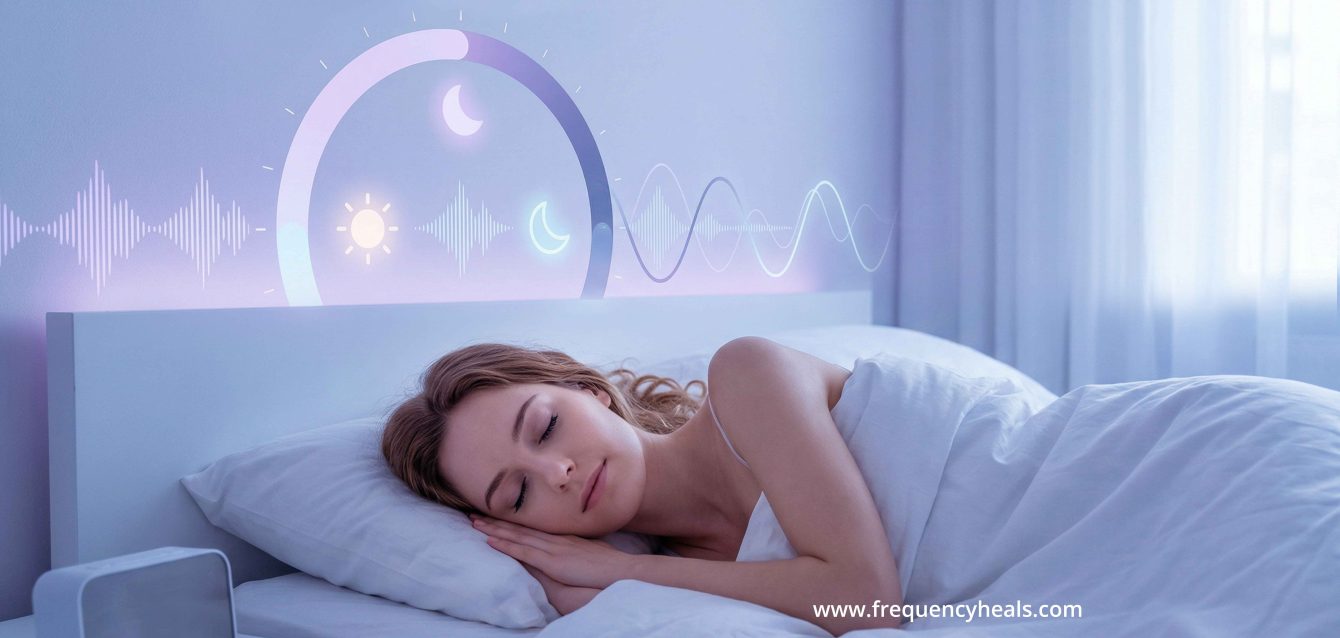
If you’ve ever experienced jet lag after crossing time zones, struggled to adjust to a new shift work schedule, or noticed how pulling an all-nighter leaves you feeling awful for days afterward, you’ve encountered your circadian rhythm — the internal 24-hour clock coordinating virtually every aspect of your physiology.
This isn’t a metaphorical clock. It’s a sophisticated biological timing system that evolved over billions of years as life on Earth adapted to the planet’s rotation and the predictable cycle of day and night [1][2]. This connection between biology and repeating patterns reflects a broader principle of how the body responds naturally to rhythm and frequency. Your circadian rhythm orchestrates when you feel alert and when you feel sleepy, regulates your body temperature throughout the day, times the release of dozens of hormones, coordinates your metabolism, and influences everything from your immune function to your mood [1][2][3].
Understanding your circadian rhythm helps explain why maintaining regular daily patterns matters so much for health — and why modern lifestyles that work against this natural timing system can create such profound consequences for wellbeing. This broader view of wellness also invites us to explore how different factors — from nutrients and lifestyle habits to frequency-based concepts — may influence the way we understand balance and wellbeing.
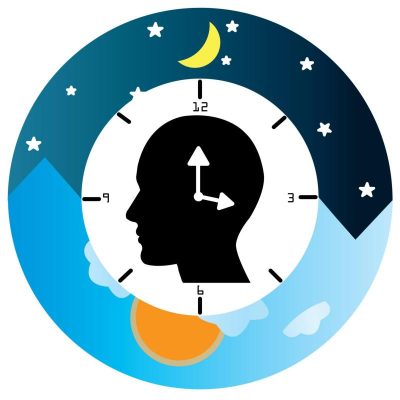
The Master Clock: How Circadian Rhythms Work
Your circadian rhythm is generated by a cluster of approximately 20,000 neurons located in your brain’s hypothalamus, specifically in a region called the suprachiasmatic nucleus (SCN) [1][2][4]. This master clock operates through molecular mechanisms — specific genes called clock genes (including PER, BMAL, and CLOCK genes) that interact in feedback loops, creating oscillations that repeat approximately every 24 hours [1][4].
What’s remarkable is that this timing system isn’t unique to your brain. Nearly every cell in your body contains the same molecular clock machinery [1][2][4]. Your liver has its own clock timing metabolic processes. Your muscles have clocks coordinating repair and growth. Your gut has clocks regulating digestion. Your kidneys, heart, lungs — virtually every organ operates on circadian schedules [1][2][4].
These distributed “peripheral clocks” throughout your body need coordination to prevent chaos, and that’s where the SCN comes in. The master clock in your brain synchronizes all the peripheral clocks, ensuring that the timing of liver metabolism, muscle repair, hormone release, and countless other processes stays coordinated [1][2][4].
The SCN synchronizes these peripheral clocks through multiple pathways: direct neural signals via the autonomic nervous system, hormonal signals (particularly the timing of cortisol and melatonin), body temperature rhythms that act as timing cues, and behavioral patterns like eating and activity [2][4][5].
Without this coordination, you’d be a biological mess — your digestion trying to process food when hormones say it’s sleep time, your immune system ramping up when it should be quiet, your body temperature fluctuating randomly rather than following the optimal 24-hour pattern.
The Sleep-Wake Cycle: Circadian Rhythm's Most Obvious Effect
The most noticeable influence of your circadian rhythm is the sleep-wake cycle — the strong pull toward wakefulness during certain hours and toward sleep during others [3][6][7].
This isn’t simply about tiredness accumulating during the day. Sleep is regulated by two interacting processes: a sleep-promoting drive that builds during wakefulness (the longer you’re awake, the sleepier you become) and a circadian alerting signal from your SCN that varies throughout the 24-hour cycle [3][6][7].
In healthy alignment, these two processes work together beautifully. Your circadian system provides maximum alerting signal during daylight hours, counteracting the slowly accumulating sleep drive and keeping you awake and functional. As evening approaches, the circadian alerting signal decreases while the sleep drive has been building all day. The combination creates the perfect conditions for falling asleep [3][6][7].
Melatonin, often called the “sleep hormone,” plays a key role in this process [3][6]. Your SCN times melatonin release from the pineal gland to begin rising in the evening (typically around 2-3 hours before your usual bedtime), signaling to your body that night is approaching. Melatonin levels peak during the night and drop in the morning [3][6]. This pattern doesn’t directly cause sleep, but it facilitates the transition to sleep and helps maintain sleep timing.
The circadian influence on sleep also affects sleep architecture — the stages and quality of sleep you experience [6][7]. The timing of when you sleep relative to your circadian phase influences sleep duration, how easily you fall asleep, how often you wake during the night, and the proportions of different sleep stages. This is why trying to sleep at unusual times (like sleeping during the day after night shift work) often results in shorter, less restorative sleep even if you’re exhausted [6][7].
Body Temperature: A Key Circadian Output
Your core body temperature doesn’t stay constant — it fluctuates roughly 1-1.5°F (about 0.5-0.8°C) over the 24-hour cycle in a pattern controlled by your circadian system [2][4][5][8].
Typically, body temperature reaches its lowest point around 4-5 AM, begins rising before you wake, peaks in late afternoon or early evening (usually between 5-7 PM), and then gradually decreases in preparation for sleep [2][4][5][8]. This rhythm continues even if you’re awake all night or sleeping all day — it’s generated internally, not simply a response to activity or rest.
The body temperature rhythm serves multiple functions. The evening decrease in temperature helps facilitate sleep onset — your body literally needs to cool down to fall asleep easily [4][5][8]. The morning rise in temperature helps support wakefulness and optimal cognitive function during the day. The temperature peak in late afternoon correlates with peak physical performance, which is why many athletic records are set in evening competitions [4][5].
Body temperature also acts as a powerful synchronizer for peripheral clocks throughout your body [4][5][8]. Cells and organs throughout your body use temperature signals as timing cues, helping coordinate their activities with the master clock in the brain. This is why disruptions to the body temperature rhythm — through irregular schedules, night shifts, or even modern thermal control that keeps indoor temperatures artificially constant — can contribute to circadian misalignment [4][5].
Hormonal Rhythms: The Chemical Messengers of Time
Many hormones follow circadian patterns, rising and falling on schedules coordinated by your SCN [1][2][3][9].
- Cortisol, often called the stress hormone, follows a striking circadian pattern. Levels are lowest around midnight, begin rising in the early morning hours (even before you wake), peak within 30-60 minutes after waking, and then gradually decline throughout the day [3][9]. This morning cortisol surge helps mobilize energy, increase alertness, and prepare your body for the day’s activities. Morning light exposure strengthens this cortisol rhythm, supporting healthy circadian function [3][9].
- Melatonin, as mentioned, rises in evening, peaks during night, and drops in morning — a pattern almost perfectly opposite to cortisol [3][6][9]. The melatonin rhythm is particularly sensitive to light exposure, which is why bright light at night can disrupt this pattern and interfere with sleep timing [3][6][9].
- Growth hormone releases primarily during deep sleep, particularly in the first half of the night [2][9]. This timing coordinates tissue repair, muscle growth, and metabolic processes with the sleep period when the body can focus energy on restoration rather than activity.
- Thyroid hormones show circadian rhythms that influence metabolism and energy regulation throughout the day [2][9]. Testosterone peaks in early morning in men, following a circadian pattern [2][9]. Insulin sensitivity varies across the day, typically being higher in morning than evening — which has implications for when you eat and how your body processes nutrients [2][9].
Dozens of other hormones follow circadian patterns, creating a coordinated hormonal environment that changes predictably across the 24-hour cycle. When your circadian rhythm is disrupted, these hormonal patterns become dysregulated, contributing to metabolic, reproductive, and mood disturbances [2][9].
How Modern Life Disrupts Circadian Rhythms
For most of human evolution, our circadian systems synchronized easily to the solar day. Sunlight during daytime provided strong signals to the SCN, while true darkness at night allowed for clear circadian timing [10][11][12]. Modern lifestyles, however, create unprecedented challenges for circadian health.
Artificial Light Exposure
Perhaps the most significant disruptor is artificial lighting [10][11][12]. Since the introduction of electric lights, humans have been exposed to inadequate light during the day (typical indoor lighting is far dimmer than outdoor sunlight) and excessive light at night — particularly blue-wavelength light from screens and LED lighting [10][11][12].
Light is the primary synchronizer of your circadian clock. Special light-sensitive cells in your eyes (intrinsically photosensitive retinal ganglion cells) detect light levels and communicate directly with your SCN [10][11]. When these cells detect bright light, they signal “daytime” to your clock. When they detect darkness, they signal “nighttime” [10][11].
But artificial light confuses this system [10][11][12]. Indoor lighting during the day often isn’t bright enough to provide robust circadian signals, weakening your clock’s synchronization. Meanwhile, even modest light exposure in the evening and night — from overhead lights, televisions, computers, and smartphones — suppresses melatonin production and delays your circadian phase, effectively telling your brain it’s still daytime [10][11][12].
The spectral composition matters too. Blue wavelengths (around 460-480 nm) are particularly potent at suppressing melatonin and alerting the circadian system [10][11][12]. LED lights and electronic screens emit significant blue light, making evening screen time especially disruptive to circadian timing.
Shift Work and Travel
Night shift work and frequent time zone travel represent extreme circadian disruptions [3][7][9][12]. During night shifts, you’re forcing yourself to be awake and active when your circadian system is strongly promoting sleep, and trying to sleep during daylight when your system promotes wakefulness [3][7][9].
The consequences are substantial. Shift workers show increased risks of cardiovascular disease, metabolic disorders, certain cancers, mood disturbances, and compromised immune function [9][12]. Even after years of night shifts, most people never fully adapt their circadian systems to the reversed schedule [7][9].
Jet lag creates similar misalignment, though usually temporarily. Your circadian clock can typically shift only about one hour per day, so crossing multiple time zones leaves you internally desynchronized for days to over a week depending on the number of zones crossed [7][12].
Irregular Sleep Schedules
Maintaining inconsistent sleep and wake times — staying up late on weekends, sleeping in to compensate, having dramatically different schedules on work days versus days off — creates chronic circadian misalignment [3][7][12].
Your circadian clock wants consistency. When you regularly go to bed and wake at the same times, your clock synchronizes to that pattern, and all the downstream rhythms (temperature, hormones, metabolism) align appropriately [3][7]. When your schedule shifts repeatedly, your clock never fully synchronizes, creating a state called “social jet lag” where your biological timing and your actual schedule remain chronically misaligned [7][12].
Screen Time Before Bed
The combination of bright light exposure, blue wavelength content, and the cognitively engaging nature of screen-based activities makes evening and nighttime screen use particularly detrimental to circadian health [10][11][12].
Many people spend the hours before bed staring at phones, tablets, or computers — exposing their eyes to bright, blue-enriched light while engaging in activities that increase alertness and delay the natural wind-down toward sleep [10][11][12]. This suppresses melatonin, delays circadian phase, makes it harder to fall asleep, and can reduce total sleep time [10][11][12].
The Health Consequences of Circadian Disruption
Chronic circadian misalignment doesn’t just affect sleep — it has profound consequences for overall health [2][9][12][13].
- Metabolic effects include increased risk of obesity, type 2 diabetes, and metabolic syndrome [2][9]. Circadian disruption affects glucose metabolism, insulin sensitivity, appetite regulation, and fat storage [2][9].
- Cardiovascular impacts show increased risk of hypertension, heart disease, and stroke among people with chronic circadian disruption [9][12][13].
- Mood and mental health suffer significantly. Circadian rhythm disorders are strongly associated with depression, anxiety, and bipolar disorder [13]. The relationship is bidirectional — circadian disruption can trigger or worsen mood disorders, while mood disorders often involve circadian dysregulation [13].
- Immune function becomes compromised with circadian misalignment, increasing susceptibility to infections and potentially affecting cancer risk [9][12][13].
- Cognitive performance declines with circadian disruption, affecting memory, attention, decision-making, and reaction times [7][12].
The severity of these consequences emphasizes how fundamental circadian timing is to human health. You are deeply, fundamentally time-based and rhythm-driven organisms. Fighting against that temporal organization creates widespread physiological stress.
Supporting Healthy Circadian Rhythms
Understanding circadian rhythms clarifies what supports healthy timing [1][3][7][12]:
- Consistent sleep and wake times, even on weekends, help stabilize your circadian clock and allow all downstream rhythms to synchronize properly [3][7][12].
- Bright light exposure in the morning, especially outdoor natural light, strongly reinforces circadian timing and supports the healthy cortisol rhythm [3][9][10].
- Limiting bright light exposure in the evening, particularly blue wavelengths from screens, helps maintain natural melatonin rhythms and circadian phase [10][11][12].
- Regular meal timing helps synchronize peripheral clocks throughout your body, particularly in digestive and metabolic tissues [2][4].
- Physical activity, especially when timed consistently during the day rather than late at night, supports circadian alignment [7][12].
- Creating dark, cool sleeping environments supports the body temperature rhythm and facilitates sleep onset [4][5][8].
These aren’t arbitrary wellness tips — they’re practices that work with your fundamental biological timing system rather than against it.
The Takeaway: You Are a Time-Based Organism
Your body isn’t a machine that operates identically at all hours. It’s a temporal organism, organized around the 24-hour day through billions of years of evolution.
Understanding this changes how you think about health. The timing of sleep, meals, activity, and light exposure isn’t just about convenience — it’s about working with or against a fundamental organizing principle of your physiology.
Circadian rhythms coordinate everything from sleep to digestion, from immune function to mood, from metabolism to cognitive performance. Maintaining stable daily patterns that align with this natural timing system isn’t restrictive — it’s supportive of how your body actually functions best.
In a 24/7 world that often encourages ignoring natural rhythms, recognizing that you are deeply time-based and rhythm-driven offers a framework for making choices that support rather than fight your biology. Your circadian clock is always running, coordinating processes throughout your body and mind. The question is whether you’re supporting its function or chronically disrupting it — and that difference matters profoundly for your health and wellbeing.
References
- [1] National Institute of General Medical Sciences. (2025). Circadian rhythms.
- [2] Biology Insights. (2026). What is the best frequency for the human body?
- [3] Cleveland Clinic. (2024). Circadian rhythm: What it is, how it works & what affects it.
- [4] PMC. (2020). Circadian rhythmicity of body temperature and metabolism.
- [5] PMC. (2016). Circadian rhythm and sleep disruption: Causes, metabolic consequences, and countermeasures.
- [6] Oxford Academic. (2016). Circadian rhythm and sleep disruption: Causes, metabolic consequences, and countermeasures.
- [7] Sleep Foundation. (2025). What is circadian rhythm?
- [8] Wikipedia. (2026). Circadian rhythm.
- [9] Huberman Lab. (2026). Light exposure and circadian rhythm.
- [10] PMC. (2015). Electric light, particularly at night, disrupts human circadian rhythmicity.
- [11] Nature. (2017). Timing of light exposure affects mood and brain circuits.
- [12] PMC. (2016). Circadian rhythm and sleep disruption causes and consequences.
- [13] Nature. (2020). Circadian rhythm disruption and mental health.







Comments
Is there a frequency that can reduce stroke induced neuropathy pain?
Regards Malcolm.
Hi Malcolm, thank you for your question.
For stroke-related neuropathy pain, some listeners choose to explore this frequency designed to support nerve comfort and reduce tingling or burning sensations:
https://www.frequencyheals.com/frequencies/nerve-damage-pain-alleviation-frequency-for-neuropathy-tingling-burning/
You can also find additional neuropathy-related tracks on our YouTube channel here:
https://www.youtube.com/@FrequencyHeals/search?query=neuropathy
Since post-stroke neuropathy can have different underlying causes, it’s also important to continue working with your healthcare professional alongside any supportive listening. Please feel free to let us know if you’d like help choosing a listening routine. Wishing you comfort and steady progress. 🌿
is there a frequency for circadian rhythm repair or alignment?
Hi Michael! Yes—there are frequency sessions people explore for circadian rhythm alignment and sleep-cycle support. One example is this melatonin-related session designed to support the body’s natural sleep timing:
https://www.youtube.com/watch?v=jRRlZQECPwE
It’s often used to help encourage sleep onset and circadian balance as part of a regular evening listening routine.
We’re also preparing to release Energy Pathways (meridian-related) audio sessions on our website soon, which many users explore for rhythm and whole-body balance support—stay tuned!
I’m trying to figure out how this all works
Hi John 💜
Thank you for reaching out. 😊
We understand that frequency concepts can feel new at first. A good place to start is our beginner-friendly guide:
🌿 Discover Frequency Healing
https://www.frequencyheals.com/discover-frequency-healing/
We recommend starting with a topic that interests you, listening at a comfortable volume, and taking time to explore at your own pace. Everyone’s experience can be different. 💙✨
Welcome to the Frequency Heals community! 😊
Thank you.
Hi Romel 💜
You’re very welcome! 😊✨
Thank you for being part of the Frequency Heals community. We hope you continue enjoying our frequency resources and educational content. 🌿💙
Wishing you all the best on your frequency journey! ✨
Wow..I love this article and kind of an eye opener too.
Hi Raghav, thank you so much! We’re glad you enjoyed the article and found it eye-opening. Understanding our circadian rhythm can offer a whole new perspective on our daily energy, sleep, and well-being. 💙
You can continue exploring your frequency journey here:
https://www.frequencyheals.com/your-frequency-journey/