

If you are reading this article, congratulations! You have made the first important step into opening yourself to a whole realm of healing that has spanned the ages, but has only in recent years gained traction among the general public. What you will be reading should reassure you that sound frequency healing is both an accessible and effective modality for everything from boosting your mood and calming your nerves to reducing inflammation and improving your sleep. And so much more.
What is perhaps hardest to grasp is that something intangible as frequencies could produce tangible results. Many think that frequencies are only used to achieve higher levels of spirituality. Of course frequencies can enhance a deeper meditative experience, but they can also help with day-to-day well-being and support healing in more acute issues. How so?
We are electric beings
Have you ever had goosebumps when you thought of something exciting? Have you ever felt your stomach drop upon receiving some devastating news? Have your cheeks ever flushed when you were embarrassed? This is the electricity in your body setting off those physiological reactions. Mere thoughts drive emotion and trigger those electrical impulses. Our hormones are the “middleman” that take those impulses and produce various physiological responses.
Hormones provide an excellent concrete example for those getting acquainted with frequency healing: they bridge the gap between the tangible and familiar to something that is intangible and perhaps a little mysterious. So let’s dive in!
When our emotions get triggered, our bodies get triggered.
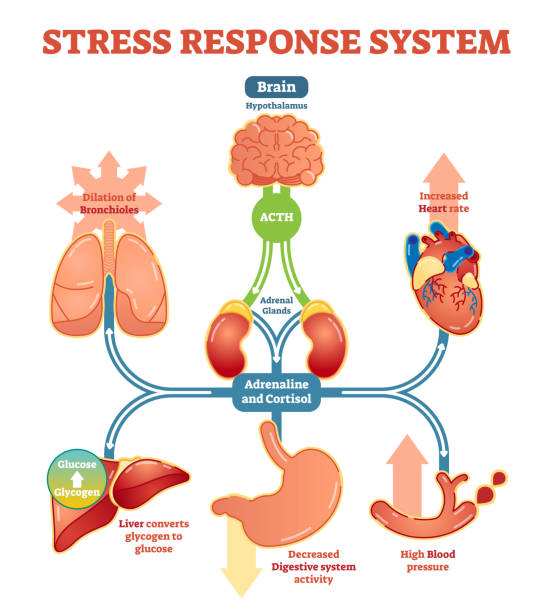
When we feel anger or fear, our bodies usually produce adrenaline. In a real emergency, a 90-second hit of adrenaline puts you into fight-or-flight mode as a survival mechanism. It tells your body to increase its heart and respiratory rates. It also works on your muscles, pushing more oxygen into them and producing more glycogen, or stored glucose (sugar) to power them. Your normal bodily functions are put on hold so you can deal with that threat. The problem is that the body can’t distinguish between a real or a perceived emergency, so if you’re holding onto triggering emotions, you are essentially giving yourself an adrenaline IV.
Likewise, stress and negative feelings can cause your cortisol levels to rise. Cortisol works to suppress functions like your immune response and digestion to ready the body to act in an emergency (even an imagined one). Along with other other chemical messengers, cortisol fuels the production of blood sugar, diverting energy to the large muscles, while inhibiting insulin production and narrowing arteries, which forces the blood to pump harder to aid your stressor response.
You’re probably starting to get the message: negative emotions across the board can bring on a host of acute and chronic issues stemming from the inflammatory response to adrenaline and cortisol. This translates to problems like muscle or joint pain, bloating, a weakened immune system, insomnia, and even more serious complications like neurodegenerative disorders.
But emotions can also trigger healthy responses, too, right?
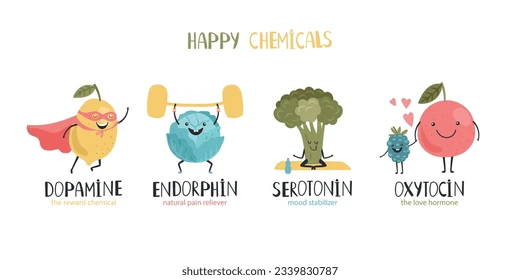
Indeed, the good news is that we can use our emotions for our well-being. High-vibrational emotional states of love or contentment set off a chain reaction that sends electrical signals to the hormones that help our bodies to relax, function normally and heal when needed. Positive emotions stimulate the production of four types of beneficial hormones:
- Dopamine is the hormone that delivers “reward” signals to the brain. As a neurotransmitter, dopamine is involved in movement, memory, cognition/focus, sleep/wakefulness, and even lactation. Dopamine also causes blood vessels to relax (at low doses) or constrict (at high doses). It reduces insulin production in your pancreas, helps in removing sodium and urine from your body, protects your gastrointestinal lining, and acts as an immune system modulator. Chronic low levels of dopamine have been tied to Parkinson’s disease, ADHD, and Restless Legs Syndrome. Higher levels can lead to obesity.
- Serotonin, or the “happiness hormone”, is a neurotransmitter that plays a key role in your moods, quality of sleep, digestion, wound healing, bone health, blood clotting and sexual desire. Low levels of serotonin may lead to health conditions such as depression/anxiety, sleep issues, and digestive problems.
- Endorphins are your body’s natural painkillers. When they attach to your brain’s reward centers, dopamine is then released. Thus, endorphins are also tied to mood. Symptoms of endorphin deficiency include pain, depression/anxiety, sleep issues, and addiction. Chronic endorphin deficiency can lead to conditions like fibromyalgia.
- Oxytocin is commonly known as the “love” hormone. In addition to managing key aspects of the male and female reproductive systems, oxytocin has an impact on some human behaviors. People lacking sufficient levels of oxytocin may experience anxiety/stress or difficulties with social connection. On the physical side, oxytocin deficiency affects the entire spectrum of reproduction functions for both men and women, from sex drive and arousal to delivery and lactation.
Now that you’ve understood that emotions are frequencies that translate into electrical impulses which in turn work on your body, you are ready to learn the basics of frequency healing. Then you will see how easy it is to use our online frequency presets and generators to help fine-tune yourself into better emotional and physical well-being.
Mastering our emotions: easier said that done
Of course, being in the right emotional state would help our well-being in many ways, but mastering emotions is easier said than done. You can’t just flip a “happy” switch and make things all better. Most of us are hardwired to veer towards lower vibrational states, which is known as a negativity bias. Without going into how that came about, let’s focus on how we can get around it.
Frequency healing: an external solution
We now understand that electrical impulses drive physiological responses. Let’s dive a little deeper into how that happens. Every molecule in our bodies vibrates; every cell carries its own electrical charge. Each tissue and organ has its own ideal frequency, which can be disrupted by illness or emotional distress. By exposing the body to the right frequencies, the part of the body that has been affected will respond to those frequencies, align with them, and find balance.
There are several ways to deliver frequencies- some of them going back thousands of years. They fall into two main categories: audio and non-audio. The most ancient forms are singing bowls, gongs, didgeridoos, drums, bells and chants. More recent frequency modalities such as PEMF and Cold Laser have become commonplace for clinical and home use, while others like Scalar and Rife are rapidly emerging. Take a look at this article if you’re curious to know more about frequency delivery mechanisms.
Perhaps some of you will be surfing the internet by now, and you will see that accessibility, quality and price-points vary greatly, which may be confusing. So let’s simplify your first steps into the realm of frequency healing by trying out a free online sound frequency session in the comfort of your home.
Our sound frequency palette
We have already mentioned some common frequency modalities. What we offer here with our free online tools are the following:
Solfeggio frequencies
Solfeggio sound healing, which hails back to Pythagoras and Gregorian chants, was originally a six-frequency scale, with three additional frequencies added by Dr Joseph Puleo in the 1970s:
- 174 Hzis associated with pain reduction and anesthetic properties.
- 285 Hz is associatedwith cellular repair (tissue restoration), body regeneration and improved immunity.
- 396 Hz helps liberate us from feelings of guilt and fear.
- 417 Hz helps with the undoing of situations and facilitating change in our lives. It is said to alleviate the conscious and subconscious mind from traumatic past experiences.
- 528 Hz is known for creating profound transformation. It has been linked to the repair of human DNA.
- 639 Hz improves our relationships with the people around us.
- 741 Hz helps us with self-expression and finding solutions.
- 852 Hz brings us toour authentic self and higher consciousness.
- 963 Hz brings about spiritual awakening and connection to the Universe.
If you wanted to work on hormonal balance, then you might want to look at what is triggering the adrenaline/cortisol response. Perhaps it’s a past traumatic event; in that case you would choose 417 Hz. Or maybe you’re feeling overwhelmed by the news cycle: in that case opt for 396 Hz. 528 Hz is a great all-around frequency to test out as well.
Rife frequencies
Rife frequencies are specific electromagnetic waves that interact with the resonant frequency of living microorganisms. You will see on this downloadable chart that there isn’t a frequency listed for hormonal balance, but that doesn’t mean Rife can’t be used. As you now know that hormonal balancing is tied to our emotional well-being, we can take that tack. A commonly cited Rife frequency for emotional and hormonal balance is 5.5 Hz, but you may find one that is more adapted to your needs. As you get more comfortable with frequencies, you can integrate specific Rife frequencies into your wellness sessions. However, for now we will be simplifying things by just working with presets.
Binaural Beats
Binaural Beats are created when two slightly different sound frequencies are played—one in each ear—through stereo headphones. The brain detects the small difference between them and perceives a third beat, or an auditory illusion. This subtle effect can influence brainwave activity, helping the mind and body settle into emotionally-supportive states. Here are the frequency ranges for each brainwave, along with some of their benefits (there is some crossover between the frequencies):
- Delta brainwaves (0.5-4 Hz) are used to encourage deep, restorative sleep and relaxation.
- Theta brainwaves (4-8 Hz) are used for stress/anxiety relief.
- Alpha brainwaves (8-12 Hz) are used for mood balance and relaxed wakefulness.
- Beta brainwaves (12.5-30 Hz) are used for focus/productivity, motivation, boosting energy, and lymphatic flow/detox
- Gamma brainwaves (30-100 Hz) are used for heightened perception and mental integration.
Using two different inputs within, say, the Theta frequency range, you can create favorable conditions for hormonal balancing by dealing with underlying anxiety.
What you need to get started
There’s not much you need to get started, actually. As you’re already curious enough to be reading this article, you have shown that you have an open mind, and this will assist you on your wellness journey. Here are some tips to make the most out of your sound frequency experience:
- Decide what you want to work on.Whether you have set a wellness goal (alleviating pain, reducing stress, helping with focus, sleeping better…) or your just wanting to see what sound frequencies can do, you can take a look at our presets and pick one to try out. Here, we will be using stress reduction for hormonal balancing as an example, but you are invited to explore our site as we have a lot to offer.
- Have good over-the-ear headphones.While you can use your computer or smartphone for most sound frequency modalities to create a healing environment, good sound quality can enhance the experience. However, if you are listening to binaural beats, headsets are necessary to ensure the delivery of a different frequency into each ear. You don’t need to break the bank to get a top-of-the-line pair. The better the audio, the more favorable the outcomes will be, but don’t beat yourself up if things are not perfect.
- Create an appropriate environment. Most frequency sessions are more effective in a calm setting with natural or dimmed lighting, away from distractions. Other programs that offer increased focus or productivity are better used in a working environment. Some of the relaxation programs are quite effective- so it’s best not to be driving or operating heavy machinery during such a session. The setting should be adapted to the frequency being used.
- Let comfort be your guide.Some sound frequencies are inaudible, others take some getting used to. Whatever you are trying out, turn the volume of your device completely down beforeputting on your headset, and slowly turn it up to where it’s both audible and comfortable for you (let your limit be under 85 decibels, or about 30-50% on your device’s volume scale). These are sounds that may feel odd to you at first, so take it slowly and gently. Keep your initial sessions short (10-20 minutes) to avoid auditory strain and fatigue. Bear in mind that frequencies in the Delta/Alpha/Theta range as well as sine waveforms are gentler, while frequencies in the Beta/Gamma range and square waveforms are more stimulating…and perhaps more aggressive.
- Be consistent and take notes. You may feel the benefits of sound healing right off the bat, but often they will come about over time. This is why it’s a good idea to incorporate sound frequencies into a regular wellness protocol, whether as part of a morning/evening routine, or integrated into other activities like study sessions. Keep a log of the desired wellness goal, the modality used, the time spent using it, the outcomes, and any other pertinent details.
Let’s now get acquainted with our click-and-go frequency presets
Look at the home page and scroll down just under the banner: you will see several ready-to-play frequency sessions in their dedicated boxes, as well as a menu for other presets in the black zone below. Let’s go back to the issue we’re working on- achieving hormonal balance. As this would be tied to reducing cortisol levels stemming from emotional issues, we would naturally click on “Emotional Wellbeing”, but there are also other helpful presets under “Solfeggio”, “Chakra”, “Sleep” and “Spiritual Wellbeing”, each one offering an enticing menu of programs to explore. These presets alone will give you plenty to try out, and indeed, many are happy just using them. However, with custom frequencies, you’ll see that there’s a whole lot more to discover later on.
Exploring Binaural Beats
Scrolling down past the presets, you will see our online frequency tools. In this article, we will just be looking at the Binaural Beats presets.
When you click on select preset, you will be taken to the five global presets you can select and then fine tune for a specific wellness objective. If we are still working on hormonal health, we would select the Delta brainwave range. If we want to work specifically on increasing serotonin levels (10.5 Hz), then I would reduce the Hertzian range by clicking first on the “Lock Right” button to adjust the left side earphone output to say, 9.5 Hz, and then by going to the “Lock Left” button to adjust the scale to 11.5 Hz for the other ear. It doesn’t matter what frequency you are using on this scale or any other scale, as it’s the difference between the two frequencies that will create the desired effect. If you want to get a feel for different frequencies within a range without manually adjusting them, then click on Randomized in Band so that the generator will randomly vary the left–right ear frequency difference within the selected band. Once you’re ready to go, turn the volume down to zero, put on your headset, and gradually raise the volume so that it’s comfortable for you. Start with shorter sessions- around 10 minutes- and work your way up. Pay attention to how you’re body is responding and do no hesitate to stop if you are feeling any discomfort.
A word of caution: While Binaural Beats are generally regarded as safe, some precautions should be taken. This especially applies to those who have certain pre-existing conditions such as pregnancy, seizure disorders or PTSD. Likewise, those wearing implanted electronic devices like pacemakers should seek the advice of a medical professional familiar with this modality.
It is also not advisable to be listening to the more relaxing Delta and Theta waves in settings where you have to be alert, such as when driving a car.
What you may feel during a frequency healing session
For most of our lives, we have turned to conventional medicine to treat what has ailed us, so we have certain expectations of how a given medicine or protocol will be, and often we want immediate results. During a sound frequency session, you may or may not not feel anything right away, but that doesn’t mean it’s not working. As frequencies coax the cells in the body to respond in a certain way, it make take several sessions to get results. However, the more you are personally engaged by being receptive and listening with no distractions, the purer the experience you will have, and the easier it will be to notice any wellness benefits.
The frequencies you have chosen for your wellness objective will also have an influence on the experience itself. Frequencies that work on relaxing the body will often make you feel calm or drowsy. Others that are meant to boost or stimulate will awaken you. Fleeting bodily sensations may include tingling, warmth, coolness, heaviness or lightness, and these are often felt in the head, chest and extremities. You might experience moments of clarity or a decluttering of a busy mind. If you’re working on emotional healing, you may finding yourself releasing old wounds, so it’s not uncommon to shed some tears or feel some sadness. Or you may experience nothing at all, and that’s OK too.
There could be some adverse effects as well, even for those who do not have pre-existing conditions. Most of these are due to sound sensitivity and overuse. In these cases, you may feel temporary headaches or light-headedness with the increase of blood circulation to the brain. These normally go away when the session ends. Your comfort is an important element in sound frequency healing, so don’t hesitate to turn down the volume, shorten the session and take a break.
It’s good to be patient and to plan for a number of regular sessions to start seeing results of more embedded issues. Feel free to work from different angles, testing different sound frequencies/modalities. If you keep track of your sessions in a log, you’ll get a better idea of what works best for you.
So as you can see, sound frequencies are an accessible, non-invasive way for you to be more in control and pro-active in your wellness journey. If you would like to go further and create your own wellness recipes, click here to learn more about our free online tone and binaural beats custom generators.
Resources:
- Your Body Is Electric — Literally ⚡
- Dopamine: What It Is, Function & Symptoms
- Serotonin: What Is It, Function & Levels
- Endorphins: What They Are and How to Boost Them
- Oxytocin: What It Is, Function & Effects
- Understanding the Different Types of Sound Healing Modalities
- Frequency Asked Questions – QI FREQUENCIES DFW
- The Effect of Different Carrier Frequencies in Binaural Beats on the Relative Power of Gamma, Alpha, and Theta Frequency Bands in Healthy People[v1] | Preprints.org







Comments
Brain Help Brain Fog.
Hi Ray, thank you for your message.
If you’re experiencing brain fog, some listeners explore frequencies that support mental clarity, relaxation, and focus—especially when symptoms are related to stress or fatigue.
You can explore brain-related frequency tracks here: https://www.frequencyheals.com/?s=brain
Listening regularly for about 10–20 minutes per session is a gentle way to begin. Stay hydrated and notice how your body responds over time. We’re happy to suggest more options if you’d like. 🌿
I hope this works for me
Hi Bruce, thank you for your message. We hope it supports you as well. Many people begin by listening for 10–20 minutes per session and continue consistently for several days to observe how their body responds.
You can also explore more frequency options here if helpful:https://www.frequencyheals.com/healing-frequency-library/
Wishing you comfort and balance on your frequency journey. 🌿✨