If you’re curious about frequency healing but haven’t yet taken the first step, there’s a simple reason why audio-based frequencies are where most people begin — they represent just one of several approaches described in different ways frequencies are delivered.
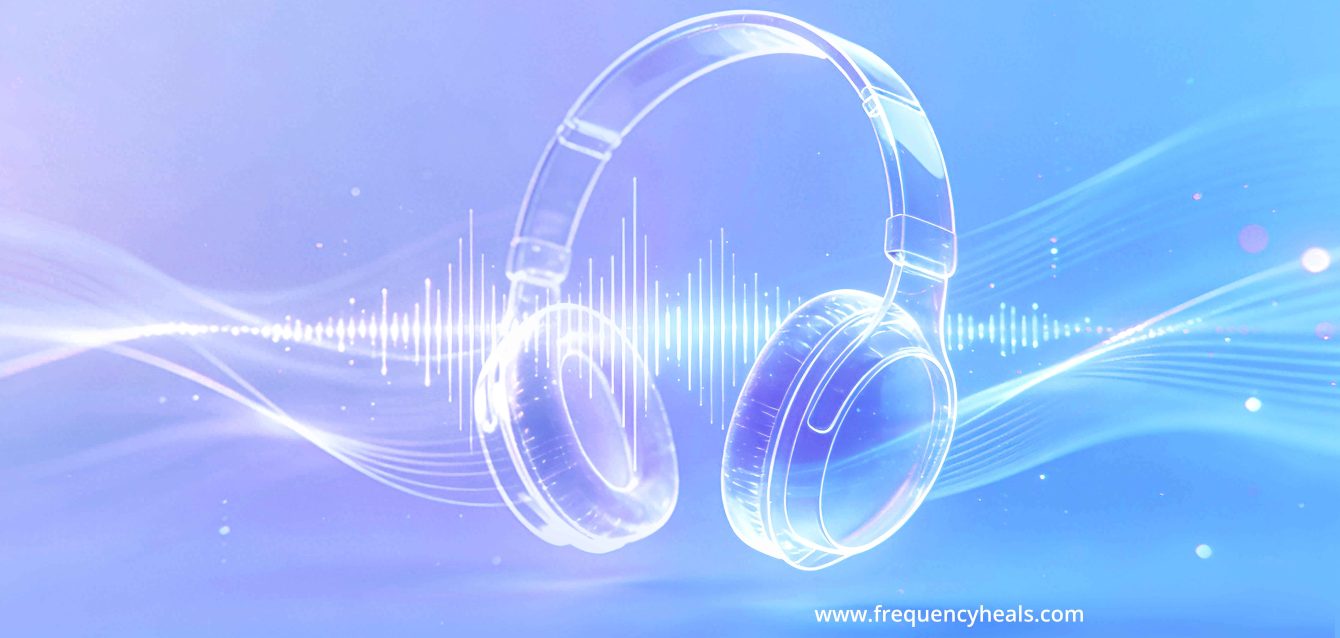
You don’t need to learn anything complicated. You don’t need special equipment. You don’t need to change your lifestyle or commit to intensive protocols. You simply put on headphones, press play, and allow the frequencies to do their work while you go about activities you’re already doing — relaxing, working, reading, or sleeping.
This simplicity isn’t a limitation. It’s actually one of audio frequency therapy’s greatest strengths. Because when something is genuinely easy to start, you’re far more likely to actually start it. And once you start, you can experience the benefits firsthand rather than endlessly researching whether frequency healing “works.”

This article explains why audio-based frequencies represent the most accessible entry point into frequency healing, and how their inherent simplicity creates opportunities for gentle, sustainable integration into daily life.
The Barrier to Entry Is Essentially Zero
One of the most compelling aspects of audio-based frequency therapy is how little stands between curiosity and actual experience.
Research consistently describes binaural beats and audio frequencies as “highly accessible” and “noninvasive,” requiring only headphones and internet access to begin [1]. This isn’t marketing language — it’s a practical reality that distinguishes audio frequency therapy from virtually every other wellness intervention.
Consider what you don’t need:
- No specialized equipment beyond basic headphones — and sometimes not even those. The headphones you already own, whether they came with your phone or you purchased them for music, work perfectly fine for frequency therapy. And while headphones are recommended for certain types of frequency audio like binaural beats (which require stereo separation), some frequencies can work effectively through speakers or even without headphones at all. In some cases, listening without headphones can actually work better depending on the type of frequency and your personal response. There’s no need to invest in expensive technology before discovering whether frequency healing resonates with you.
- No technical knowledge or training. You don’t need to understand neuroscience, read instruction manuals, or master complicated protocols. If you can play audio on a device, you can use frequency therapy.
- No significant time commitment. Unlike therapies requiring appointments, travel, or dedicated practice spaces, audio frequencies work within whatever time you have available — ten minutes before bed, during your lunch break, or while commuting.
- No lifestyle changes. You don’t need to restructure your schedule, adopt new habits before beginning, or make space in your home. Audio frequency therapy fits into your life exactly as it already exists.
This minimal barrier to entry means the gap between “I’m curious about frequency healing” and “I’m experiencing frequency healing” can be measured in minutes rather than weeks. Download an audio file or open a streaming app, put on headphones, and you’ve started.
It Integrates Seamlessly Into Existing Activities
Perhaps the most practical advantage of audio-based frequency therapy is that it doesn’t require you to stop doing anything else.
Unlike meditation practices that demand dedicated focus, or wellness interventions requiring you to be in specific locations, audio frequencies can accompany activities you’re already engaged in throughout your day.
For relaxation and stress relief, you might listen to theta or alpha frequencies while:
- Sitting quietly in the evening after work
- Taking a bath or shower
- Lying down for a short rest
- Preparing for sleep
For focus and cognitive support, you might use beta frequencies while:
- Working at your computer
- Studying or reading
- Completing household tasks that benefit from sustained attention
- Engaging in creative projects
For sleep support, delta frequencies can play:
- As you’re falling asleep
- Throughout the entire night
- During afternoon naps
This flexibility means audio frequency therapy doesn’t compete with other activities for your limited time and attention. It supports what you’re already doing rather than demanding you add something entirely new to an already full schedule [2].
Research on home-use binaural beats acknowledges this practical reality, noting that people commonly integrate frequency listening into everyday activities like studying, working from home, or preparing for sleep [3]. The accessibility of this approach — both in terms of ease of use and compatibility with daily routines — contributes significantly to why audio remains the most popular entry point for frequency healing.
There's No Learning Curve
Some wellness practices require weeks or months of dedicated learning before you can practice effectively on your own. Meditation, yoga, breathwork — these are valuable practices, but they involve skill development that takes time and often benefits from guidance.
Audio frequency therapy has essentially no learning curve.
The process is straightforward: select frequencies appropriate to your goal, adjust volume to a comfortable level, put on headphones, and listen. That’s it. You’re practicing frequency therapy successfully from your very first session.
This doesn’t mean there’s nothing to learn over time. As you gain experience, you’ll discover:
- Which frequency ranges work best for different purposes in your life
- What durations feel most comfortable and effective
- Which times of day support your goals most readily
- How to combine frequency listening with other practices
But these refinements come through gentle experimentation, not through mastering complex techniques before you can benefit. You can start experiencing effects immediately while gradually developing preferences and understanding based on your own responses.
Research emphasizes this accessibility, describing binaural beats as offering “a simple, non-invasive way to influence brainwave activity” that works “without prior training” [4][5]. This matters enormously for people who feel overwhelmed by wellness practices with steep learning curves or who simply want something they can begin using today rather than eventually.
The Investment Is Minimal
Cost represents another significant barrier to many wellness interventions. Therapy sessions, specialized equipment, classes, professional guidance — these can require substantial financial investment before you know whether an approach will actually help.
Audio frequency therapy, by contrast, is remarkably affordable to explore.
Many high-quality binaural beat recordings and frequency-based audio tracks are available free on platforms like YouTube, Spotify, and specialized apps [2][6]. Even premium apps or curated audio programs typically cost less than a single therapy session or wellness class.
The equipment requirement — stereo headphones — ranges from basic models costing under twenty dollars to higher-quality options, but even inexpensive headphones allow you to experience frequency therapy effectively. Once you have headphones, there’s no ongoing cost unless you choose to purchase specific audio programs.
Research examining the cost-effectiveness of binaural beat therapy highlights these economic advantages, noting that “production of binaural beat audio tracks is relatively inexpensive” and “can be digitally distributed at minimal cost,” often available free or at very low prices on various platforms [6]. Unlike traditional therapies requiring frequent professional sessions, audio frequencies can be self-administered at home, eliminating ongoing costs.
This low financial barrier means you can explore frequency healing without financial risk. If it doesn’t resonate with you, you’ve lost essentially nothing. If it does help, you’ve discovered a valuable tool for minimal investment.
The Investment Is Minimal
For people new to frequency healing, there’s often underlying uncertainty: Will this feel weird? Could it be harmful? What if I don’t like how it makes me feel?
Audio-based frequency therapy addresses these concerns through its inherent gentleness and complete control remaining in your hands.
You control the volume, keeping it as soft as feels comfortable. You control the duration, listening for as long or as briefly as suits you. You can stop at any moment if anything feels uncomfortable. There’s no commitment, no pressure, no sense that you must continue if it doesn’t feel right.
This complete agency makes audio frequency therapy feel safe to explore. Research consistently characterizes binaural beats as having “minimal side effects” and being “low-risk” [4][7]. For healthy adults following basic guidelines around comfortable volume and appropriate duration, audio frequency therapy is generally considered safe and noninvasive [5].
The gentle nature of the practice means you can approach it experimentally rather than anxiously. Try a fifteen-minute session. Notice how you feel. If it’s pleasant and helpful, continue. If not, simply don’t use it again. The stakes are genuinely low, which paradoxically makes success more likely because you’re not approaching it with anxiety about doing it “correctly.”
It Works With Your Schedule, Not Against It
Modern life is demanding, and most people struggle to find time for additional wellness practices no matter how beneficial they might be. Audio frequency therapy sidesteps this problem entirely by working within whatever schedule you already have.
You can listen to frequencies:
- For five minutes or fifty, depending on available time
- At any time of day that suits your goals and schedule
- While doing other things or during dedicated quiet time
- Every day, several times weekly, or occasionally as needed
This flexibility means audio frequency therapy adapts to your life rather than requiring your life to adapt to it. Busy week with no downtime? Listen to focus-supporting frequencies while working. Stressed evening with time to decompress? Use relaxation frequencies during a quiet half-hour before bed. Struggling with sleep? Play delta frequencies throughout the night.
Research examining real-world use of binaural beats notes that people commonly integrate frequency listening into existing daily activities precisely because it doesn’t require dedicated time blocks or schedule restructuring [3]. This practical compatibility with actual human lives contributes significantly to why audio remains the most accessible form of frequency therapy.
It Lets You Explore Before Committing
Perhaps most importantly, starting with audio-based frequency therapy allows you to discover whether frequency healing works for you before making any significant commitments.
You can experience neural entrainment, notice how different frequency ranges affect your states of mind, and develop familiarity with how your nervous system responds to frequency-based support — all without purchasing devices, attending appointments, or restructuring your lifestyle.
This exploratory approach serves several purposes:
It builds understanding. Experiencing audio frequencies helps you understand the principles of frequency healing in practical terms rather than abstract concepts. You learn what “theta frequencies support meditation” actually means by feeling it in your own practice.
It reveals your responsiveness. Some people respond strongly to frequency therapy, others more modestly. Starting with audio helps you gauge your individual sensitivity and response patterns before exploring more intensive approaches.
It clarifies your interests. As you experiment with different frequencies for different purposes, you discover what aspects of frequency healing most appeal to you and serve your needs, guiding any future exploration.
It validates the approach. If audio frequencies produce noticeable benefits — better sleep, reduced stress, improved focus — you’ve confirmed that frequency healing works for you specifically, creating confidence for potentially exploring other modalities later if desired.
This exploratory phase is valuable regardless of where your frequency healing journey ultimately leads. If audio continues meeting your needs indefinitely, you’ve found an effective, accessible tool. If your interests or needs eventually evolve toward exploring frequency devices or other delivery methods, you’ll approach that exploration with established experience and understanding rather than starting from scratch.
The Bottom Line: Start Here
If you’re drawn to frequency healing but unsure where to begin, the answer is straightforward: start with audio.
Not because audio is somehow inferior to other approaches — it’s not. Not because you’ll eventually “graduate” to something else — you might never need to. But because audio-based frequency therapy offers the easiest, most accessible, lowest-risk entry point for discovering whether frequency healing resonates with you.
You can begin today, right now, with equipment you likely already own and resources readily available online. You can experiment gently, adjust based on your experience, and integrate frequency support into your life in whatever way feels most natural and helpful.
The complexity can come later if you want it. The specialized devices, the advanced protocols, the intensive exploration — all of that remains available if your journey leads there. But it’s not necessary for beginning. It’s not even necessary for benefiting significantly from frequency healing.
Sometimes the easiest path is also the wisest one. Audio-based frequency therapy proves this principle beautifully. It removes every reasonable barrier between curiosity and experience, creating space for you to discover what frequency healing might offer you — simply, safely, and on your own terms.
References
- [1] Nature. (2025). A parametric investigation of binaural beats for brain entrainment and enhancing sustained attention. Scientific Reports, 15, 1815.
- [2] LoneStar Neurology. (2025). Boost cognitive function & relaxation with binaural beats.
- [3] Nature. (2023). Reverse effect of home-use binaural beats brain stimulation. Scientific Reports, 13, 10985.
- [4] Mind Alive. (2026). The complete 2026 guide to binaural beats.
- [5] Garcia-Argibay, M., Santed, M. A., & Reales, J. M. (2019). Efficacy of binaural auditory beats in cognition, anxiety, and pain perception: A meta-analysis. Psychological Research, 83(2), 357-372.
- [6] Stojanović-Stojanović, D., et al. (2024). The efficiency of binaural beats on anxiety and depression — A systematic review. Applied Sciences, 14(13), 5675.